



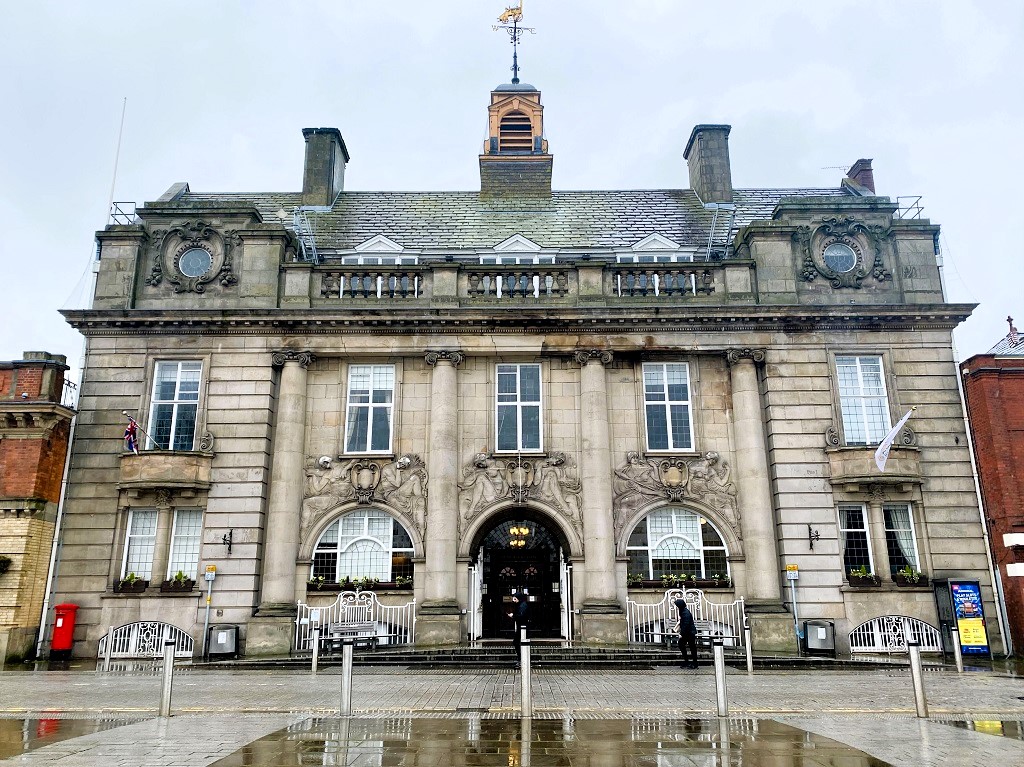
‘Genuine turnaround’ for Cheshire East Council
“Cheshire East is finally facing up to the consequences of decisions deferred, problems ignored, and opportunities missed over more than a decade,” wrote the Chartered Institute of Public Finance and Accountancy in its review of the council’s books.
The report, which was authored back in May but only published today, was commissioned after Cheshire East Council requested Exceptional Financial Support from government for the 2026-27 financial year.
Cheshire East has been reliant on EFS for years, seeking £17.6m for 2023-24, £17.6m again in 2024-25, and £25.3m in 2025-26.
There is no way Cheshire East Council could have avoided bankruptcy without EFS support during these years, CIPFA noted.
However, this time the ask is different. Cheshire East is looking to use the financial boost as a “bridge to sustainability rather than a recurring sticking plaster,” CIPFA wrote in its report. The council is on track to start making significant savings in 2027-28, putting it on track to move off dependency on EFS.
“It is in a genuine turnaround situation, has made real progress over the last six months, but still has a long way to go,” CIPFA wrote.
Current methodology, the CIPFA noted, includes “asset disposals, new housing development, a potential revision to the Council Tax Reduction Scheme, and a star chamber approach to in-year underspends all form part of the recovery toolkit.”
Part of the problem is Cheshire East Council’s refusal to raise council tax over the years, which has cost the authority £22.6m in cumulative income. Other issues mirror those impacting councils across the country – an increase in demand for services, particularly social care, that has outstripped funding.
There have also been issues around culture that have plagued the council.
CIPFA wrote: “Since its formation in 2009 the council has been dogged by external investigations, reputational damage and eroded staff morale.
“Years of austerity that forced difficult decisions elsewhere passed Cheshire East by,” the report continued.
“The pandemic compounded this, and the council arrived at its current crisis without the institutional resilience or appetite for transformation that the situation now demands.”
The current model for transformation and improvement has merit, making individual service areas accountable for their own savings, CIPFA noted. There is work to be done though.
“The council has the right intent, is building the right foundations, and has the right people in key senior positions. But intent must now translate into sustained delivery at pace, across all parts of the organisation, not just those already in motion,” the report stated.
“The council will be smaller, more digital and more strategically focused. Getting there requires strong nerve, genuine workforce engagement at every level, and the continued confidence of MHCLG and its residents. Without that, even the best-intentioned transformation will fall short of what is needed.”
Cheshire East Council Leader Cllr Nick Mannion welcomed the report’s acknowledgement of the work being done to improve the council. He pointed out that since it was authority, more progress has been made.
“We have completely changed the council’s governance arrangements, moving to a cabinet model in just six months,” he said.
“We have strengthened our independently chaired Assurance Panel with the appointment of Sharon Kemp as chair, continued to improve financial reporting and oversight, and made further permanent senior officer appointments.
“These are just a few examples of how we are responding to recommendations from this and other external reviews.”
Mannion said that the council was serious when it comes to improving.
“While we have made significant progress, we are not complacent,” he said. “We know there is more to do, and we are absolutely committed to delivering sustained improvement.”
Deputy leader Cllr Michael Gorman added that the council was focussed on the future.
“Our ambition is not simply to balance the books,” he said.
“We want to create the conditions for sustainable economic growth by attracting investment, supporting local businesses, delivering new employment opportunities, investing in skills and ensuring that our towns and rural communities are well placed to benefit from future growth.”
Cheshire East Council was one of several in the North West to undergo a CIPFA review.
Cumberland Council’s review showed a local authority that was on track to not require EFS support to have a balanced budget during the 2027-28 fiscal year.
Wirral Council’s was less optimistic, noting the local authority’s issues around delivery and handling financial stress. Its position is “serious but potentially recoverable”, the report said.
The CIPFA was most critical of Halton Council, whose budget situation is “unsustainable” with a budget shortfall due to to nearly £120m in 2030-31. Read more.
Related Articles

Analysis
VIDEO + GALLERY | Cheshire and Warrington Combined Authority sets out stall for future
Senior leaders at AstraZeneca, Bentley Motors, Great British Energy, and more joined the new combined authority on Friday in making the case for investment in the sub-region.