



Halton’s financial situation ‘unsustainable’ as budget shortfall widens
With the structural budget gap due to grow from £44.9m in 2026-27 to £118.6m in 2030-31, the Chartered Institute of Public Finance and Accountancy’s review of the council’s books paints a picture of a local authority struggling to agree a path forward.
Halton Council underwent an examination by CIPFA as a consequence of requesting Exceptional Financial Support from government for the financial year 2026-27. The review was undertaken in April, with the report, which was published yesterday, dated May.
The report outlines an increase in net revenue expenditure from £103.7m to £183.1m in the four fiscal years between 2022-23 and 2025-26. Children’s and adults services is the highest source of expenditure for the council.
While EFS will help alleviate the budget pressures in the short term, it has its own problems.
“Whilst requests for EFS provide some respite, this is a temporary measure that will not resolve the underlying issue,” CIPFA’s report reads.
“The request for EFS is significant in proportion to the net revenue budget, and if utilised in full as per the application, will add additional revenue pressures in the region of £32 million per annum. Each £10m borrowing will add some £1m cost to the revenue budget, including interest and Minimum Revenue Provision.”
Regarding the underlying issue, the CIPFA verdict was that meaningful change is required – but not everyone at the council is necessarily on the same page.
“Members and officers understand that the council’s financial position is unsustainable, and that change, transformation and savings are urgently needed to address the significant and increasing budget gap,” the CIPFA’s report reads.
“However, there is limited evidence of members understanding of the concept of transformation, or whether they are willing to make the difficult decisions to deliver the level of savings required.”
CIPFA noted that the council has not developed a detailed action plan to address the gap, despite being recommended to via the Local Government Association’s corporate peer challenge in 2024 and CIPFA’s own resilience review in 2025.
Accordingly, the CIPFA has recommend members and officers undergo a series of workshops to understand what sort of transformation is needed to make meaningful change to the council’s financial status.
There were some hints of optimism in the report, with CIPFA noting that the council’s director of transformation had established a Change and Innovation Unit. Other praised actions include the appointment of an independent improvement panel and an independent audit committee member.
“This will provide more credibility to a recovery plan as there is minimal scope for delay due to the size of the budget gap,” CIPFA said.
Part of that plan could include disposing of additional assets. The council told CIPFA that there were no assets to be disposed of, however the group noted that the asset management plan for the council had not been updated since 2018 and that there is no asset disposal plan in place.
“The scale of the challenge in bridging the financial gap in Halton is considerable,” the report states.
“The development of a transformation plan that strengthens financial management, and sets out how further income can be generated, costs reduced and surplus assets sold to reduce borrowing will determine whether the council has the capacity and conviction needed for the next steps.”
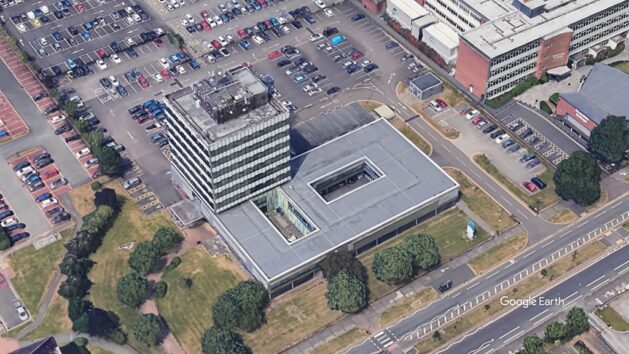
Since the review in May, Halton Council has sought to consolidate its real estate, including knocking down its seven-storey Municipal Building in Widnes and selling it to developers, as well as flirting with selling the DCBL Stadium.
Halton Council was not alone in undergoing a CIPFA review. Other North West councils that were examined due to requesting ESF were Cheshire East Council, Cumberland Council, and Wirral Council.


The problem Halton, and those other council’s mentioned at the end of this article, and every other council for that matter, to varying extents, has is that their budgets have been cut every year for almost 2 decades. Even where difficult decisions have been avoided so far, or in council’s which were fortunate to have good non-central government grant incomes in the first place, there is very little left to go at. All that remains, mostly, at most authorities are the sorts of things that are optional but which make provision of statutory services better, or more efficient or effective. You could, for instance, save loads of money by reducing the pay and conditions of staff – but then you’d simply be unable to attract quality staff which would make delivering the minimum required statutory services impossible, or result in increased costs through non-statutory things no longer happening adequately. The problem, in a nutshell, is that in UK 2026 the price of everything is king and the value of everything is long forgotten.
By Anonymous
Maybe if government diverted some of the cash mountains currently directed towards Combined Authorities to local Councils instead then these situations could be resolved.
By Anonymous
Maybe Halton should spend more wisely. It seems clear from the CIPFA review that there is a way forward, and has been for a while. The Council just hasn’t bothered to take it.
By ALL