



Cumberland to forgo public-private partnership model for St Cuthbert’s Garden Village
A joint venture does not appear to be in the cards for the council, which is instead set to pursue a Locally Led New Towns Development Corporation model to deliver the 10,000-home project.
Cumberland Council’s executive board will decide next week which delivery model it prefers for St Cuthbert’s Garden Village, one of its flagship projects.
What is St Cuthbert’s Garden Village?
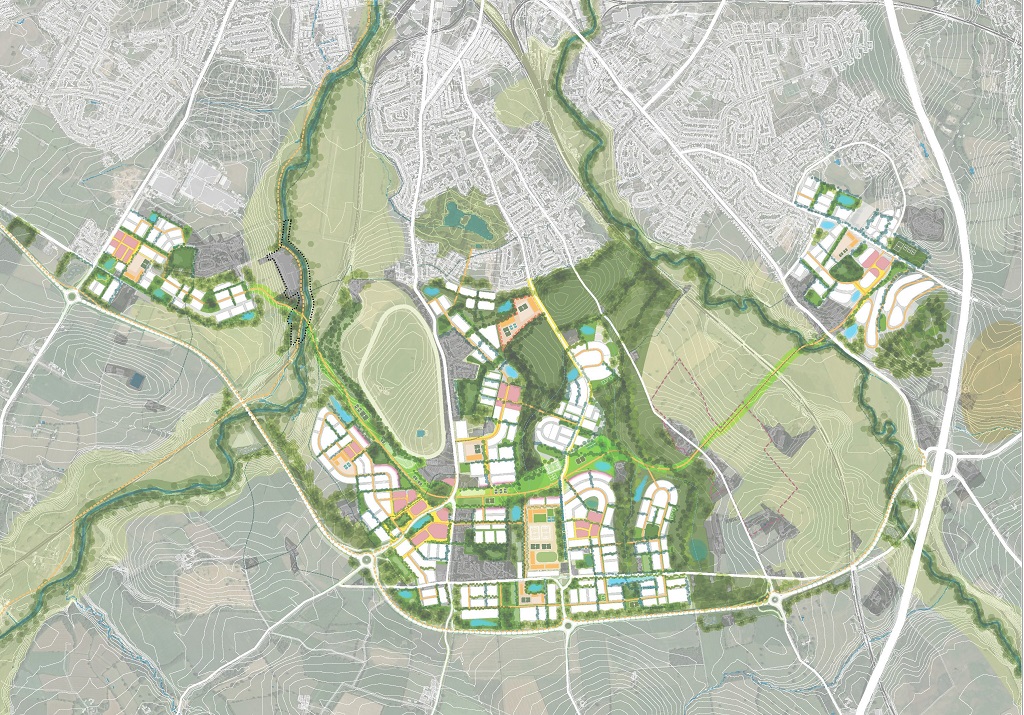
St Cuthbert’s, which is allocated for land south of Carlisle, would host 64 acres of land for manufacturing, engineering, and logistics use – as well as provision for primary and secondary schools, retail space, and the aforementioned homes. Early ideas included a prominent park, which was the subject of a design competition won by Gillespies in 2022.
The village, which joined the government’s Garden Settlements Programme in 2017, is estimated to increase spend in the local economy by £93m each year.
St Cuthbert’s has had a journey in making it thus far and is still contingent on the completion of three projects: the completion of the Carlisle Southern Link Road this spring, the adoption of the St Cuthbert Village Local Plan in the summer, and the establishment of a special delivery vehicle.
It is this delivery vehicle that is the subject of discussion at next week’s executive committee meeting. The executive will be presented with three options: former a Locally Led New Town Development Corporation, pursue a joint venture with a private sector partner, or deliver it on its own.
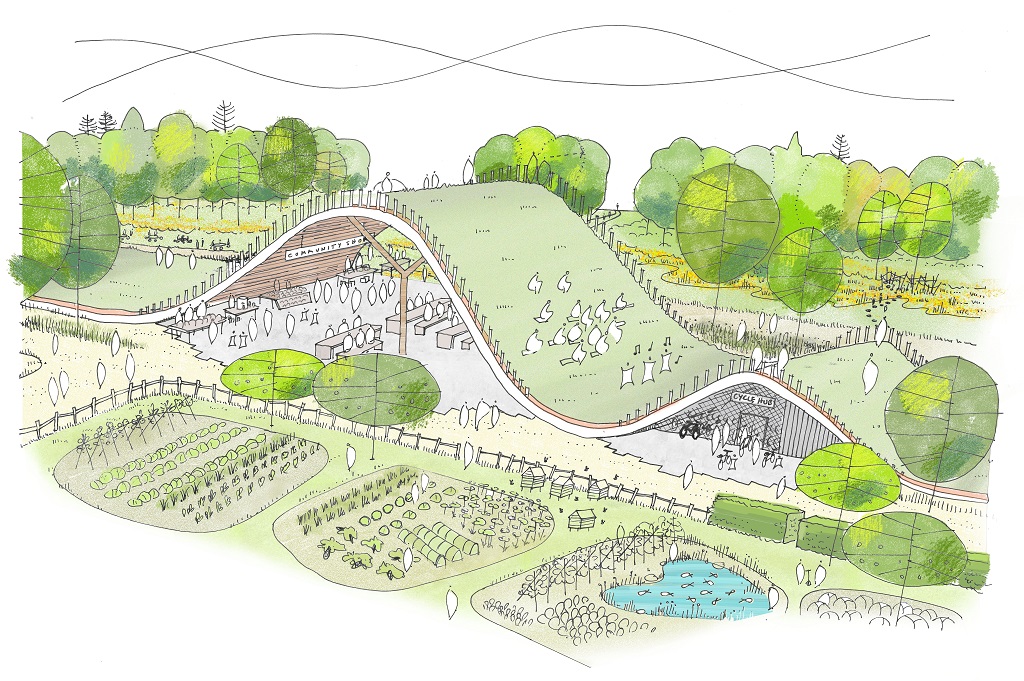
Gillespies’ winning design for a park at St Cuthbert’s Garden Village. Credit: via Carlisle City Council, now Cumberland Council
Why go the LLNTDC route?
Officers, and the council’s own scrutiny committee, recommend the council pursue the LLNTDC model. They have garnered the support of the Ministry of Housing, Communities, and Local Government as well, with MHCLG agreeing that an LLNTDC “offers more comprehensive powers to deliver the best socio-economic outcomes with less risk to the council compared to the public/private joint venture”, as per the council report.
So what is so special about an LLNTDC? Here’s what the report said:
- Funding for the LLNTDC comes from the Treasury via grants and borrowing – not the council. This reduces the council’s risk in the project. Funding is agreed with the Treasury on a case-by-case basis
- With the Treasury leading the finances, a government covenant can be used to reduce risk for future investors
- Funding is repaid from development proceeds
- There is a requirement to not make a profit, which means the development can progress faster than if it was being delivered through a JV, which would require regular profits for the private-sector partner
- LLNTDCs have CPO powers
- LLNTDCs can undertake infrastructure works that are necessary for the project, even if they take place outside of the project’s boundaries
MHCLG and the council put the LLNTDC as offering a 4.45 benefit cost ratio (every £1 spent equates to £4.45 for the local economy). A joint venture, they estimate, has a 2.27 benefit cost ratio.
Still, forming an LLNTDC is a costly and slow process. MHCLG has committed £730,000 in revenue funding to the council to help it progress the model, accordingly. But for an LLNTDC to be formed, it will have to be formally established by the secretary of state and then created via an act of Parliament.
Cumberland Council estimates it could have an LLNTDC operational by summer 2027.
What’s next?
Cumberland Council’s executive will vote to pursue a LLNTDC delivery model for St Cuthbert’s Garden Village on Tuesday. At that point, it will commence securing all the required paperwork to submit an application to create an LLNTDC by the end of July.


It’ll look like Runcorn.
By Anonymous