


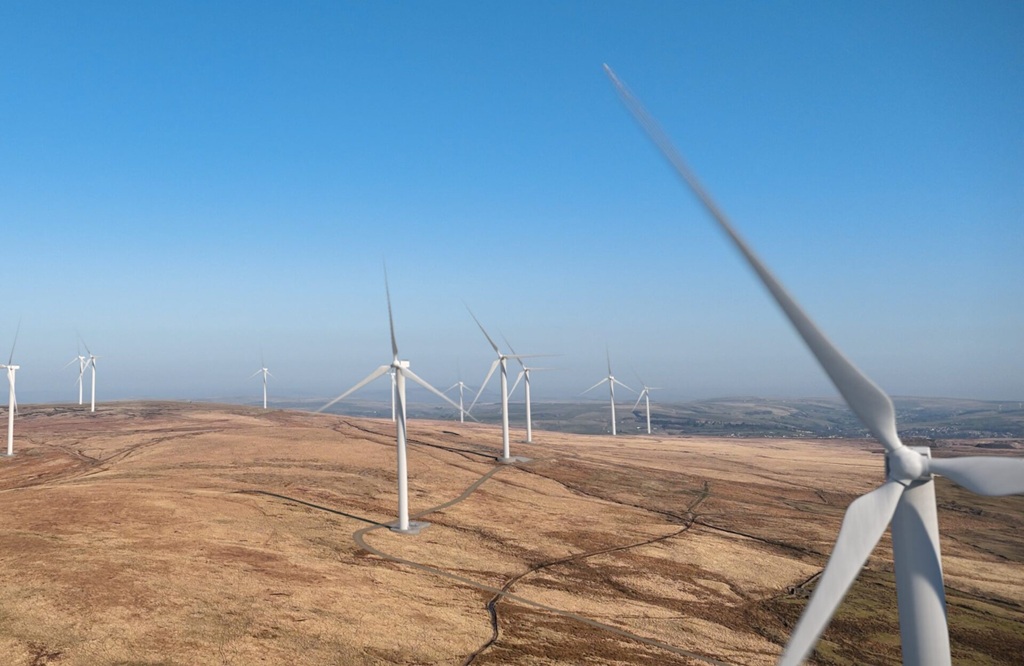
Cubico submits updated Scout Moor II proposals
Announced at Place’s Energy & Power event this morning, the energy firm has reworked its plans for an onshore wind farm between Rossendale and Rochdale, the main element being a reduction from 17 turbines to 12.
Cubico Sustainable Investments said that extensive consultation has led to the revising of its plans for the South Pennine Moors site, with the scheme “refined to reduce potential impacts, strengthen environmental mitigation and support a long-term programme of local community investment”.
If approved, Scout Moor II would generate around 70MW of clean, homegrown electricity, subject to final turbine selection, helping support the country’s future energy needs while delivering long-term investment into local communities and a significant programme of moorland restoration.
Key changes made to the proposals include:
- A reduction in turbine numbers from 17 to 12
- Turbines and infrastructure removed from the deepest areas of peat
- Fewer turbines visible from nearby communities and key viewpoints
- Greater separation from the Pennine Bridleway and other key recreational routes
- A revised grid connection route that avoids Edenfield and Waterfoot villages
- Enhanced habitat restoration and peatland management proposals.
The revised plans also include a significant programme of moorland restoration and peatland enhancement, focused on restoring degraded peat habitats, improving biodiversity, supporting carbon storage and strengthening the long-term resilience of the moor.
Peter Rowe, project lead for Scout Moor II at Cubico, said: “From the outset, we said that consultation would help shape Scout Moor II, and the updated proposals show that this has happened.
“The project today is different because people have engaged. The feedback we received has directly influenced the proposals and resulted in meaningful changes to the scheme.
“These include reducing the number of turbines, removing infrastructure from the deepest areas of peat, increasing separation from key recreational routes and revising the grid connection route to avoid Edenfield and Waterfoot villages.
“We know there will continue to be different views about the project, but we hope people can see that the consultation has been a genuine process of listening, engagement and refinement.
“We believe the revised proposals strike a better balance between delivering homegrown renewable energy, reducing local and environmental impacts and creating long-term benefits for local communities.”
Separate from the planning process, Cubico added that the updated proposals retain its commitment to an enhanced and index-linked Community Wealth Fund based on £6,000 per MW of installed capacity, around 20% above the typical industry benchmark.
Subject to final turbine selection, this could provide around £400,000 each year for local projects and initiatives throughout the operational life of the wind farm.
A revenue-sharing mechanism has also been proposed, meaning local communities would share in the success of the project if the wind farm performed strongly over time.
The fund would be independently managed and shaped by local priorities, with the potential to support initiatives such as community facilities, environmental improvements, education, skills and local economic development.
Cubico appointed Groundwork in October 2025 to help refine the Community Wealth Fund proposals and work alongside residents and stakeholders across Rossendale and Rochdale to shape the future direction of the fund.
Consultation on the wind farm was carried out across winter 2024 and spring 2025, with plans then submitted in July, trailing England’s largest onshore wind farm in a decade.
The Scout Moor II proposals are awaiting determination by Rossendale and Rochdale Councils.