


Northern Powerhouse Rail delayed, prolonging decade of uncertainty
The highly anticipated and long-stalled transport link, which would feature a £17bn Manchester-Liverpool rail line via Warrington, will not be pitched as expected by the Prime Minister at the Labour Party conference.
Chancellor Rachel Reeves had pledged to unveil the government’s vision for Northern Powerhouse Rail over “the coming weeks” as part of the June 2025 Spending Review, but a vision has yet to materialise. Reeves did, however, commit £15bn for Northern transport infrastructure.
Plans for the railway aim to replicate the success of the Oxford-Cambridge Arc by increasing mobility and efficiency and connecting high-growth industries across the North West.
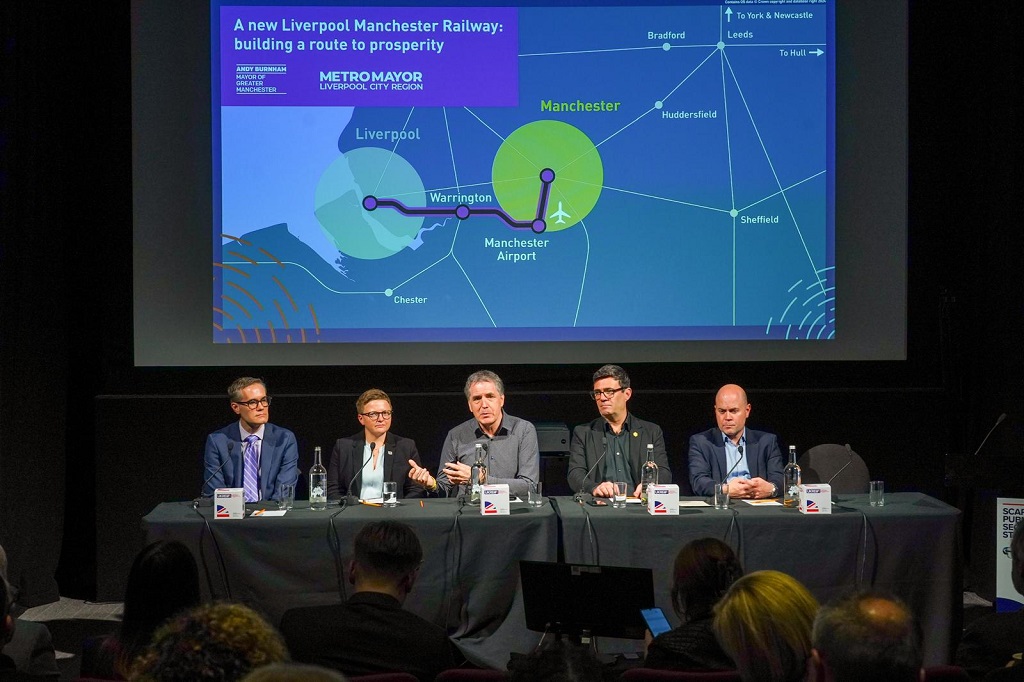
Metro mayors Andy Burnham and Steve Rotheram claimed at MIPIM in March 2025 that the project could add £7bn GVA a year to the UK economy.
A cornerstone of NPR’s revival is the proposed rail link between Liverpool and Manchester, which would stretch from Liverpool Lime Street to Manchester Piccadilly, via both Warrington Bank Quay and Manchester Airport.
NPR has been in the works since it was first touted by then-chancellor George Osborne in 2014.
A decade later, at UKREiiF in May 2024, the Liverpool-Manchester Railway Board was announced with much fanfare. The board intended to create a strategy outlining how to maximise the regional economic benefits of such infrastructure.
Steve Rotheram, Mayor of Liverpool City Region, told the audience at UKREiiF that the project “is not going to be like HS2”, adding, “this is going to happen”.
At the Labour Party conference in 2024, then-transport secretary Louise Haigh declared that funding for the link may not be available – a year later, the government has opted to stall any announcement on the scheme.
Andy Burnham, Mayor of Greater Manchester, told BBC Radio Manchester that the current infrastructure around Manchester is not sufficient to support the city’s ongoing status as the fastest growing city region in the country.
He said: “I do believe that the transport secretary wants to help us deliver our ambitions, but it feels that projects in the southern half of the country are always green-lighted, but red-lighted up here.
“It’s been promised to us for over 10 years. We aren’t asking for anything that wasn’t promised by the government.
“The case I’ll have to keep making is why can’t we have an Elizabeth Line for the North West, that would bring huge growth to the big cities and Warrington.”
He also added that Manchester Airport would benefit from the link and then could be considered over expanding London’s crowded airports.
A spokesperson for the Liverpool City Region Combined Authority has declined to comment.
Darren Muir, director of planning at Pegasus Group, said the NPR link is “fundamental to the city region’s long-term growth”, adding that it is “vital to take a genuinely regional approach that integrates transport, housing, and economic growth”.
He said: “We know from experience that infrastructure certainty drives confidence and investment. Securing clarity on Northern Powerhouse Rail is therefore essential if we are to turn strategic plans into real, deliverable projects on the ground.
“[The rail line] would provide the connectivity needed to deliver the ambitions of the forthcoming Liverpool City Region Spatial Development Strategy, unlocking housing, employment, and regeneration opportunities in a sustainable way.
“The continued delays to the LCRCA SDS, coupled with a lack of clarity on Northern Powerhouse Rail, create significant uncertainty for local authorities and investors.”
Jeremy Hinds, director at Savills, said: “The case for continued investment in modern railways is always a good one, and the need to integrate the economies of the cities in the North, particularly Liverpool and Manchester, has been made many times.
“It is unclear whether the decision to postpone an announcement now is a prelude to a later decision to cancel the project altogether, or whether the spending review is ensuring that the project can be undertaken without incurring the excess experienced under the development of HS2.
“In any event, one of the consequences of the decision to postpone an announcement is to create uncertainty, and that is generally bad for business and for investment decision-making programs.”
The Department for Transport has been contacted for comment.