Ryebank Fields dissenters lodge protest plans
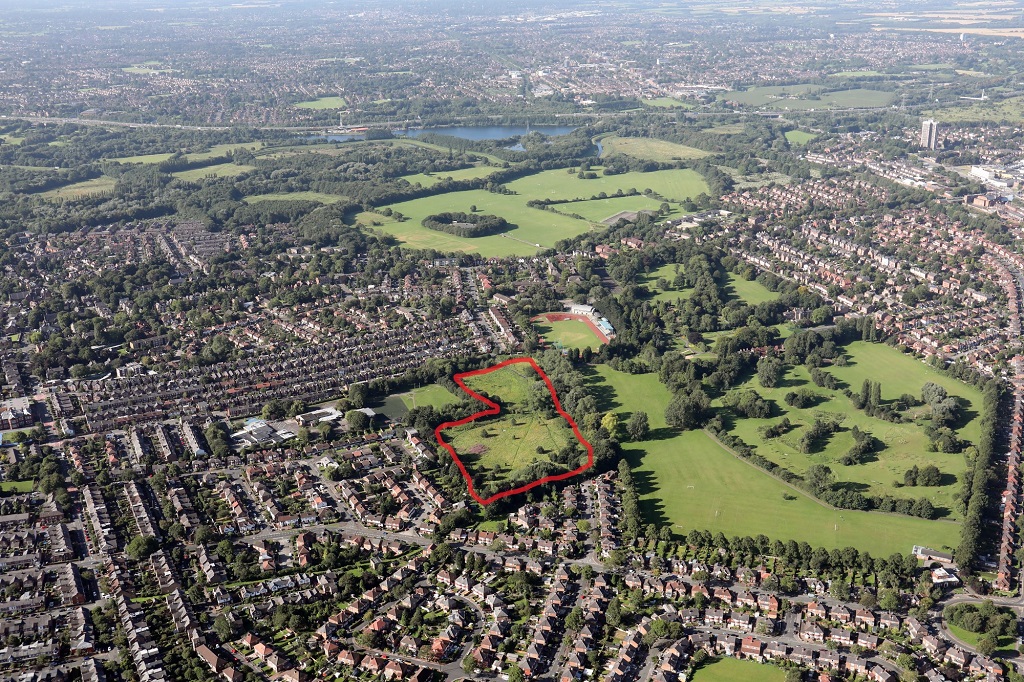
A group of campaigners has tabled an alternative proposal for the 10-acre Chorlton site that Step Places and Southway Housing want to redevelop into a contentious residential scheme.
Plans to redevelop Ryebank Fields, located on the border of Manchester and Trafford, were controversial even before landowner Manchester Metropolitan University appointed Step Places and Southway as development partners.
The land is a re-wilded former landfill site and is used by locals as an incidental green space.
As a result, opposition to the loss of this amenity has been vociferous. A protest group that has received support from Extinction Rebellion has decried proposals to build homes on the site, claiming the plans would ‘decimate’ and important community asset.
It is the group’s view that Ryebank Fields should remain undeveloped and open to the public.
In the face of opposition, Step Places and Southway Housing, in partnership with MMU, submitted plans for their 120-home project in February.
The homes, designed by 5plus Architects, would be built to Passivhaus standards and 35% of them would be affordable.
The project is yet to be determined by Manchester City Council and the local authority has now validated the application from Ryebank Fields Community Group for an alternative proposal.
The group’s plans propose no development at all and would seek to preserve the land as a community woodland.
The application can be viewed using reference number 143413/FO/2025 on Manchester City Council’s planning portal.
That the community group does not own the site puts it at an obvious and possibly insurmountable disadvantage when it comes to having its plans determined.
However, the group is prepared to take the matter all the way to the High Court in a bid to block the redevelopment of Ryebank Fields.
Rhetta Moran, chair of Ryebank Fields Community Group, said: “The community response to our consultation is overwhelming and shows the strength of feeling against development is extraordinarily strong as it has been for many years.
“We are determined to fight every step of the way to protect our fields. We are in a biodiversity crisis, and we must seek to retain any existing areas of natural green spaces, especially in urban areas.”
There is a precedent for success for this sort of movement. In 2020, after a 25-year campaign, a community group in Scotland secured land that Glasgow City Council had planned to build houses on and preserved it as a space for the community.
In that case, the city council took the unusual step of approving plans for two applications – a 60-home project and the campaign group’s plans – before ultimately transferring the land to the community group.
In the case of Ryebank Fields, where the land is not publicly owned, the alternative application will serve at the very least to heap more pressure on the team behind the housing plan, whose application has been objected to by United Utilities.
The Environment Agency, another statutory consultee, has advised that a more comprehensive package of remediation be carried out.
The project team behind the Ryebank Fields said: “Our plans for a vibrant and sustainable community will provide much needed new affordable homes, including age-friendly housing and specially designed apartments for young adults with autistic needs.
“We take the site’s history seriously. Any proposals must demonstrate safe and effective remediation of historic contamination, and our planning application sets out a detailed, transparent approach to achieving this.
“Our plans will retain significant parkland, enhance ecological habitats, and create new pathways and spaces for public enjoyment. Our goal is to strike the right balance between cleaning up a site known to contain contaminants, providing homes for local people, and enhancing the natural environment so that Ryebank Fields can be enjoyed by the community for years to come.”
To learn more about the housing plans, search for reference number 142223/FO/2025 on Manchester City Council’s planning portal.
Asteer Planning is advising on planning matters. The project team includes TPM Landscape, SK Transport, Walker Sime, Urban Green, Phi Low Carbon, and Ridge.