



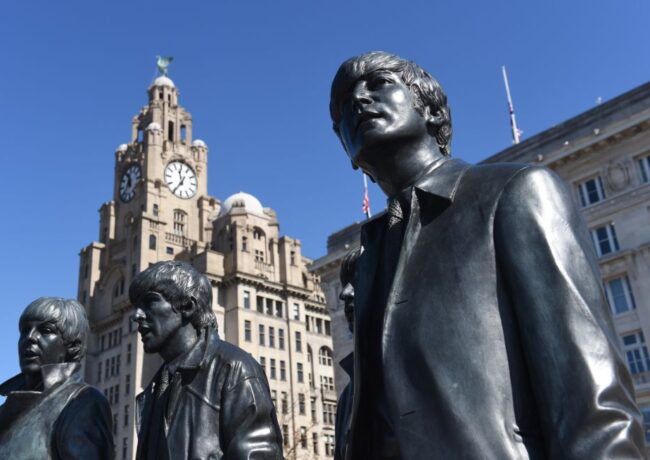
Liverpool is no longer a World Heritage Site
After a secret ballot vote, Unesco formally stripped the city of its World Heritage status on 21 July.
The city and its waterfront had been a World Heritage Site since 2004. The 340-acre World Heritage Site included the Three Graces, Albert Dock, the Stanley Dock and Duke Street conservation areas, as well as the city’s commercial and cultural quarters. Unesco had warned the city was at risk of losing its status in 2012, when the organisation put the city on its “endangered” list.
Unesco cited the development at Liverpool Waters by Peel L&P as a key reason for the decision. That includes the plans for an Everton FC stadium at Bramley-Moore Dock. Unesco said that the £5bn Peel regeneration project would “irreversibly damage” the site.
Chris Capes, director of development for Peel L&P’s Liverpool Waters, said the Unesco decision was “very disappointing”, but the development work going on in Liverpool is important.
“Regeneration for this part of the city is vital and, like our partners across the city region, we are focused on delivering it – creating new homes, commercial space, amenities, public realm, leisure facilities and key infrastructure on previously disused brownfield land,” Capes said.
“We will show the world that regeneration and the protection of Liverpool’s heritage can happen together.”
Paul Cherpeau, chief executive of Liverpool Chamber of Commerce, called losing the World Heritage status a “glancing blow,” but said it is unlikely that it will significantly undermine the city’s visitor economy.
“We must move forward with confidence to pursue projects which will further strengthen our economic future without diluting our illustrious past,” he said.
Cherpeau did admit disappointment over the decision.
“It would of course be better for Liverpool to retain World Heritage Status, but not at the expense of developing our city for the benefit of future generations,” he said.
“Liverpool has wonderful heritage assets and huge potential for growth; those two opportunities can co-exist in harmony and we must not try to play one off against the other,” Cherpeau continued. “It’s a shame, therefore, that UNESCO has taken this decision without further investigation.”
Steve Rotheram, Metro Mayor of Liverpool City Region said the area was still proud of its history and criticised the organisation for not delving deeper into Liverpool’s situation.
“Today’s decision by Unesco is a retrograde step that does not reflect the reality of what is happening on the ground,” Rotheram said. “Indeed, this was a decision taken on the other side of the world by people who do not appear to understand the renaissance that has taken place in recent years.
“But many of the sites cited by Unesco are in communities sorely in need of investment,” he continued. “Places like Liverpool should not be faced with the binary choice between maintaining heritage status or regenerating left-behind communities – and the wealth of jobs and opportunities that come with it. We did not want to lose our World Heritage Status, but nor could we allow it to preserve our region in aspic, while the world evolves around us.
“This is a really disappointing decision,” Rotheram said. “But I am confident that our city will remain a vibrant and attractive cultural destination and – as we rebuild from the pandemic – will continue to welcome millions of people to our city and wider city region.”
Adam Hall, director of Liverpool-based architect Falconer Chester Hall, said: “Liverpool has a big, dynamic economy that has been successfully re-structured in recent decades and I don’t think this decision will derail the city’s growth. I never saw any proof that Unesco’s accreditation, welcome as it was, was a decisive factor in the city’s booming tourism market, for example.
“Liverpool has walked a very careful middle course between conservation and regeneration based on good, modern architecture and a responsive planning regime. I have been of the view that this has worked very well and that the city is the better for it. It’s a pity that Unesco thinks differently but it’s their ball and they can take it away if they wish.
“The city still has regeneration challenges and many historic sites and buildings lend themselves well to reuse. Others, perhaps not, but the need to grow the economy and provide work have to be taken into consideration. Liverpool will continue to grow and prosper.”
Best news in ages!
By Liverpool86
Good, now they can get on and Liverpool can reach its potential to be an even greater city by looking to the future, not the past
By Birdman
Not that fussed, however Liverpool has fallen into allowing some awful building in recent years, lime street is the prime example! I just hope this doesn’t open the flood gates in ruining the water front.
By Mark
World heritage status wasn’t adding to Liverpool. Sensitive and careful development is essential to help Liverpool successfully deliver the best education, infrastructure, homes, health and wellbeing for its people and visitors.
By TJL
UNESCO clearly want to lock this working and living frontage in the past, so good riddance. Liverpool still has a great heritage and being unfettered from UNESCO is probably a blessing in disguise.
By Grumpy Old Git
Fantastic news. regeneration and the all-important new stadium is far more beneficial to the city than the listing
By Terry
Good riddance to it. We want a City that looks to its future but also recognise its past and UNESCO cannot take that from us.
By IR
Does somebody want to give me a list of developments this actually stopped? Such a big asset never fully exploited. Those celebrating should reflect
By Waste
Bad news for Liverpool
By LIV
It’s a tough one – the northern docks have massive historical significance but they’ve been rotting for decades. As a proud Liverpudlian I think there’s a happy compromise to be had and we’ll do just fine without UNESCO world heritage status.
By Stuart
This is excellent news especially for our business community and potential developers. I suspect the only people that will be disappointed will be our neighbours along the M62 as ‘‘this is now one less barrier to Liverpool competing on a level playing field with them.
By David
The best news I’ve heard all year. Bye UNESCO! Now let’s get building those skyscrapers and bring offices to Liverpool
By David
Hopefully Liverpool can look forward to bringing in some real investment from outside of the city without the shackles of Unesco and a certain tubby Mayor.
By Merseysider
David, despite the sometimes banter’ comments on here from outSide Liverpool (let’s face it , it goes both ways) I don’t think Manchester has been the problem or even UNESCO, However personally I think losing the status can only help developers make a case for building offices…that more than anything is what the city needs to attract jobs…not the only thing but it will help. Oh, and a government sympathetic to the investment needs of the North West….and good luck to all of us on that one.
By Anonymous
People are deluded if they think the asset of being a World Heritage Site is the thing that has stymied development in Liverpool. How about the recently-corrupt council, weak land values, and poor inward investment links?
But sure, blame Unesco. Huge opportunity wasted there. This isn’t positive news at all.
By Backwards
Liverpool World Heritage Site (WHS) must have been one of the biggest in the world ,covering hundreds of acres, in addition to that was a massive buffer zone, and all this resulted in a questioning of practically anything that was built in the city centre and North docks. At one stage, 2015?, WHO requested all development in and around the city centre was halted while they appraised the situation, and it was utter madness that a developing city could operate under these pressures.
It would have been far better to tightly restrict the WHS to one or two of the oldest dock quaysides and restore some of the adjacent dock buildings, as this would have adequately shown part of the history and heritage of the port, and in the meantime those interested could plainly see the importance of the role played by the Albert Dock, 3 graces , Tobacco Warehouse etc without them even being in a WHS.
By Anonymous