



Commentary
IN FOCUS | Beer and now: regenerating UK breweries
Beer is just one of many things that used to be made in or near our town and city centres.
As most of our cities grew up in the Victorian age, when the output of breweries would be transported by horse, it’s not surprising that most UK cities have or had large beer-producing sites in and near the city centre. But for the most part, they’re not brewing any more. The chances are that whatever your favourite beer is, it won’t be made in a big old redbrick complex, with add-on buildings aplenty, looming over city streets.
The UK still has large breweries of course, but big shifts in transport, storage, property prices and decades of mergers & acquisition activity in brewery ownership mean that they are found on urban fringes, like Heineken’s monster operation at Moss Side, Manchester, or in rather anonymous sites handy for the motorway network – say, Molson Coors in Tadcaster, or Carlsberg-Marston in Northampton.
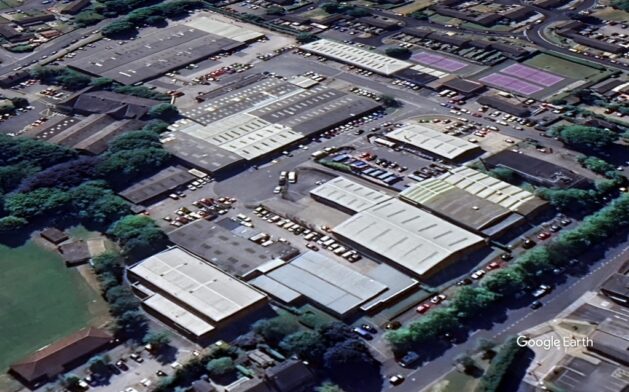
Sprawling sites like Tadcaster brewing macro-brands has been a trend for years. Credit: Google Earth
This has been going on for a long time now. The oldest redevelopment profiled below is 25 years old, while in Kendal, the Brewery Arts Centre opened in a former Vaux production facility as far back as 1972. But it’s still happening, something to which a current Capital&Centric project, Sheffield’s Cannon Brewery in Sheffield, attests.
So what is the appeal of breweries? Among the many projects regeneration veteran Andy Delaney, director at Aspinall Verdi, has advised on is Cains Brewery Village in Liverpool.
He says: “Breweries are often landmark buildings in towns and cities, familiar places where hundreds of people, and families, have made a living over several generations. They are usually large pieces of real estate on the edge of the town centre, with huge placemaking potential.”
Set against that potential are challenges – anything half-decent looking of age and scale might well be listed. These sites might not be in the post-codes that get estate agents pulse’s racing, and might not have great public transport. So viability can be a question – as at Cains in Liverpool, where Delaney advised on what over time became a story of “bottom-up regeneration,” as he puts it.
Redevelopment of breweries continues to happen. We see both complete demolition and replacement at some sites, and subtle reworking and adaptation at others. Can we learn a few lessons here?
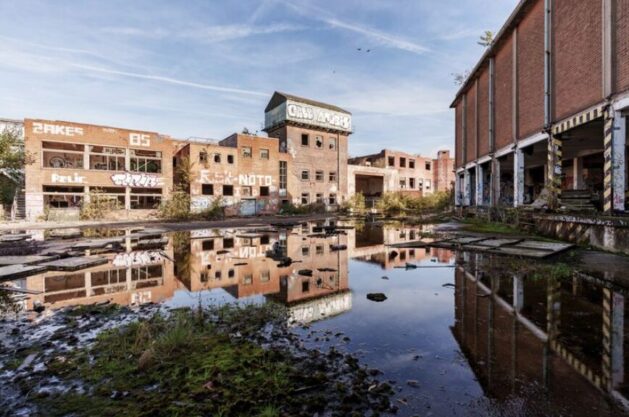
Capital&Centric wants to retain heritage aspects at Sheffield’s Cannon Brewery. Credit: via Font Comms
PAST
COOK STREET BREWERY, SALFORD
When the party stopped: 1988. Threlfall’s built this mighty redbrick brewery off Chapel Street in the 1860s, and around 100 years later, Threlfall’s merged with Chesters, before the enlarged company was taken over by Whitbread. A serial acquirer of regional brewers, Whitbread closed things down, doing the same with Liverpool-based Higsons in 1990.
What happened next: Having lain empty for a decade, Greater Manchester Property Venture Fund developed the complex in 2001 as what we know it as today, the Deva Centre. Rebadged as Deva City Office Park, it has been providing decent office space just over the border from Manchester’s core ever since, the 83,000 sq ft asset twice being traded for £10m+.
Tasting notes: Wilsons in Newton Heath – another name you may still occasionally spot on pub stonework and signage – also closed in the late 1980s, also becoming business units. Might both of these have gone over to resi with a later sale?
WALKERS, WARRINGTON
When the party stopped: Known in its later years as Tetley Walker, after its 1960 takeover by the Yorkshire business, the Dallam Lane site shut down in 1994.
What happened next: A rugby league stadium: the Halliwell Jones, which became home to Warrington Wolves following the team’s 2004 move from Wilderspool.
Tasting notes: Before the Tetley’s takeover, Walkers had been merged with Liverpool brewer Cains for a time. The world of beer M&A activity is a tangled one, and we need not overly concern ourselves with it here.
PRESENT
BODDINGTON’S, MANCHESTER
When the party stopped: Having brewed at Strangeways since 1778, Boddies sold up to Whitbread in the 1970s. Once AB Inbev took over Whitbread’s beer arm in 2000, the writing was on the wall, with production ceasing in 2004.
What happened next: What didn’t? Deansgate Securities, a joint venture between Manchester developers Ask and Realty Estates, bought the site in 2006, paying a reported £12m. That year, the brewer played host to what would become another well known Manchester brand, The Warehouse Project, for its debut season. The site muddled along, with surface parking and the like, And then came the credit crunch.
Before Ask quit the JV, a pre-let was agreed with Travelodge for a hotel delivered by Marcus Worthington Properties and the BP Pension Fund, subsequently sold to Orchard Street Investment Management in 2014.
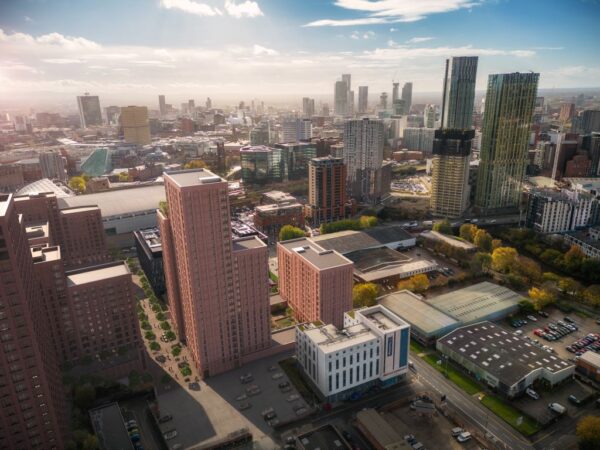
Brewery Gardens is the latest piece of the Boddingtons revamp jigsaw. Credit: Clarion
Old Brewery Gardens, a £175m, 556-apartment development, was consented in 2018, but the development vehicle that had an option to buy the site from Realty went bust in 2021. Salboy then stepped in to deliver a scheme now branded as Waterhouse Gardens.
A neighbouring plot is being taken forward by Latimer, which last summer secured Gateway 2 approval for 505 homes, four years on from acquiring its site from education group LTE. A Manchester College digital campus has also been delivered at Boddies by LTE.
It would be a stretch to say the Boddingtons redevelopment has triggered regeneration around it, but it’s happening anyway, as the expansion of Manchester/Salford city core continues, with a Strangeways regeneration framework one of the big stories of 2025.
Tasting notes: With keg production relocated to Samlesbury by InBev upon Manchester’s closure, local outfit Hydes picked up the mantle, brewing cask Boddies up until 2010. Then – nothing – until production was revived, to some fanfare, by JW Lees in 2025.
TETLEY, LEEDS
When the party stopped: It was 2008 when global beer giant Carlsberg announced the closure of brewing at the Tetley’s site to the south of Leeds city centre, with the last barrel being produced in 2011.
What happened next: There are few words more over-used than iconic, but Tetley’s has a strong case. Brewing at the site dated back to 1822, when Joshua Tetley signed a lease for a plot at Salem Place, the origin point of an operation that grew into a brewery of immense size.
The site had shrunk by 2008. Working for locally-based, heritage-forward developer Rushbond, DLA Architecture’s landscape arm masterplanned Brewery Wharf, seeing waterside land and buildings taken forward in a scheme that encompassed the former Tetley’s visitor centre.
More recent years have seen the evolution of Vastint UK’s Aire Park, a mixed-use development led by grade A offices, and in time 1,400 homes will be delivered across 24 acres, also including a park.
At the heart of this sits “the Instagram shot,” neon sign and all. The Tetley, the listed former brewery nerve centre, housed an art gallery as a meanwhile use but as of 2023 has been subsumed into Vastint’s ownership. For now, Kirkstall Brewery runs a popular bar operation and brewing heritage attraction, but more lasting change is afoot.
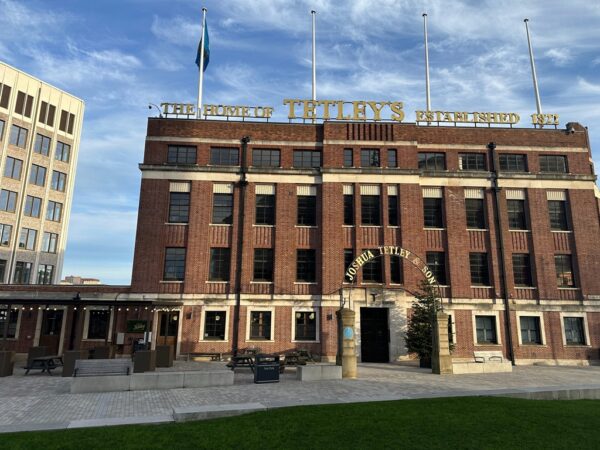
December saw approval for an overhaul, designed by Supervene and Enjoy Design, which will see the replacement of the single storey extension north of the building with a new two-storey extension with roof terrace.
The basement, which previously connected the building with the wider brewery site, will be made open to the public for the first time, the ground floor will be used as a market hall space, and the upper floors have been earmarked for event space and 13,000 sq ft of office space.
Tasting notes: Carlsberg shifted production of Tetley’s smoothflow bitter to its sites in Wolverhampton, Hartlepool and, inevitably, Tadcaster, although Leeds Brewery (since taken over by Kirkstall Brewery) struck a deal in 2018 to brew a special Tetley’s beer for the hand-pulled hardcore.
SCOTTISH & NEWCASTLE TYNE BREWERY, NEWCASTLE
When the party stopped: The Helix site is a microcosm of Newcastle history and culture: once a coal mine, later occupied by a sprawling S&N Breweries complex until closure in 2005.
What happened next: The Science Central masterplan was Newcastle’s vision to replace the former Tyne brewery with 500,000 sq ft of office & research space and 450 homes. Since rebranded as Helix, the site has seen successful commercial development, with grade A offices Lumen and Spark, together with the life science-focused Biosphere. In 2023 Newcastle City Council’s development partner Legal & General submitted plans for 320 homes across twin towers of 28 and 18 storeys. December 2024 saw permission granted for Vastint to build a Marriott Tribute hotel, while in late 2025 Downing secured Gateway 2 approval for a 400-bedspace PBSA scheme.

SimpsonHaugh designed Downing’s Heber Street scheme. Credit: via Influential
Tasting notes: S&N’s UK operations and brands were divvied up by the Carlsberg and Heineken empires in 2008. Heineken picked up Newcastle Brown Ale.
CAINS, LIVERPOOL
When the party stopped: In a literal sense, Cains Brewery Village is party central nowadays, but not in brewing. Production at any sort of scale stopped in around 2013 at the whopping 1850s-built Stanhope Street site.
What happened next: The Dusanj brothers bought Cains in 2002, with the early years witnessing much talk of brewing heritage and pub investment. Things soon went south. By 2013, the site was being put forward as Cains Brewery Village, a mixed-use project.
At that point, the included a 94-bed boutique hotel, a four-screen arthouse cinema, and 700+ homes. But big-time developers couldn’t be swayed by what still felt like a risky proposition. So the team sought a more local solution.
Aspinall Verdi’s Delaney says: “Flexibility and entrepreneurialism have been key. There was interest in the scheme from potential development partners, but the numbers would not stack up sufficiently for a deal to be struck. The time wasn’t right for big business, but the attractiveness of the building, the location, the flexibility of the estate management and a coming together of like-minded people saw a ‘bottom up’ transformation from abandonment to a thriving incubator for creatives and leisure businesses.
“Ghetto Golf, Bongo’s Bingo, Baltic Market, Ryde, Northern Lights, Red Brick Market and Punch Tarmey’s all made their name on the site and have seen their brands grow regionally, nationally and internationally.”
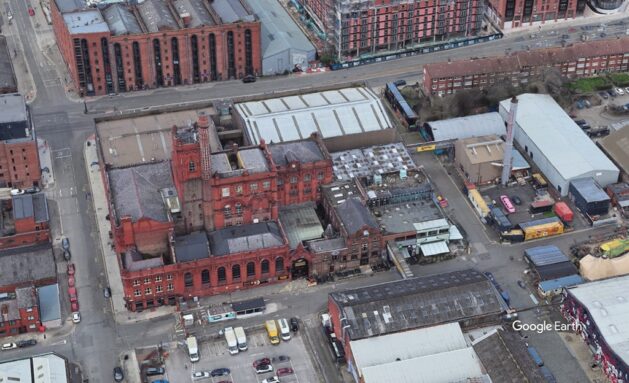
Different attractions are in different parts of the sprawling Cains complex. Credit: Google Earth
Whereas at the outset Cains was seen as “risky Toxteth,” as Liverpool’s leisure economy boomed, nowadays it is at the centre of things in a flourishing Baltic Quarter. Boxpark opened its first location outside London at the scheme, while plans emerged this year for a 56-bed shipping container hotel called Snoozebox.
And Cains has had a knock-on effect. Delaney says: “The destination’s huge success has also helped make a persuasive economic case for the transformative new Liverpool Baltic train station, located directly west of the brewery. Whilst apartments have not yet been developed on the site, thousands of apartments have been built in the surrounding area.” Further development seems inevitable.
Tasting notes: Plans were in motion to revive brewing Cains in 2022, by leisure entrepreneur Andrew Mikhail – owner of Punch Tarmeys – but were shelved due to legal disputes.
VAUX, SUNDERLAND
When the party stopped: Prince might have named 1999 as a big party year, but that wasn’t the case here – Vaux was sold that year to a financier, who focused on the group’s hotel business, shutting down both Vaux and its subsidiary Ward’s in Sheffield.
What happened next: An exercise in picking the wrong partners, largely. Between the city core and the River Wear, the cleared Vaux site’s potential as a regeneration flagship seemed obvious, but things got bogged down in a wrangle between urban regeneration company Sunderland Arc and Tesco, which had bought the site in the early 2000s, amidst the grocery giant’s imperial phase.
Tesco agreed to sell up in 2010, but Sunderland then threw its lot in with Carillion, leading to further stasis when the construction giant went to the wall. Momentum wasn’t really gathered until plans for a £40m sustainability-forward residential area came forward as part of the wider Riverside Sunderland masterplan.

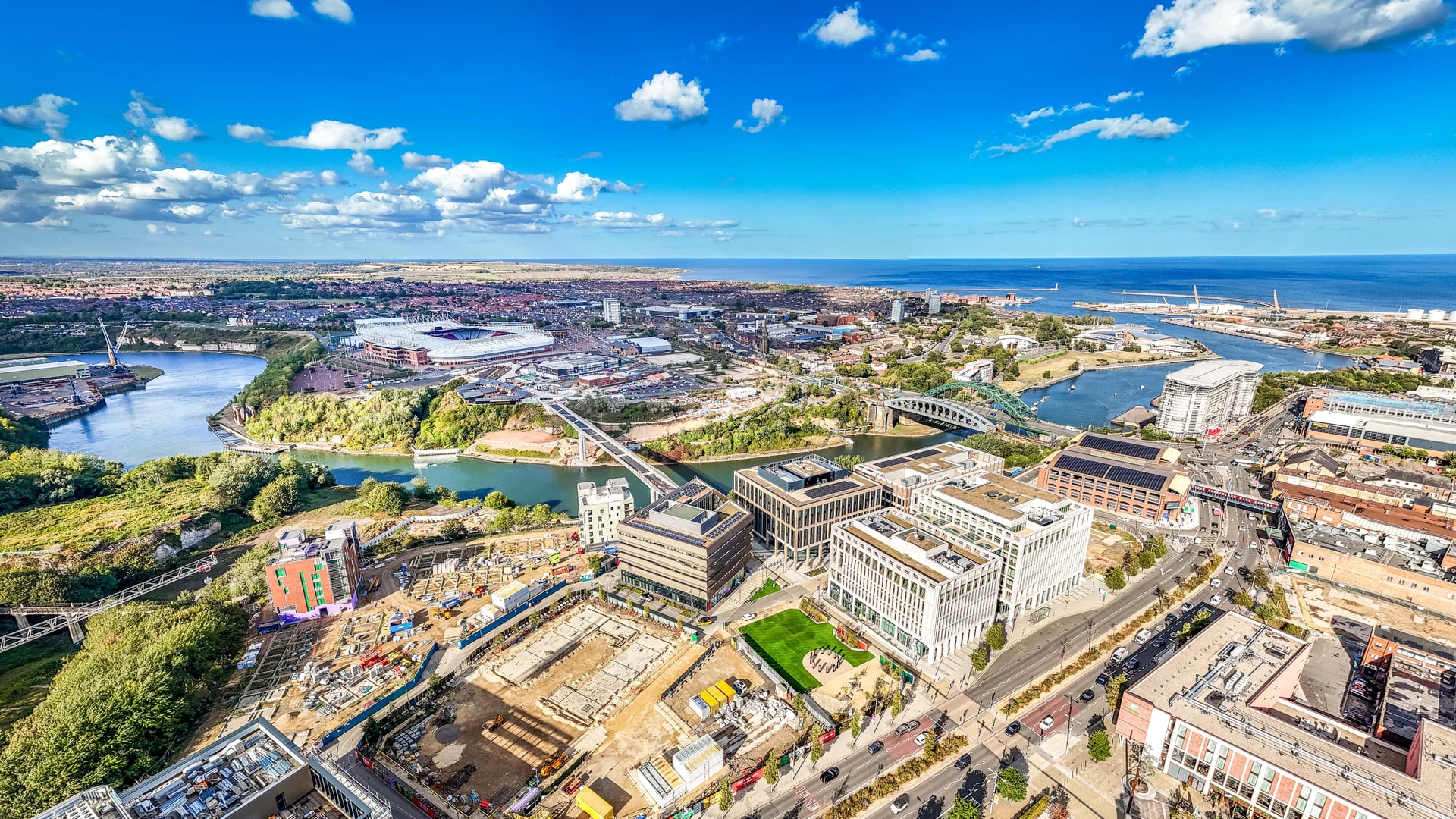
Sunderland fans travel to and from the Stadium of Light past the Vaux site over the new Keel Crossing. Credit: via Creo
Two phases have been delivered, and a third, a new eye hospital, is set to open. The first batch of homes at Vaux Housing, the residential element, are also close to being ready for occupation – a welcome sight from the city’s new Keel Crossing.
In all, the resi development tallies up to 135 homes including houses, maisonettes and apartments, with the site hosting Expo Sunderland in October 2025. Remagin, Igloo, Mawson Kerr and Proctor & Matthews have all worked with SCC.
Tasting notes: Two strands here. The Vaux brand has been revived by a craft brewer based at St Peter’s Gate just across the Wear, which is backed by George Clarke. Former Vaux brewers at Maxim in Houghton meanwhile, continue to deliver more traditional Vaux styles.
HARDY & HANSON’S, NOTTINGHAM
When the party stopped: Built in Kimberley in 1832, the site had been a major employer before it was sold to Greene King in 2006, with operations shutting down five years later.
What happened next: This redevelopment has been a tricky one. Housebuilder Fairgrove Homes started work on redeveloping the site in 2015, but a decade on is still to complete the project, although some people are now residents at Brewery Yard. However, some have fallen out with the developer over its plans to auction off the historic brewery tower, consented for three homes, to another party to deliver.
Tasting notes: In a nod to Notts, a one-time brewing powerhouse, Greene King still brews Olde Trip, a well-regarded bitter.
FUTURE
CANNON BREWERY, SHEFFIELD
When the party stopped: Until 1998, Cannon Brewery in Neepsend was the home of Stones bitter, perhaps best remembered for its orange and black branding and a string of TV commercials with utterly cringeworthy puns.
What happened next: For a long time, nothing. But with the site having lain empty for 20 years, Manchester-headquartered Capital&Centric took up the challenge in a city it has found a taste for, having delivered at Eyewitness Works.
Summer 2024 saw plans approved for a 550-home development project, with South Yorkshire Mayoral Combined Authority stumping up £11.75m from its Brownfield Housing Fund to support the scheme. Diggers arrived to kick things off in August 2025.

The Cannon site is a complex one. Credit: via Font Comms
Working with architect shedkm, C&C intends to blend new-build blocks with origin buildings at the 4.2-acre site. As reported by Place Yorkshire here, the plans include converting the brew house to 20,000 sq ft of workspace and overhauling the site’s water tower, a slender, three-storey brick block dating to around 1900, for residential and community uses. The tallest new-build will be a gateway 18-storey tower.
Tasting notes: Molson Coors did a deal with True North Brew Co in 2022, allowing the local operator to produce cask Stones bitter, providing something of a return for what was reportedly the UK’s top-selling bitter of the 1960s and 1970s. You’ll find it on several Sheffield bars.
FEDERATION BREWERY, GATESHEAD
When the party stopped: Federation had only moved from central Newcastle as recently as 1980, and was then subsumed into the S&N empire. Production of Newcastle Brown Ale ceased at the site in 2010, with buildings coming down in 2013.
What happened next: This summer, Gateshead Council’s planning committee unanimously approved proposals from Topgolf to redevelop the Metrocentre-adjacent site in a £40m project. Playing perfectly into the trend to add leisure attractions alongside retail – and fleshing out the food & beverage offer has been a key push for Metrocentre in the last few years – the plan is for a three-storey leisure facility with 102 hitting bays, a bar and restaurant, and rooftop terrace.
Tasting notes: Newcastle Brown Ale, like many other popular brands, is now primarily brewed at Heineken’s Tadcaster brewing megalopolis in North Yorkshire.
ROBINSON’S, STOCKPORT
When the party stopped: In 2022, the 180-year old brewing and pub group, still family-owned, announced that it would close the historic Unicorn Brewery at Lower Hillgate, shifting everything out to the firm’s much larger site in Bredbury. The move is expected to be completed in 2027 or 2028.
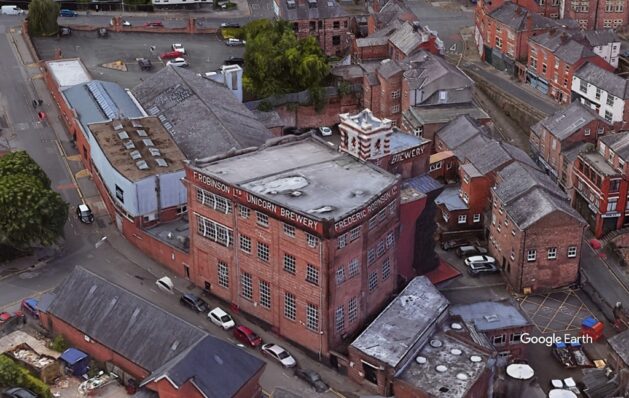
Could the Unicorn site play into Stockport’s town centre living boom? Credit: Google Earth
What happened next: The current generation of Robinsons at the helm of the family firm has done much to modernise pubs, branding, flavours and overall vibes across what remains a hefty estate of 250+ pubs.
Simply put, the Unicorn site is impossible to expand, is hard to reach, and must cost a fortune to maintain, given its age. Redevelopment surely awaits in a town centre famously enjoying a boom period with residential and leisure on the up. Recent years had seen the Unicorn brewery house training and visitor centres, although much of the brewing and packaging had been taking place out at Bredbury for years.
Tasting notes: Robbies is still going strong, with more modern styles introduced in recent years.
BANKS’S, WOLVERHAMPTON
When the party stopped: Just last year. Carlsberg Marston’s Brewing Company had announced in October 2024 that it would close Banks’s, a Wolverhampton institution, softening the blow by promising investment in its Burton-upon-Trent and Northampton sites.
What happened next: A new business, Carlsberg Britvic, was formed when CMBC sold off its UK brewing arm, and in September work started on a 222,000 sq ft unit at the £2n West Midlands Interchange. The site should be operational in late 2026.
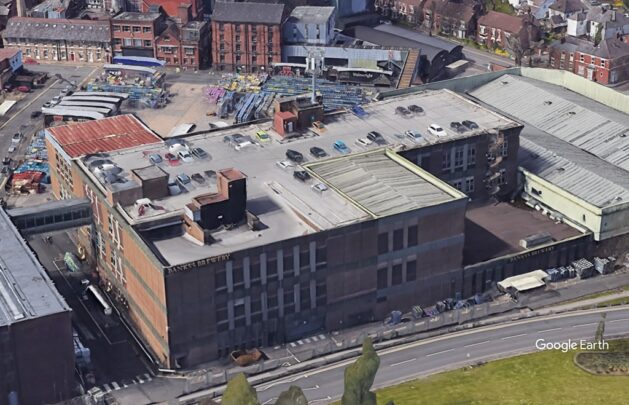
As for the site in Chapel Ash on the western edge of the city centre, the last Banks’s beer was produced in September 2025, bringing to a close a story that started in 1875. The city council is aware of the regeneration potential here, as chief executive Tim Johnson told Place. The brewing giant’s Burton site has taken over production.
Tasting notes: Business as usual for what is described as the largest multi-beverage supplier in the UK, with brands including Kronenbourg 1664, Angelo Poretti, Brooklyn, Erdinger and J20, along with various real ale brands.
BASS/BREWERY QUARTER, BURTON-UPON-TRENT
When the party stopped: It’s been a gradual fall from grace for Burton, the mothership of British ale, but Molson Coors, one of the few remaining global giants following decades of M&A in brewing, sold off its HQ in the town to the council for £5.2m in 2022.
What happened next: Plans were lodged in October 2025 for the Brewery Quarter, a mixed-use scheme off the high street which could see the Carling House offices turned into a hotel, with a new visitor centre planned for the employee car park. The famous water tower will be redeveloped, with a rooftop viewing platform overlooking a new public square to the rear of Bass House, which will also become a heritage attraction combined with a Loungers cafe bar.
Tasting notes: Among real ale veterans and hip newbies alike, draught Bass has very much made a comeback. The red triangle will be appearing in a pub near you soon, if it hasn’t already.

Approval is in place for a brewing heritage-led regeneration scheme. Credit: Franklin Ellis
THWAITES, BLACKBURN
When the party stopped: The Star brewery on Penny Street closed in 2018, with the main buildings demolished in 2020.
What happened next: With a revamped brewery site set to be a critical element of Blackburn’s £250m town centre masterplan, a lot of sitting around waiting for Morrison’s to make up their mind took place – the supermarket group was long inked in to anchor the site’s redevelopment, replacing its 97,000 sq ft Railway Road store, which would be replaced by residential.
However, Morrison’s pulled the plug on that project in March 2024. Six months later, Blackburn with Darwen Council bought out partner Maple Grove Developments for £1.6m at the brewery site. However, in late 2025 it was announced that MGD – a regular partner, and one working with the local authority on a nearby innovation campus – has a 12-month period of exclusivity on the site. Mixed-use is the likely way forward, it is understood.
Tasting notes: Thwaites moved lock, stock and barrel out to the Ribble Valley, with a reshaped business now majoring on the company’s inns and hotels. The beer division as it stood, featuring the big-hitting Wainwright and Lancaster Bomber brands, was sold for £25m to Marston’s in 2015.
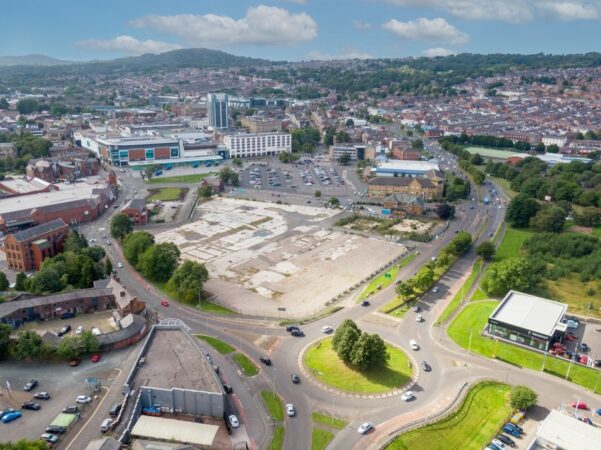
Can development become a reality in 2026? Credit: Blackburn with Darwen Council
The future potential of the Heineken site is massive, it’s huge!
By Will
You could add the the future section the former Mitchell’s Brewery site on Brewery Lane, located within Lancaster’s Canal Quarter. How far in the future though as the Canal Quarter progresses at a glacial pace.
By Dom
I’ve been surprised to see how much continued development is going on at the Heineken factory in Moss Side. When they decide to shift that out of the city centre, that site is an incredibly opportunity for all sorts of uses.
By Anonymous
The Carlsberg development in Copenhagen is worth any PNW reader a site visit/bespecled holiday. Redevelopment done properly
By The Elephant Man (not that one).
Joseph Holt worth a mention – in the same place for 150 years and plans to expand their site, including some visitor element / tap room. Hope it happens.
By Anonymous
fabulous article, but a depressing read non the less. I will never forgive Whitbread for what they did to Boddingtons, it was just before the real ale revival too so it could have been saved
By Anonymous