




Commentary
Factory-first construction needs factory-first skills
If Greater Manchester wants Modern Methods of Construction to accelerate housing delivery, the industry must rethink how it trains its workforce, argues Angela Mansell of Mansell Building Solutions.
Across boroughs such as Oldham, Rochdale and Salford, regeneration is gathering pace and tens of thousands of homes are in the pipeline. Yet as delivery models look to Modern Methods of Construction (MMC) as a solution, a hard truth is coming into focus – the industry isn’t short of intent, it’s short of the right skills.
The challenge is no longer just getting more people into construction, it’s equipping a workforce for how homes are designed, manufactured and assembled. Factory-led construction demands precision, co-ordination and a fundamentally different mindset.
Put simply, factory-first delivery needs factory-first skills, and, without them, MMC simply won’t deliver.
MMC is changing how buildings are delivered
Factory-led construction is reshaping the way homes are built. With early engagement and disciplined design, MMC can cut delivery timelines by 20% to 60% and reduce material waste by 45% or more. Shifting key stages into controlled factory environments also tackles labour shortages while making programmes more predictable.
But the advantage is not speed. The real advantage is certainty: consistent quality, reliable schedules, and repeatable outcomes. In places like Greater Manchester, where housing must keep pace with population growth and regeneration, that certainty is critical.
The industry has to recognise that off-site construction isn’t just moving work into a factory; it creates a new delivery ecosystem. Roles now span manufacturing, logistics, digital co-ordination, and quality assurance. Production lines replace fragmented site sequencing, and process management matters as much as trade skill.
Process must drive skills
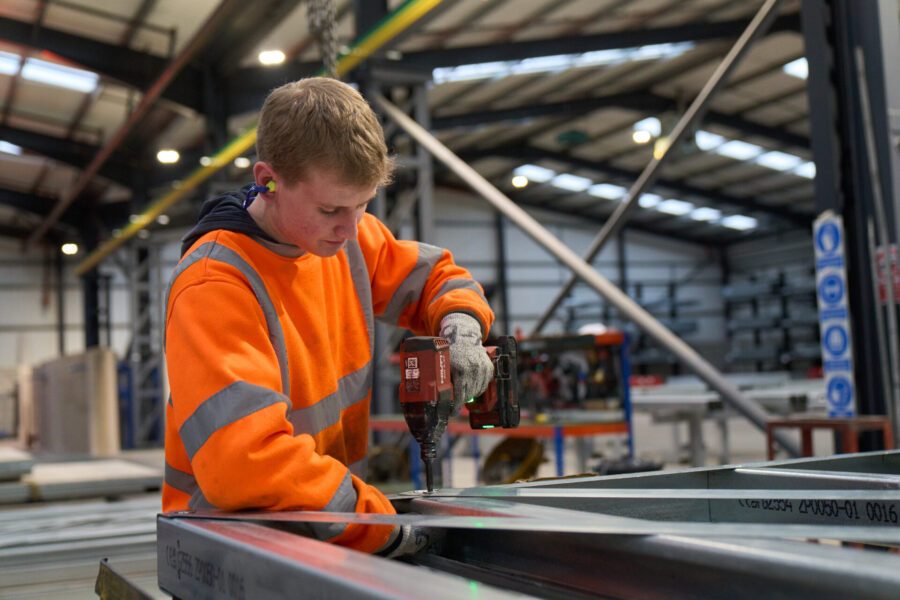
The real shift with factory-first construction is that process now drives the skills required to deliver it. For decades, construction training has been organised around traditional trades and assumptions about how buildings are assembled on site. Apprenticeships and learning pathways evolved around those structures.
MMC turns that logic on its head. In factory-led delivery, the construction process is mapped out long before work begins on site. Digital design, manufacturing sequencing and logistics planning determine how components are produced, transported and assembled.
In other words, the process comes first. Skills development must follow that process, equipping people to operate within a coordinated system rather than simply perform isolated tasks.
That means understanding how design decisions affect manufacturing tolerances, how components move through production lines, and how logistics and sequencing shape installation on site.
When training remains rooted in traditional trade silos, it risks preparing people for a delivery model that is rapidly changing. Factory-first construction requires a workforce that understands how the system works, not just how individual elements are installed.
Oldham: Leading factory-first construction
Oldham’s manufacturing heritage positions it perfectly to shape the future of construction. With Greater Manchester scaling up housing and regeneration, factory-first delivery offers a natural link between the region’s industrial past and its modern ambitions. But for that potential to be realised, skills must evolve alongside the delivery model.
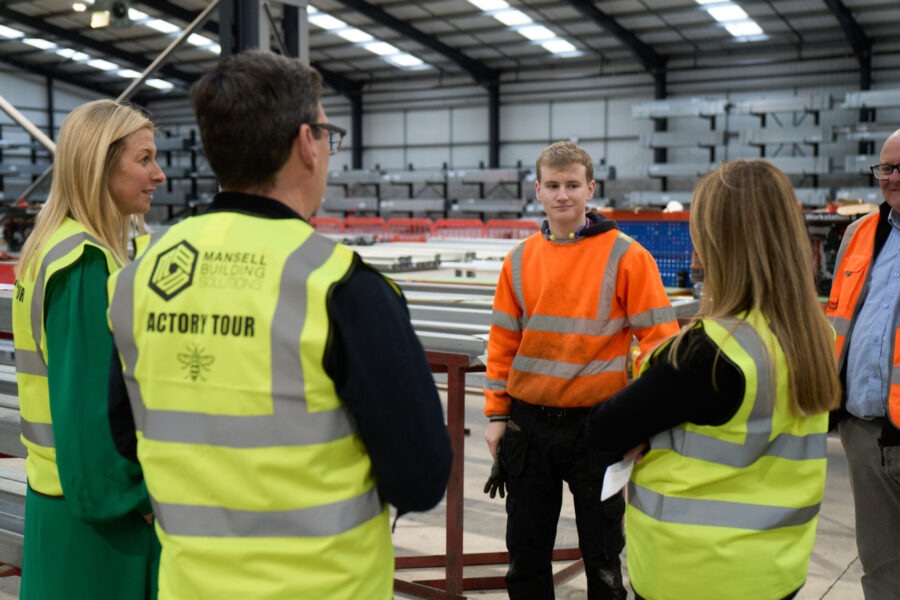
That’s the thinking behind Mansell’s new MMC Centre in Oldham. This isn’t a traditional training space, but mirrors real-world, factory-led construction processes. Trainees and project teams see how components are designed, manufactured, and assembled within a co-ordinated production system. The focus isn’t on isolated trades – it’s on understanding the end-to-end delivery process that drives high-quality MMC outcomes.
For newcomers to the industry, the centre builds understanding of precision, sequencing, and collaboration from day one. For experienced professionals, it provides a clear pathway to adapt existing skills to a factory-first context. Facilities like this won’t solve the skills challenge overnight, but they show how training can match the realities of modern construction and accelerate adoption across the region.
Apprenticeships must catch up
Apprenticeships remain a vital route into construction, but current frameworks are struggling to keep up with a factory-first delivery model. While the apprenticeship levy was designed to fund future skills, rigid standards and a 47% dropout rate show the system isn’t fully working.
Most standards still focus on traditional, site-based trades, leaving MMC roles, which combine manufacturing, digital co-ordination and integrated assembly, critically underserved. When training doesn’t reflect how projects are delivered, the impact is clear: employers can’t find the right skills, apprentices lack clear progression, and productivity gains stall.
To make MMC mainstream, apprenticeships need to evolve. Modular pathways aligned to modern roles, funding models suited to specialist contractors, and training environments that mirror factory-led processes are essential.
Mansell is already leading the way, supporting trainees in finishes like boarding and drylining, and expanding factory-based traineeships across panel manufacture and on-site assembly to create clear progression pathways.
Building a workforce ready for the future
MMC is often discussed through the lens of technology and innovation. Digital design tools, advanced manufacturing and new building systems dominate the conversation. But the determining factor will always be people.
Factory-first construction only works when the workforce is trained in the process-led methodology that underpins it. Precision, co-ordination, and collaboration cannot be bolted on later; they must be built into training from the very beginning.
Greater Manchester is one of the UK’s most ambitious regions for housing delivery and regeneration. Boroughs like Oldham have a unique opportunity to shape how homes are built. But ambition alone won’t deliver homes.
If the region wants MMC to fulfil its potential, the industry must stop designing training around historic trade structures and start designing it around the delivery processes that now define modern construction.
Housing targets are important. But they only become real homes when the delivery system behind them works.
Factory-led construction can help provide that system. But only if the industry invests just as seriously in the factory-first skills required to make it work.
- Angela Mansell is managing director of Mansell Building Solutions