Sign-off for movement-led Carlisle masterplan
Cumberland Council’s executive has given its blessing for the document to become its strategic framework for coordinating regeneration, growth and investment in the city up to 2050.
A report from the vibrant and healthy places portfolio holder went before the executive yesterday, and was approved, with priorities set out including bringing vacant buildings and brownfield sites back into use, broadening city centre activity, improving public spaces and connections, and strengthening the cultural and visitor offer.
The masterplan is non-statutory, but will complement statutory planning policy and support the Cumberland Economic and Inclusive Growth Strategy 2026–2036.
Cumberland said that approval will provide a shared basis for coordinating council and partner activity and making the case for investment, but will not commit the council to fund or deliver every proposal.
Mott MacDonald has worked with the council on the preparation of the masterplan, working between October 2025 and June 2026.
One area that is still in flux is a movement study, to be triggered shortly, which will look at the impact of the £260m Carlisle Southern Link Road – finally opened this June – on city centre through-traffic, and how changes could inform future thinking.
Another area of focus has been in how Carlisle works around its rivers, the city being divided by three – the Eden, Caldew and Petteril.
Among the city-wide proposals set out in the draft document, first and foremost is the city growth areas: those set out as priorities. This includes Kingmoor Park, St Cuthberts Garden Village, and the 64-acre Newlands employment area.
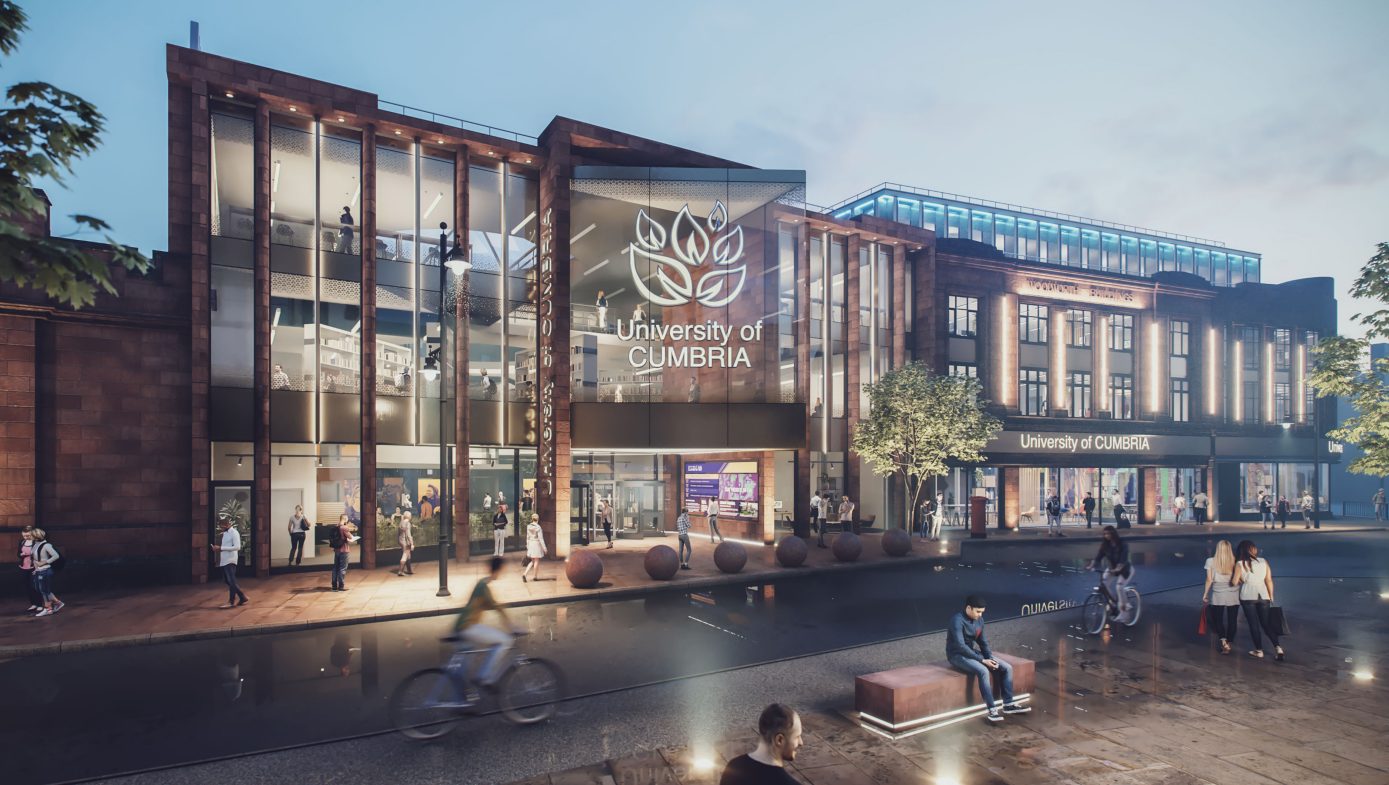
Other topics identified in the city-wide proposals are the expansion of the University of Cumbria, blue-green corridors, walking & cycling (feeding into the ricvers & parks work), and leveraging the link road. Ensuring some legacy from the upcoming visit of the Tour de France is also critical – the high-profile stage one is due to finish in the city next summer.
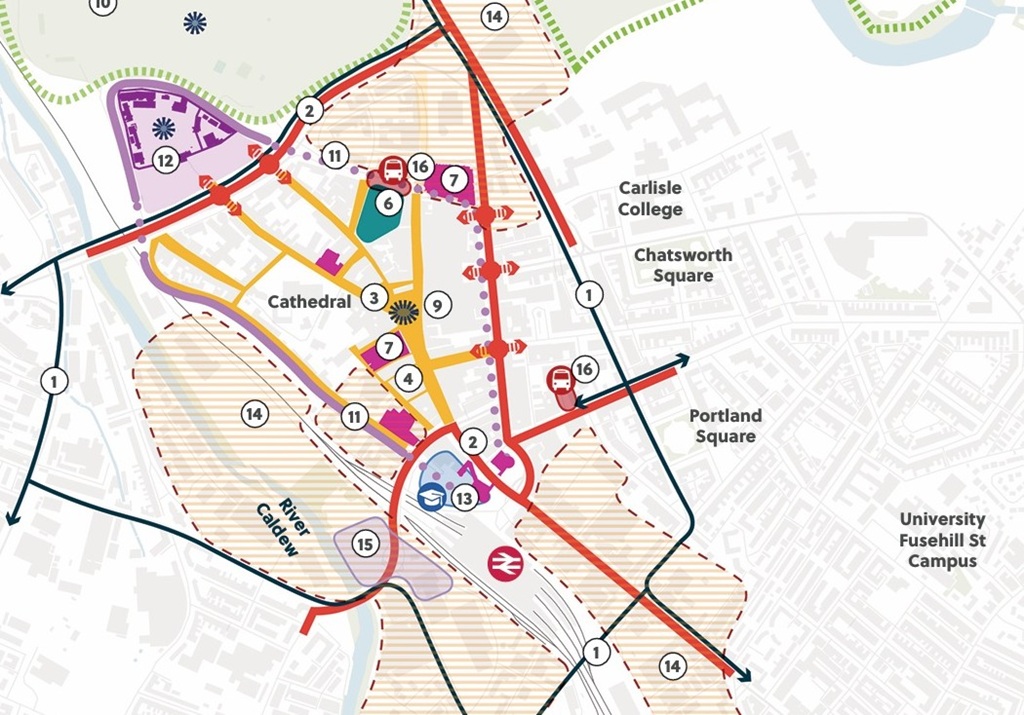
Much focus is given to the city centre, under the “primacy of the city” heading. As can be seen in recent work around the station gateway, the council is keen to encourage a low traffic city centre, with “people-first corridors” and a pedestrian core mapped out.
Another item here is “Activating the Historic Lanes” setting out the potential for animating the city’s series of alleyways.