Commentary
The North West is running out of warehouse space. Its ports can help close the gap
Anyone trying to secure Grade A industrial space in the North West this year has felt the squeeze, writes Phillip Hall of Peel Ports. The development pipeline isn’t keeping up with demand and good sites are hard to bring forward. These constraints mean prospective companies are competing for a shrinking pool of buildings, and for a region that has spent a decade selling itself as the natural home of UK logistics, this is an uncomfortable position to be in.
Thinking outside of the property market story, warehousing is also where the region’s wider ambitions are won or lost. When products can’t be stored close to where they’re needed, the broader North West construction pipeline starts to feel the strain as programmes fall behind schedule and haulage costs creep up. Urban regeneration schemes are especially exposed, with tight city centre plots having little room to lay down materials, meaning stock needs to arrive right on cue, or be stored nearby at an additional rate.
The long-term solution is to build more storage space, with years required to design, consent and deliver – made trickier by the short supply of land in the region. While this infrastructure is built out, there is capacity the market tends to overlook sitting by the water’s edge.
Port-centric warehousing holds products at the point of import, rather than transporting them inland to scarce and expensive sites. Once a cargo lands, it moves a short distance across the dock estate and into storage, waiting there until it is ready for its final destination. The result is fewer stops, reduced journey distances and less inland warehouse space tied up storing goods long before they’re required.
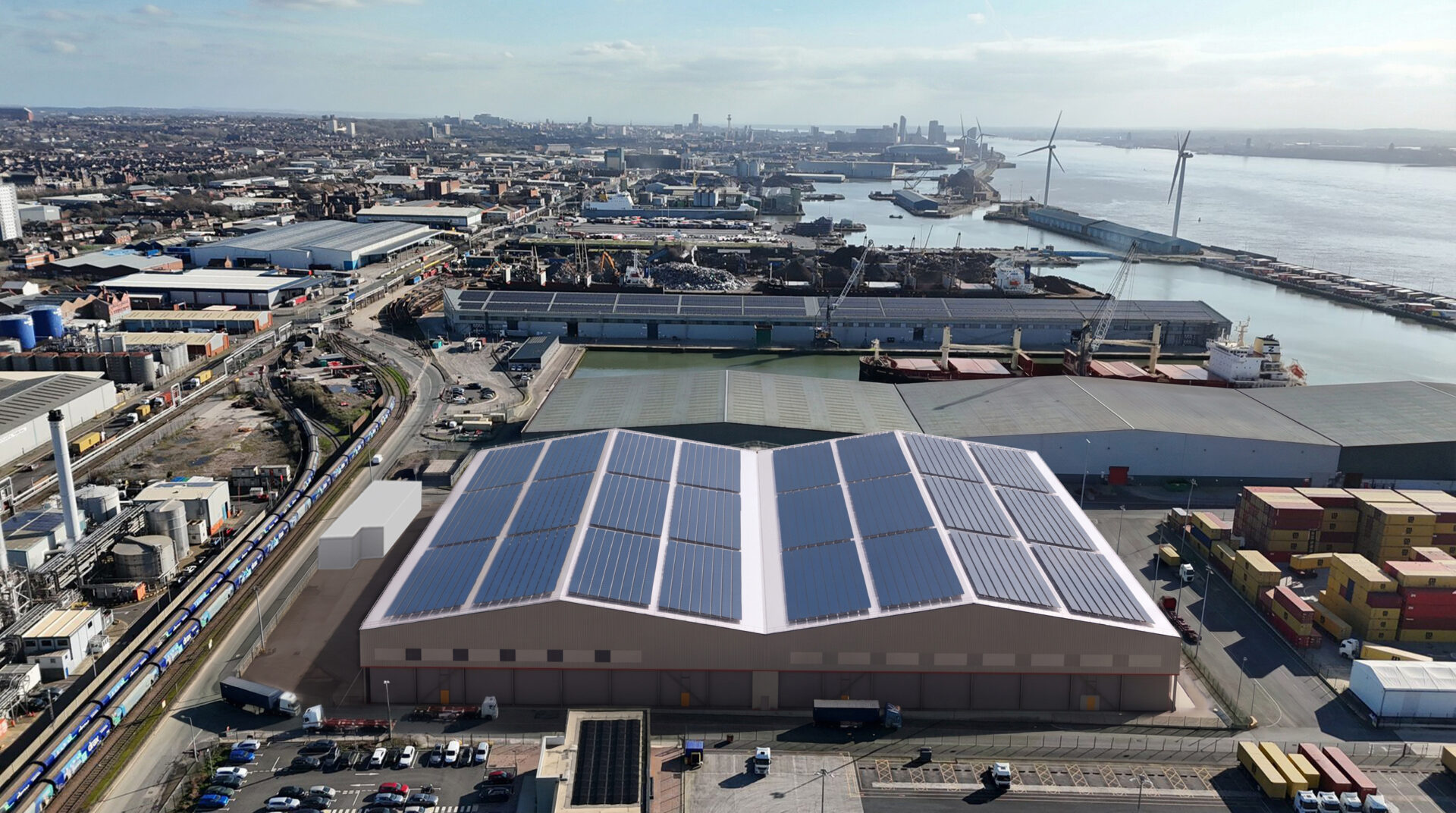
Above is a CGI illustration of a potential storage solution located on the deck estate. Credit: Peel Ports Group
Our Alexandra Dock facility in Liverpool demonstrates this capability, offering 640,000 sq ft of covered warehousing with fully traceable stock systems, bonded storage for goods held before duty is paid and deep-water berths alongside that take large cargo vessels. From there, a wide network of road, rail and coastal routes ensure it arrives where it needs to be quickly and smoothly. With fewer handling stages and goods kept on a secure, access-controlled dock estate under fully traceable systems, there is less to go wrong between ship and site.
The argument here is not that ports should replace the inland storage market, but that they can act as a buffer when it comes under strain. This buffer matters most to anyone running a construction programme. Materials that land early, are held in good condition and ready when called for will arrive when the site needs them, rather than when a stretched supply chain finally delivers. When a late delivery can hold everything else up, this certainty is worth paying for.
The North West is already backing its waterfront, as demonstrated by the Liverpool City Region Freeport. The region, which centres on the Port of Liverpool, was created to attract investment and trade towards the quayside, with customs and business rate incentives on qualifying sites, and projections of around £800m of investment and over 14,000 jobs. The freeport has already made the case that the docks can provide the necessary economic infrastructure to a region anxious about where its next usable floorspace will come from; the next step is for the logistics strategy to catch up with the ambition.
Part of achieving this involves a question of how port land is counted. Dockside estates designated for operational use can often facilitate warehousing without the longer process an untouched greenfield site demands. When the region adds up its logistics capacity, dockside floorspace is rarely counted. Recognising it as part of the industrial supply, rather than a maritime category to one side of it, would add usable storage faster than most other options in the region.
So, as warehousing capacity continues to be developed inland, it must be remembered that there is always another option for planners who need space now. The deep water, covered space and connectivity already exist on the quayside, much of it ready to go, rather than years down the line. For a region eager for growth and short of room to deliver it, there is too much capacity at hand to leave off the map.
- Phillip Hall is the Mersey Port director for Peel Ports.