Commentary
Turning public land into long-term income: how Wildstone partners with the public sector
Local authorities across the country face a familiar challenge: rising demand for services and finite budgets, writes Mike Duty of Wildstone. Part of the answer may already sit within their estates, on roadside verges, underpasses and redundant plots.
Wildstone is the world’s largest owner of outdoor media infrastructure. We acquire and lease property for outdoor advertising, and our portfolio now includes more than 5,500 out-of-home assets, from digital screens and classic paper and paste billboards to super-premium digital sites. With more than 100 employees across the UK, Ireland, Germany, the Netherlands, Spain, and Australia, we are continuously expanding and upgrading our estate.
A model built around the property owner
We have two financial models.
Firstly, to acquire existing advertising sites from the public sector on long leases. The structure we offer is a mix of an upfront capital receipt and a continuing income stream, so the council gets certainty now and still benefits from future growth in the estate, putting the funds into strategic priorities, infrastructure improvements or community investment.
Secondly, we identify and develop new advertising locations, funding the planning process and physical infrastructure before licensing the completed sites to established media operators, who
manage the advertising sales. By remaining independent of media sales, we maintain an alignment of interests with both landowners and operators, creating the foundations for long-term partnerships.
For public sector partners, that means an end-to-end service at no capital cost. We begin with a property opportunity review and free valuation, then propose terms based on either secure, ongoing and index-linked rental income or a single upfront capital payment – or even a combination of both. Our in-house team of specialists then assumes responsibility for the entire process, covering planning, all delivery and construction costs, electrical fees, business rates, alongside all servicing and maintenance throughout the contract term.
Partnerships built around public sector goals
We have worked with a wide range of public sector organisations, including Westminster City Council, Derby City Council, Salford City Council, and Transport for London. Every authority has different priorities, from funding frontline services to investing in infrastructure or engaging residents.
That is why we work closely with each partner from the outset, taking time to understand their goals and shaping a proposal around them. The following case studies demonstrate how that approach has delivered results.
Transport for London
Our partnership with Transport for London shows what the model can deliver at scale. We agreed a landmark £80m deal to acquire 13 digital advertising installations at some of the capital’s most iconic roadside locations, under a 99-year lease.
More than one million vehicles a day pass these sites. They include the Euston Road underpass, one of Europe’s busiest roads; Old Street roundabout; Chiswick Towers on the M4 towards Heathrow; Wandsworth roundabout’s distinctive superstructure; and the Leytonstone and A40 Ealing underpasses.
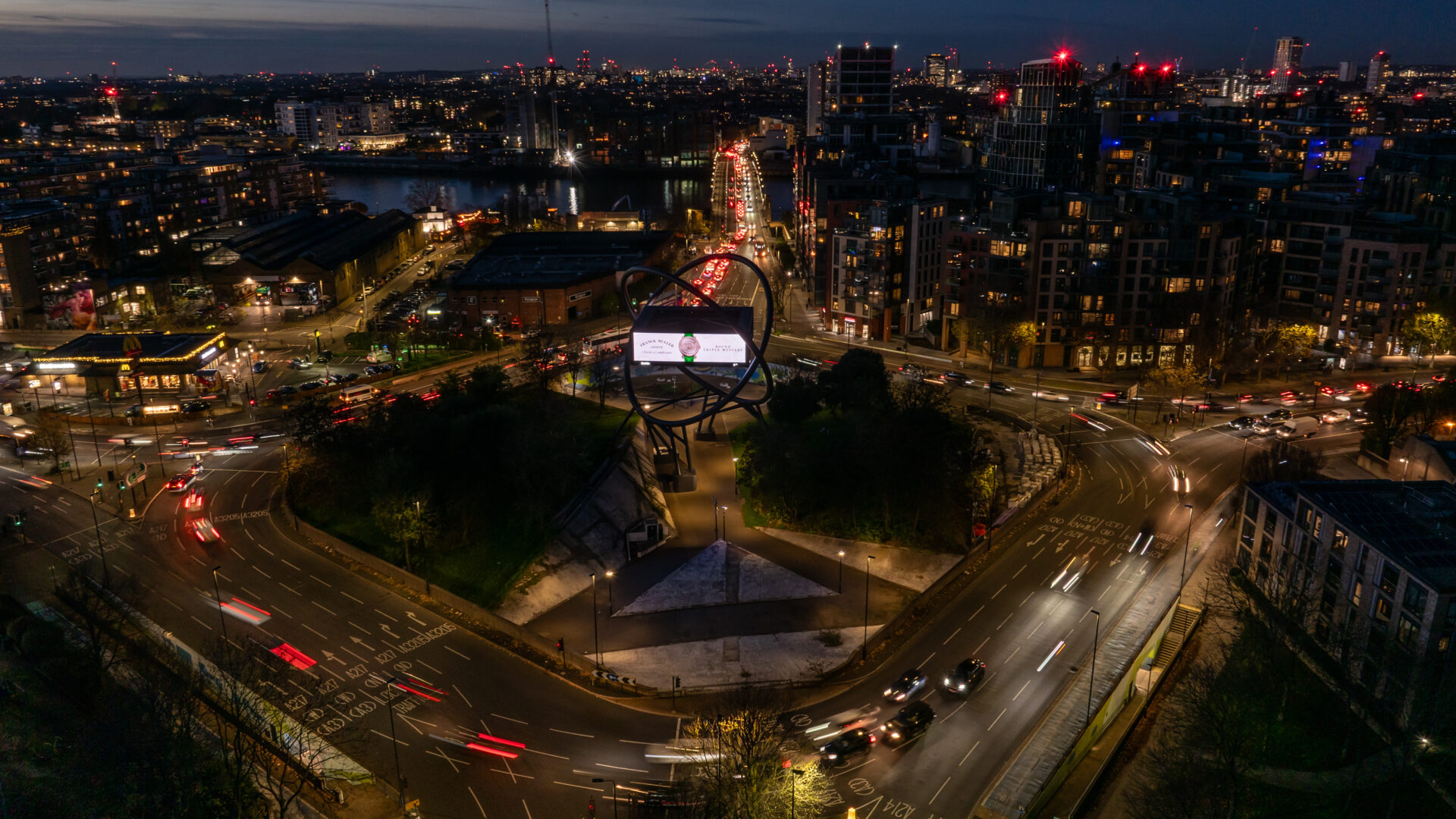
Wandsworth roundabout is an example of one of the 13 digital advertising sites acquired by Wildstone. Credit: Wildstone
For TfL, the agreement provides a significant financial boost as it diversifies its capital funding, with the proceeds reinvested in the transport network. Media sales continue through the incumbent operators, Clear Channel, Global, JCDecaux and Ocean Outdoor, while we plan further upgrades. It reflects a growing trend of public bodies using private partnerships to unlock revenue while enhancing city infrastructure.
Salford City Council
Our partnership with Salford City Council shows how the model works for a local authority. It served a dual purpose: delivering vital income for the city and giving the council a new channel to reach residents.
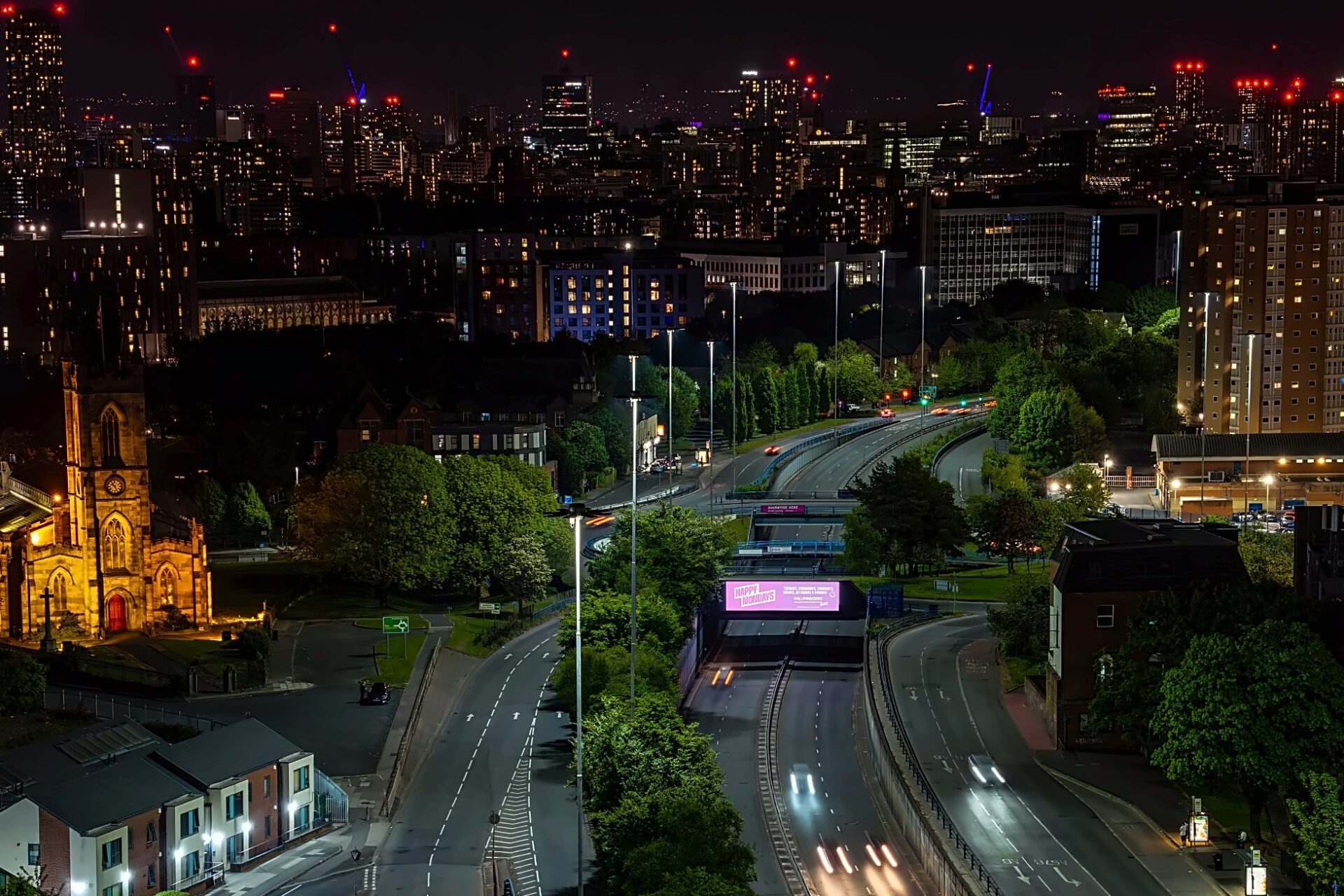
Wildstone developed seven new digital displays on redundant council land along key routes into and out of the city, including Salford’s first digital 96-sheet sites. These assets now generate significant annual rent for the council. Salford also has access to the screens at no extra cost, using them to advertise key campaigns and messages.
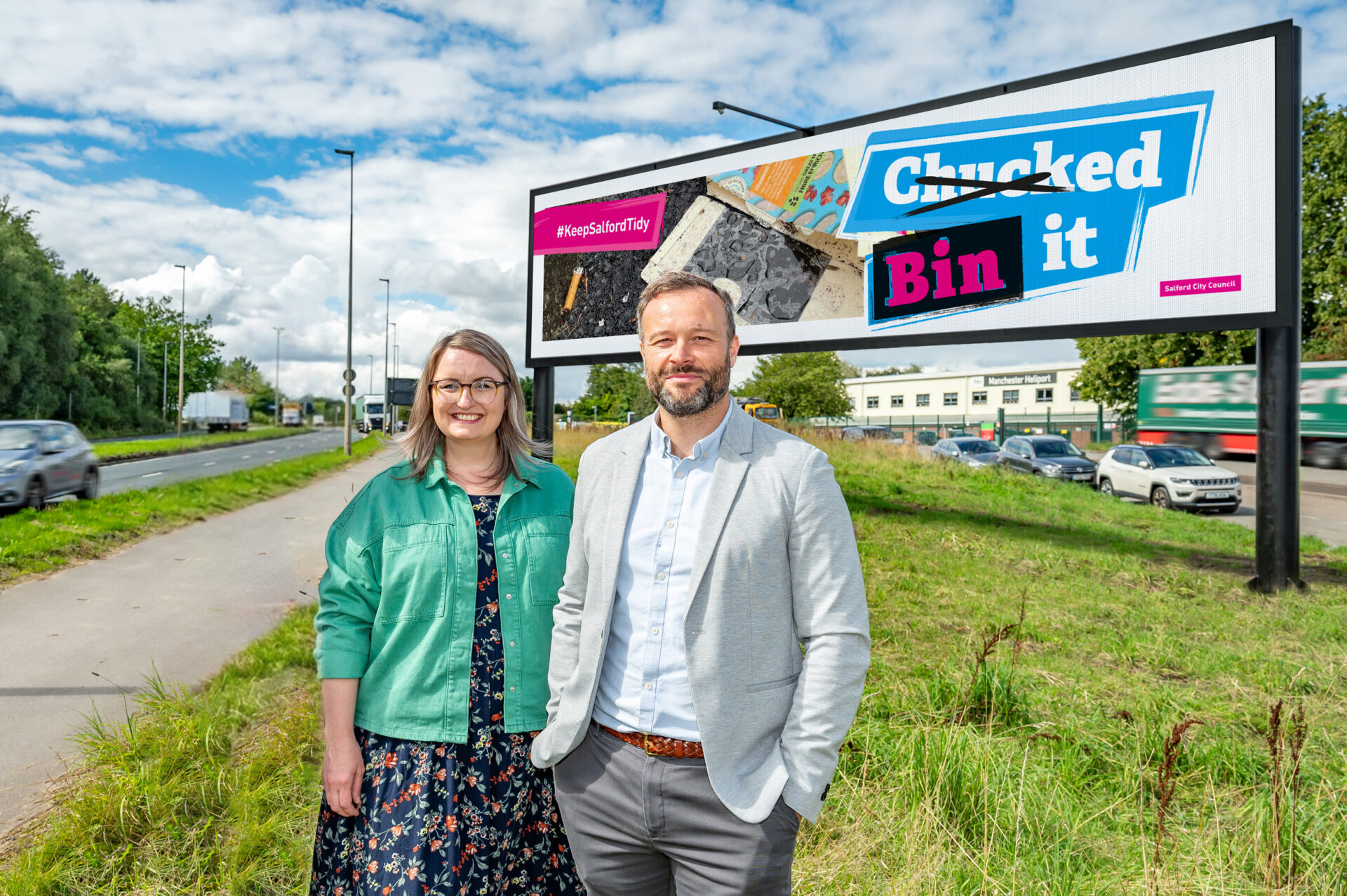
Cllr Hannah Robinson-Smith, Salford City Council and Mike Duty, Wildstone in front of new digital displays on redundant council land are generating income for Salford City Council. Credit: Wildstone
Cllr Hannah Robinson-Smith, lead member for culture, heritage, equalities, sports and leisure, said: “The Salford Underpass board enables us to share campaign activity more widely, making more residents aware of important services, support and initiatives that are available. The income generated from this partnership is also hugely important to us as a council.”
A trusted, long-term partner
Whether through a single landmark agreement or a handful of well-placed roadside sites, our partnerships show how underused public estate can become a secure, long-term income stream or deliver a substantial capital receipt. Each being delivered at no capital cost to the authority. Just as importantly, each has been shaped around what that organisation needed to achieve.
If your organisation is looking to release capital from an existing mature billboard infrastructure estate or generate additional revenue and build a trusted, long-term partnership, I would welcome a conversation.