



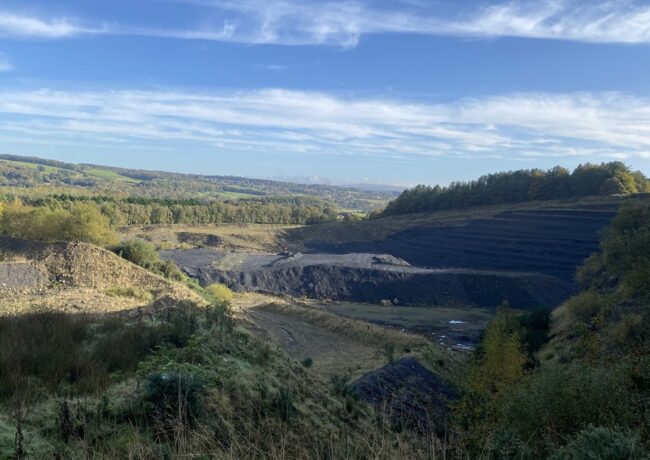
Ibstock-owned quarry to become habitat bank
Green Earth Developments Group will lead the transformation of the 73-acre West Lancashire site into meadows and woodlands where developers can invest in biodiversity net gain credits.
The Dalton Quarry site formerly provided brickshale, and will now be a protected area to promote biodiversity, spans two ‘national character areas’ in the Lancashire Coal Measures and the Lancashire and Amounderness Plain.
GEDG said the location will put it within reach of developers across a wide area from Blackpool to Chorley and south to St Helens and Knowsley.
Landowner Ibstock, the listed Leicestershire building materials provider, has agreed terms with GEDG on an arrangement that will see the latter take on a 30-year programme of habitat creation and management.
Plans for Dalton Quarry include the creation and enhancement of a wide range of habitats, including lowland meadow, open mosaic habitat, floodplain wetland mosaic and lowland mixed deciduous woodland, alongside hedgerow and watercourse units.
Early works will include remodelling the quarry floor to restore natural drainage, improving the woodland stream corridor, and beginning a grassland transition programme to establish species-rich lowland meadow across former agricultural fields.
The project will be managed under a 30-year stewardship model, with the first five years focused on habitat creation and enhancement, followed by 25 years of active management and monitoring.
The plans exceed the restoration obligations typically applied to worked mineral sites, with compliance oversight from a Natural England-approved responsible body for the full 30-year term.
Simon Towers, chairman of Green Earth Developments Group, said: “Dalton Quarry captures exactly what biodiversity net gain should be about. This is a site that helped build communities for decades through the supply of construction materials. Now it can support the next generation of development in a different way, by creating the biodiversity units projects need while delivering meaningful nature recovery at scale.
“Too often, the debate around BNG focuses on metrics and numbers. The bigger opportunity is transformation. Former mineral sites like this can become some of the most valuable environmental assets in the country when backed by long-term investment, expert management and the right ecological vision.”
GEDG will retain specialist ecological consultancy Middlemarch Environmental, part of Warwickshire Wildlife Trust, to monitor the site throughout the management period.
The firm said that an advantage the site offers is that its nutrient-poor mineral soils provide ideal conditions for species-rich grassland and open mosaic habitats, both of which are difficult to replicate on more conventional land, and are increasingly valuable within the UK’s ecological network.
Nick Spence, planning and estates manager at Ibstock, said: “Dalton Quarry has supported local communities for generations through the supply of essential building materials. Alongside this, Ibstock has built a strong track record of restoring land responsibly, often exceeding restoration obligations once quarries or land are no longer operational.
“This partnership with Green Earth builds on that foundation – enabling the land to continue playing a role in supporting local future development, while also delivering long‑term biodiversity, environmental and economic benefit.”
GEDG describes itself as a UK-based specialist in turning complex brownfield land into high-value, nature-rich biodiversity assets. A certified B Corporation, it offers over 2,500 BNG units across multiple sites.
Other GEDG habitat bank sites are at Cledford Lagoons in Cheshire East and Chapel Farm, within Blackburn with Darwen’s jurisdiction. In April, the firm announced that a former RAF airfield in Northamptonshire is its latest site to go live.
It would be nice to have seen the use of local ecologists who know the area for this scheme but i guess thats up to them.
By CW