What is Manchester’s most important building?
Readers, we want your knowledge. Join Place as we debate which single Manchester building has made the largest impact on the city over the past 100 years.
Beauty is very much in the eye of the beholder when it comes to “the best building” or what represents a superior design. A cursory glance through the Place comments section will tell you that much, every time a new residential tower’s CGIs are released.
But we think there is an interesting debate to be had around what the most important building is.
By most important, we mean the one that has contributed most to enhancing the city in its broadest sense.
This can be read in several ways, and that is what makes the subject worthy of debate.
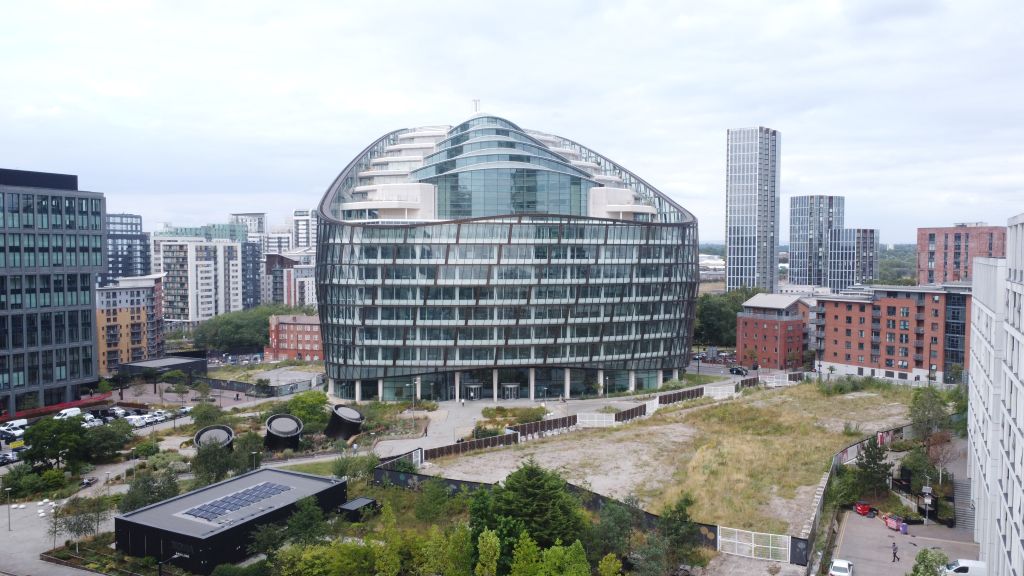
Will a case be made for the super-sustainable One Angel Square? Credit: Place North West
For some, “the most important” could simply be a matter of the bottom line, one that has contributed significantly to GDP or economic development. How much has it brought in through business rates, or how much has it been traded for?
For others, the most important could be something that blazed a trail and changed the thinking over what was thought to be deliverable for Manchester.
It could be a cultural project, something that opened up new opportunities and influenced the city’s direction.
Really, the big question is: what moved the city forwards?
We’re looking for your ideas here. Which buildings should be in the running? Let us know in the comments or by emailing [email protected] with the subject line Most Important Building. Be sure to justify your choice in the body of the email.
Just one note: the building must have been delivered in the last 100 years. That means Manchester Cathedral, Chetham’s Library, Manchester Town Hall, The Royal Exchange, and the like are off the table.
Ideas should be submitted by the end of Sunday 9 August.
We will then examine each of the contenders, making a case for why each project would make a worthy winner, and then it’s over to the voting readership.
We will launch the competition proper on 12 August, with voting open until 26 August. We will then publish the definitive, final report on 2 September.
To get the cogs whirring, we’ve got a few ideas.
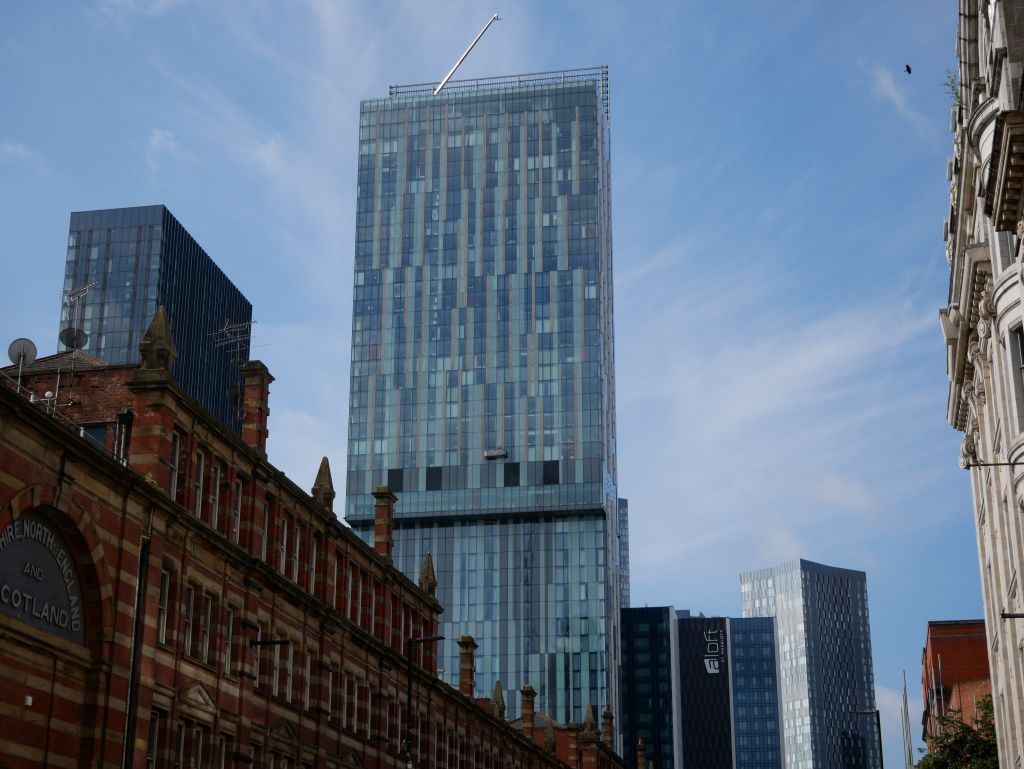
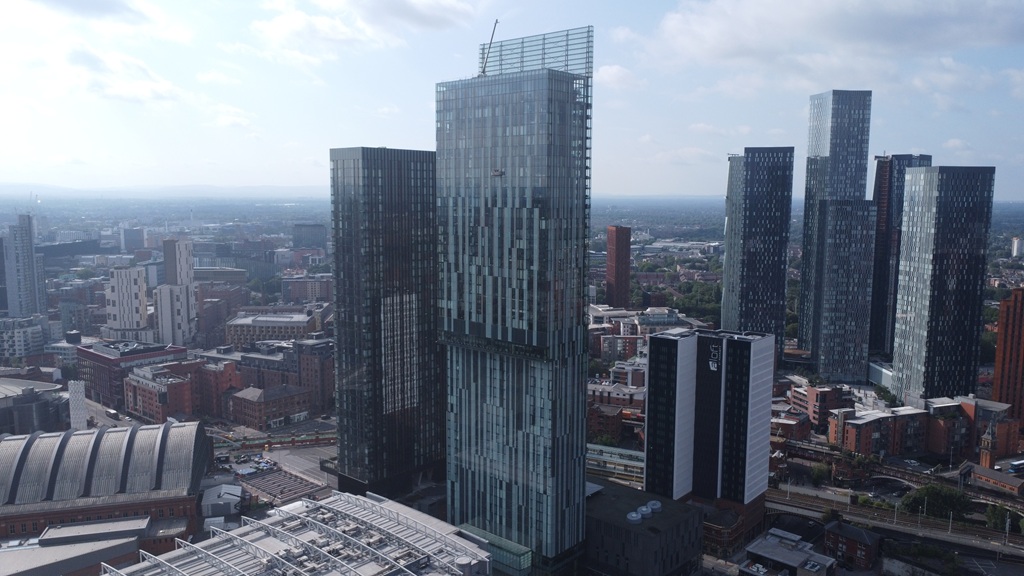
Beetham Tower was the first of its kind in Manchester. Credit: PNW
Beetham Tower
In the early 2000s, Manchester was by no means pre-eminent among regional cities, many of which were advancing skyscraper projects to signify their confidence and global outlook. Most never got further than the drawing board. Beetham Tower laid down a marker. Great Jackson Street and the Age of Renaker followed.
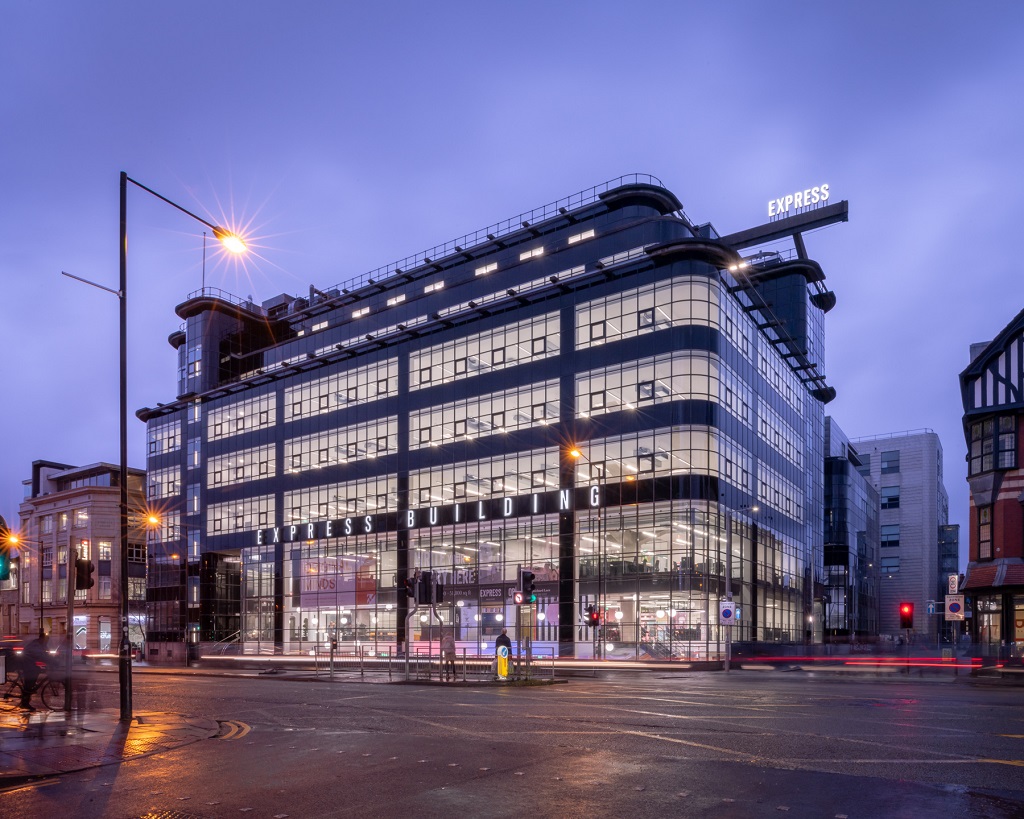
The Daily Express Building is one of the most interesting in Manchester. Credit: Jim Stephenson via RDPR
Daily Express Building
How many buildings in Manchester are genuinely “iconic” items on the must-visit list of architecture nerds? The pride of Great Ancoats Street definitely ticks that box. Now billed simply as Express after a classy makeover, it remains a visual showstopper and a totem to its environs’ publishing heritage.
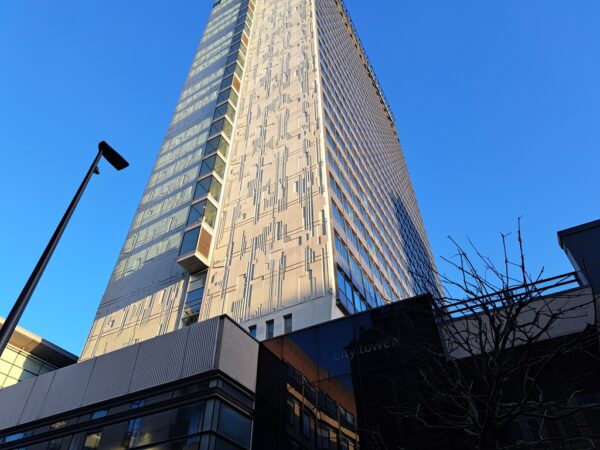
Fifty-odd and looking fine, City Tower is instantly recognisable. Credit: Place North West
City Tower
Along with its Piccadilly Plaza neighbours, the 30-storey tower overlooking Piccadilly Gardens may be the most instantly recognisable silhouette in the Mancunian built environment, certainly until Beetham. It remains a Modernist classic, subtly reinvented but still providing what remains a rare thing in the English regions – offices with a view from up high.
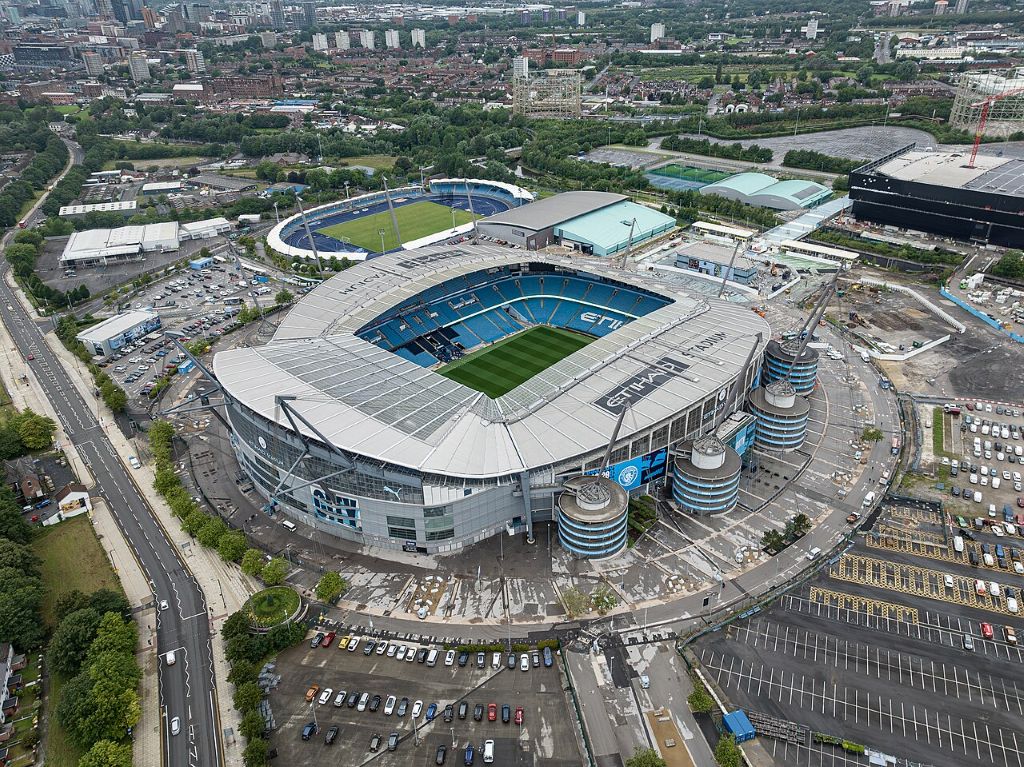
Could the Etihad be the most important building in Manchester? Credit: Photo/Map: Arne-Museler, arne-mueselerr.com; CC BY-SA 3.0 bit.ly/3Q1z4kf
City of Manchester Stadium aka The Etihad
To avoid stretching the definition too far, we’ll say the main stand, which was the nerve centre of Manchester’s 2002 Commonwealth Games. Without this event, and a creative solution to post-Games legacy that moved the historically-erratic Manchester City to Eastlands, Abu Dhabi may have spent its billions in Leeds, Newcastle or somewhere else.
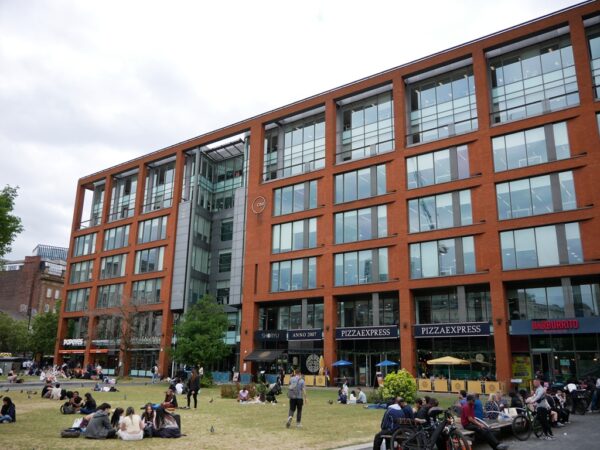
Nobody said this was a beauty contest… 1PG does the job. Credit: Place North West
One Piccadilly Gardens
You may not love the design. You may hate everything about the 21st century update of the Gardens as a whole. Buuuut… let’s go back to 2005, when the Bank of New York’s inward investment requirement was in play – Leeds, Birmingham, and others in the frame. The instant availability of 1PG, due to developers being cajoled to speculate, paid off hugely. BNY expanded to Spinningfields in 2008, and is now signed for 200,000 sq ft at Noma. This scheme triggered a 20-year success story, a blue-chip, large-scale occupier making Manchester its UK home. Cash in the bank.