


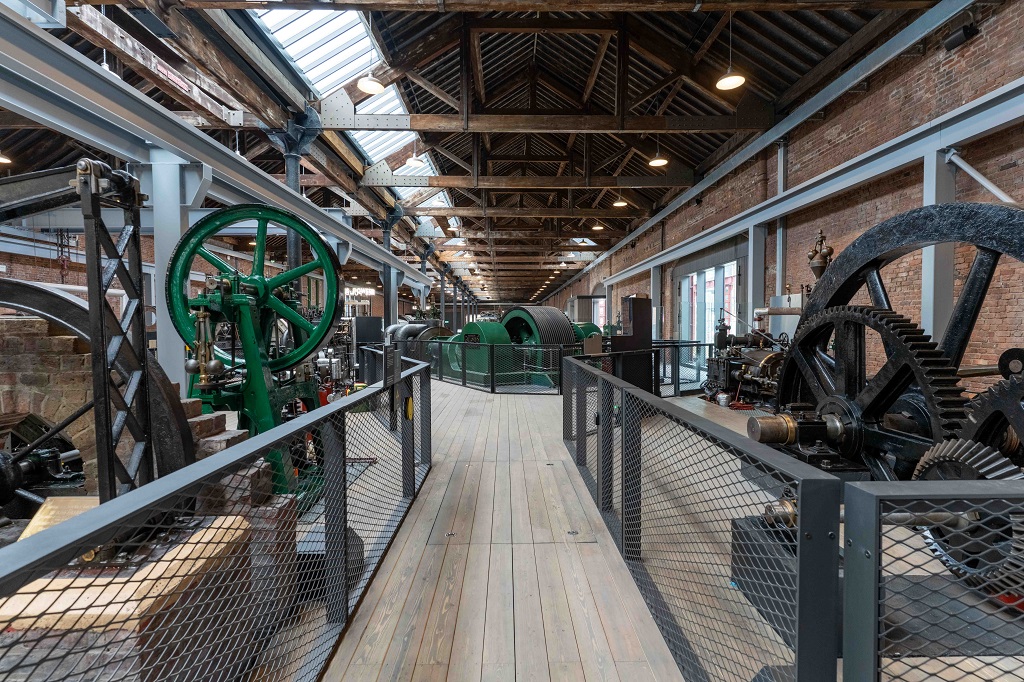
GALLERY | Science and Industry Museum’s Power Hall reopens today
The whir of machinery and the hiss of steam engines are returning to the Manchester attraction after being quiet for six years.
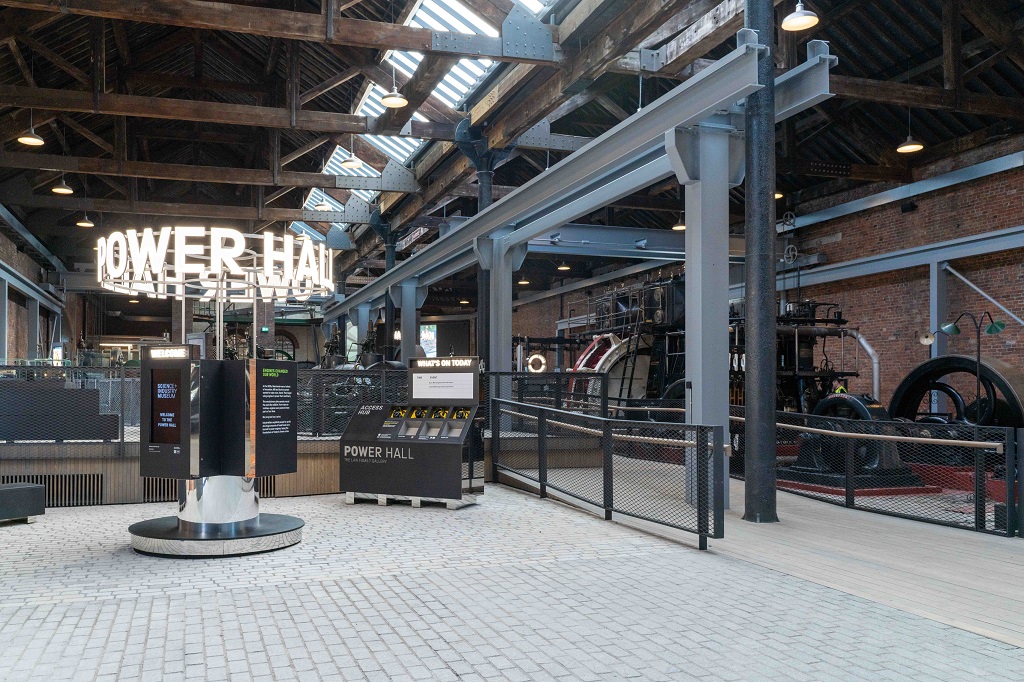
That is how long it took for the grade two-listed Power Hall: The Andrew Law Gallery at the Science and Industry Museum to undergo a seismic revamp, part of a wider £40m initiative to spruce up, futureproof, and decarbonise the facility.
The work included the creation of a new visitor entrance, improved circulation design, addition of a new roof, repair of timber trusses, and installation of a series of energy efficiency measures such as LED lights, ground-source heat pumps, and an electric boiler.
Sustainability has been a focus throughout, with the new roof featuring most of the original slates. These slates sit on top of a woodfibre insulation made from timber industry byproduct.
As a result of the decarbonisation programme, the museum will reduce its annual carbon dioxide emissions by 515 tonnes.
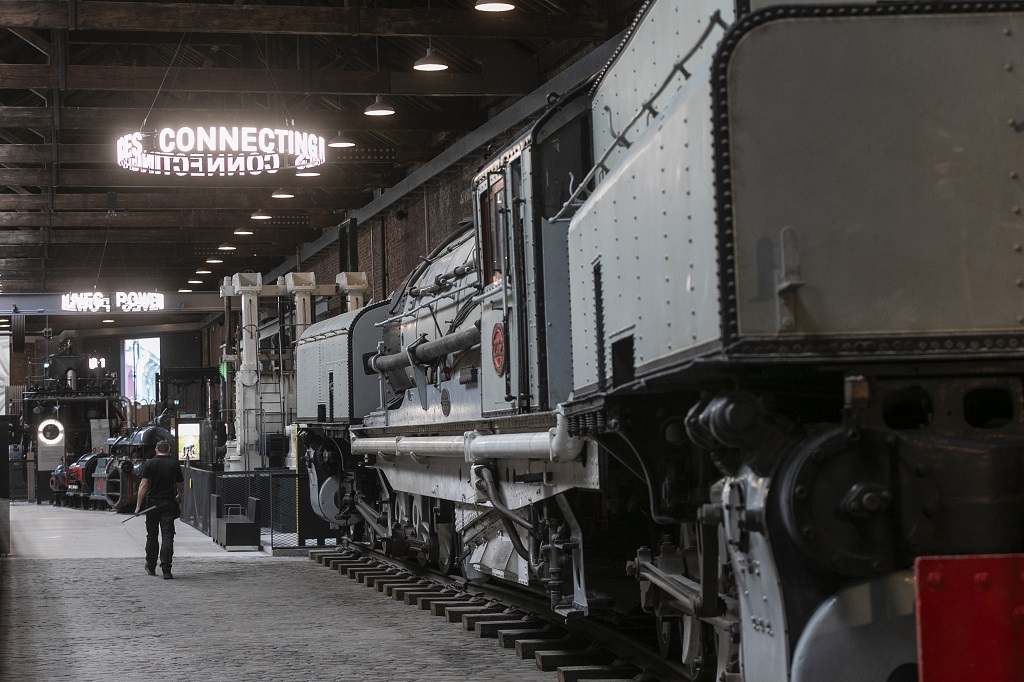
Power Hall allows visitors to see steam engines up close. Credit: Lee McClean, PA Media Assignments
“This is a hugely significant moment for our museum, the Science Museum Group and for Manchester,” said Sally MacDonald, director of the Science and Industry Museum.
“Power Hall symbolises the city’s innovation, creativity and resilience, and we are overjoyed that visitors will soon be back to enjoy all the amazing objects and stories on display,” she continued.
“Ideas that began in this city have impacted people and places across the world and shaped life as we know it, and Power Hall showcases this in a very physical way.”
Carmody Groarke was the architect and lead designer behind the project, with Studio MUTT leading on the exhibition design itself. HH Smith & Sons was the main contractor. Deloitte was the planning consultant.
Max Fordham led on the engineering that made the SIM’s sustainability dreams a reality.
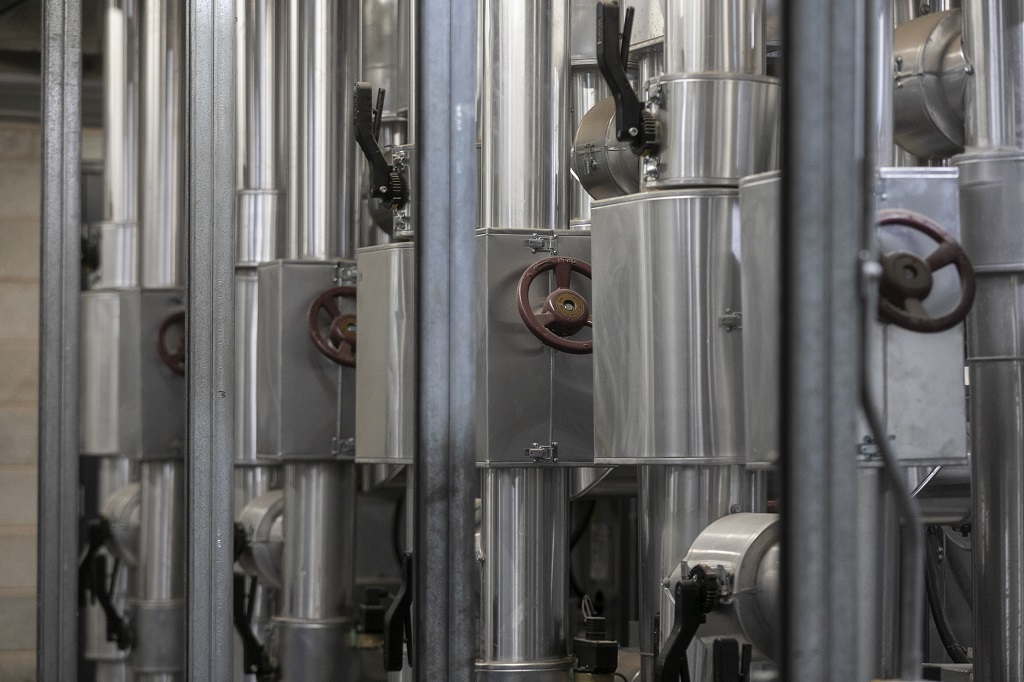
The new steam boiler at the SIM has become part of the exhibit. Credit: Lee McClean, PA Media Assignments
For Iain Shaw, director and leader of Max Fordham’s Manchester office, working on Power Hall was personal. He used to visit the museum regularly as a child and credited the historic steam engines at Power Hall for inspiring him to become an engineer.
Now, he is ready for those same steam engines to inspire the next generation of engineers.
Getting the engines up and running had proved tricky.
“The biggest challenge was connecting a modern system to a set of Victorian engines, which are museum artifacts,” Shaw told Place North West.
“We had to do it delicately, and we had very little data on how these engines run,” he said. “Unlike modern equipment, they don’t come with a technical sheet telling you how they work!”
The heritage element of the project was also a complicated endeavour for planner Deloitte. Katie Wray, director at Deloitte, oversaw the submission of approximately 10 listed building consent applications that were required for the project.
“Deloitte works on all manner of projects in this space, but the challenge here was the complexity of the planning and listed building consent strategy,” Wray said.
“The level of technical understanding required on this project was high, and its overall success would not have been possible without an expert design team and committed and informed museum team, along with support from Manchester City Council.”
Power Hall will be displaying more recent history in addition to those steam engines. In fact, Shaw’s own work has become an artefact – the museum has made the boiler system part of the display.
“Secretly, this is the thing I am most proud of,” Shaw said. “Who knew M&E could be on display next to its Victorian counterparts, telling the story of decarbonisation?
“It’s such a beautiful installation that was done under the watchful eye of Carmody Groarke. It’s as much an architectural installation as it is an artefact, work of art, or a working plant room.”
Wray agreed that the M&E display was a must-see.
“The new M&E for the water-source heat network, which powers the historic steam engines in the hall, is particularly notable and well worth appreciating,” she said.
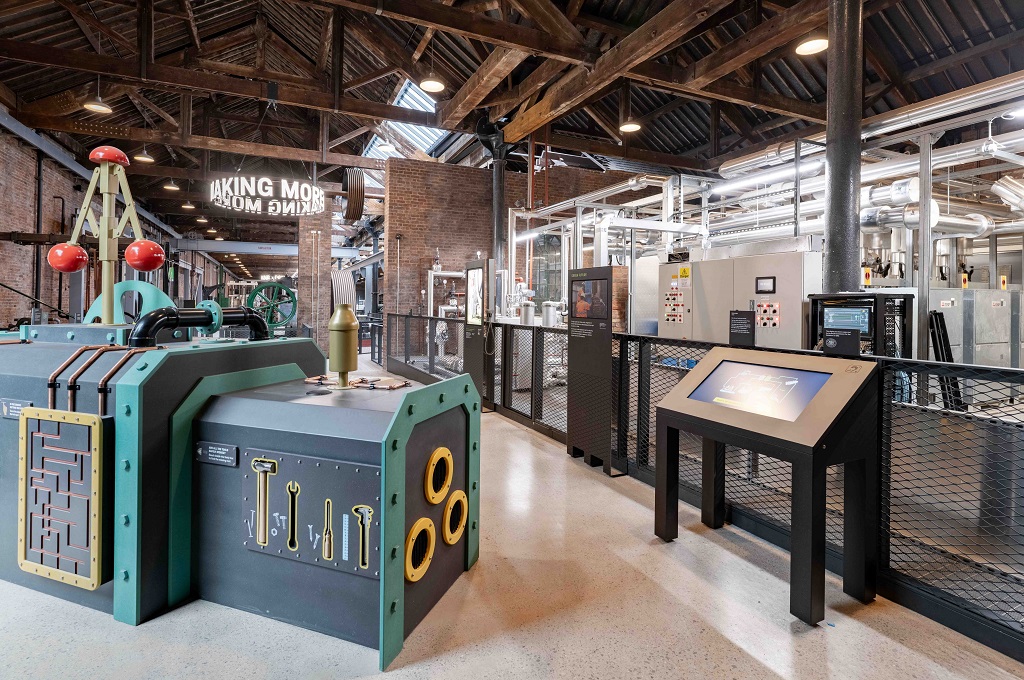
The M&E system is part of the display at Power Hall. Credit: Dave Bewick, Science and Industry Museum
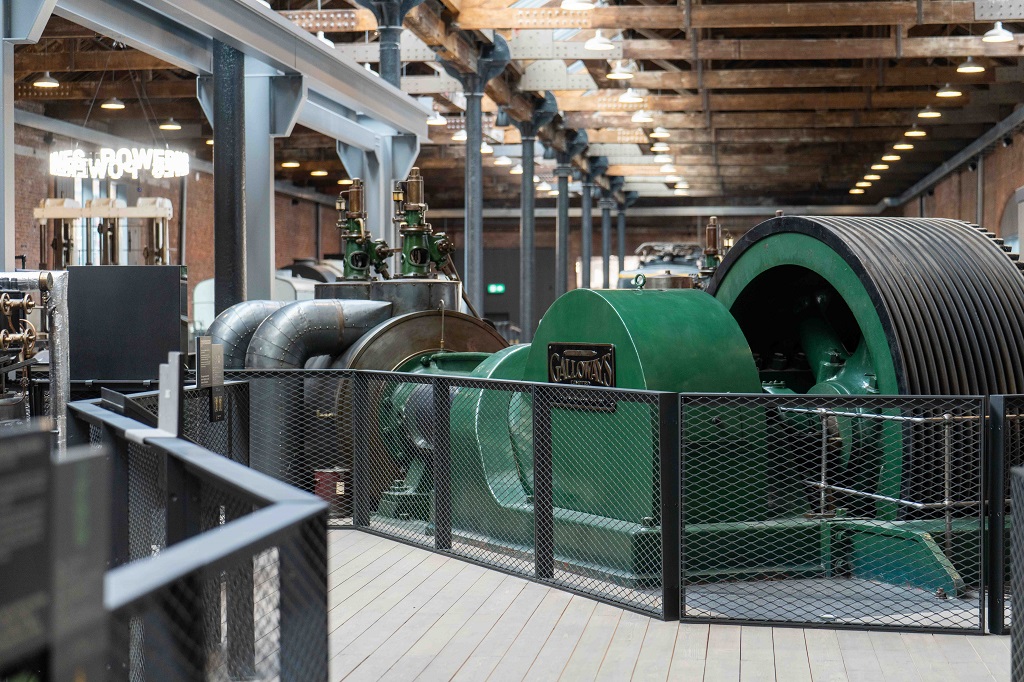
For those visiting on Friday, Shaw offers this advice: “Go when there is a demonstration of the Historic Working Machinery and watch how everything is designed and runs like clockwork. It’s mesmerising, and the noises and smells and warmth are evocative. You feel like you’re in a working mill, you can’t feel that anywhere else.”
Wray similarly encourages visitors to get lost in history.
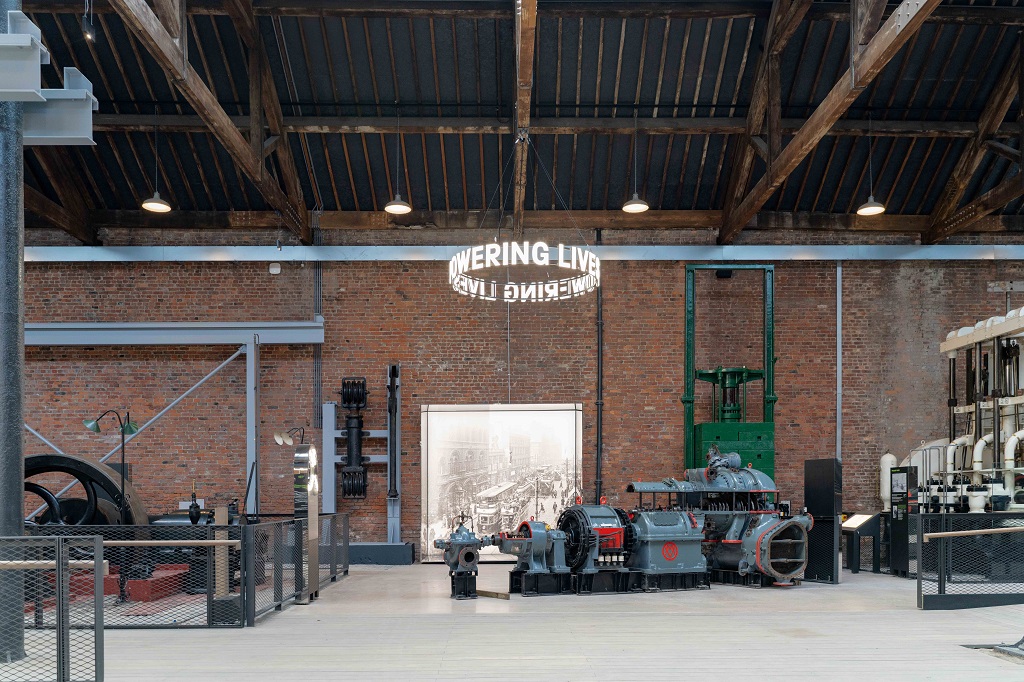
“I’d urge visitors to pay close attention to the platform, which mirrors the historic platform with an enlarged photo taken at that very spot in the Power Hall,” she suggested. “It is a powerful way of bringing the space to life.”
Shaw was hopeful the display and the larger sustainability story behind the renovation would have a lasting impact on visitors.
“Hopefully everyone will take away a lesson about decarbonisation and what they can do at home to reduce their impact on the building,” he said.
“If everyone who visited their consumption by 5% at home, it would have a far greater effect than the museum being zero carbon – that’s the power of education,” Shaw continued.
With the reopening of Power Hall, the museum’s renewal project is due to reach the halfway mark by the end of this year. It has already commenced the planning phase for the next round of improvements – including the creation of a new Wonderlab gallery and an interactive Technicians gallery for teens.
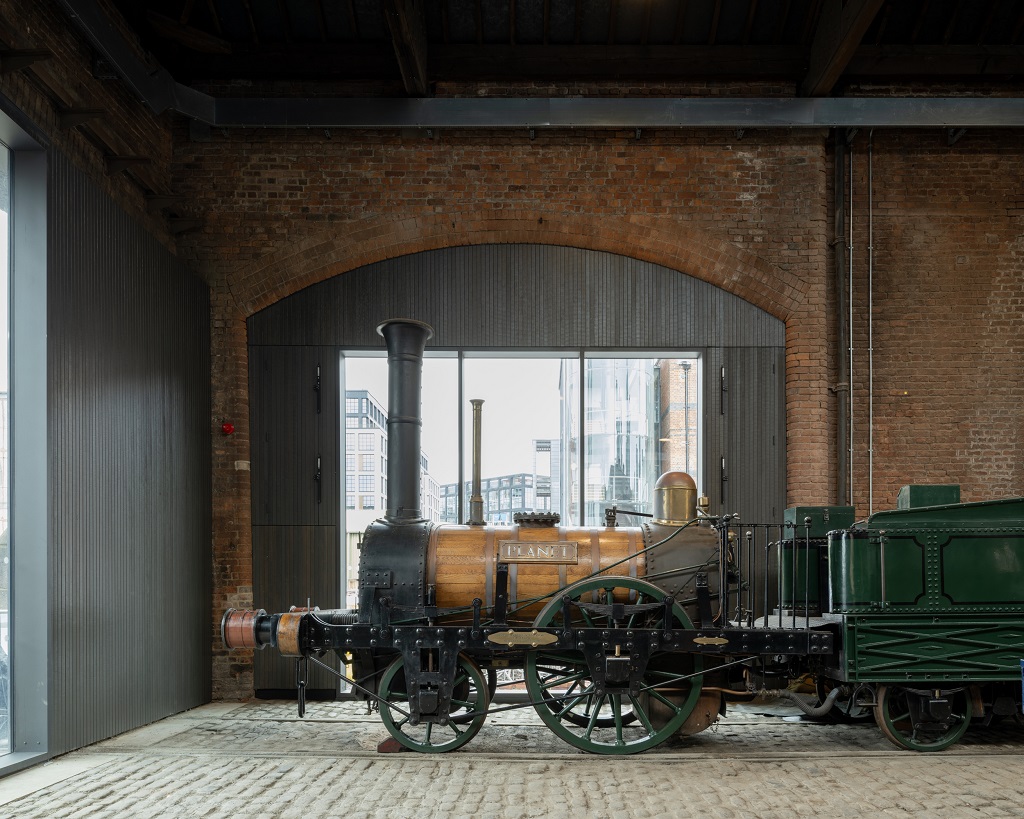
The museum is also looking into creating a static rail experience at the 1830 Station Building on its campus – the same building that was the station for the world’s first steam-powered, inter-city passenger and freight railway. The 1830 Station Building is due to reopen in time for the Liverpool-Manchester railway bicentenary in 2030.
Click any image to launch gallery
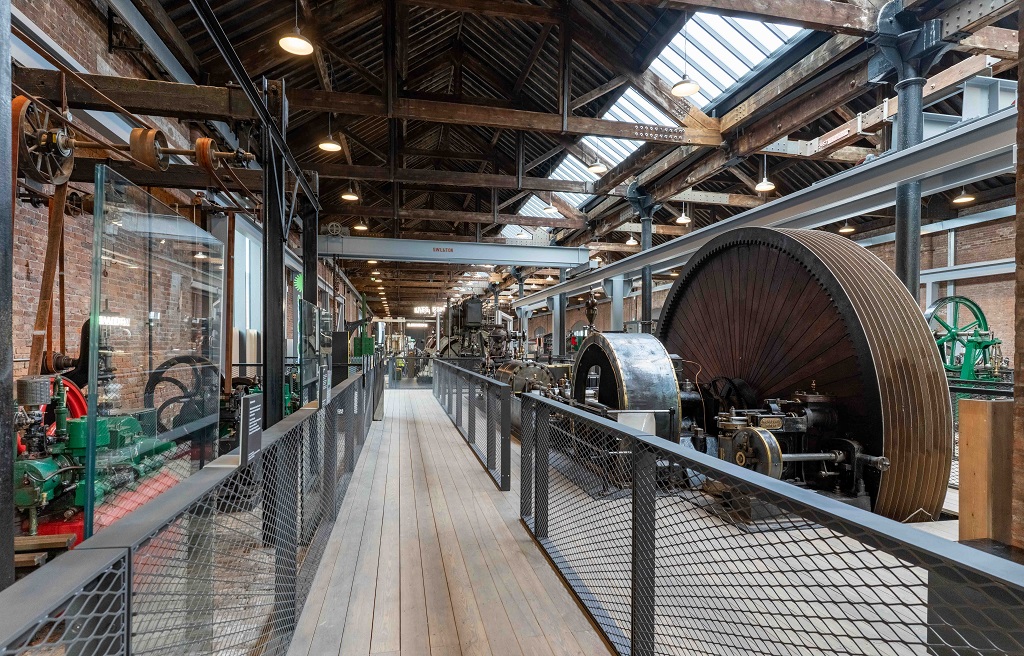
- Credit: Dave Bewick, Science and Industry Museum
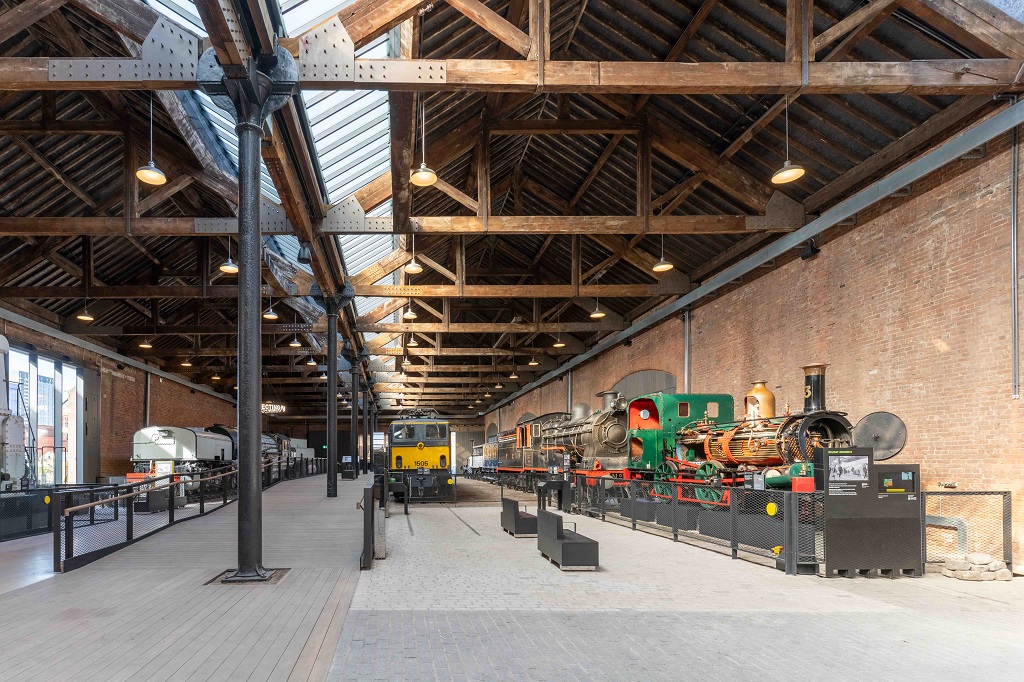
- Credit: Dave Bewick, Science and Industry Museum
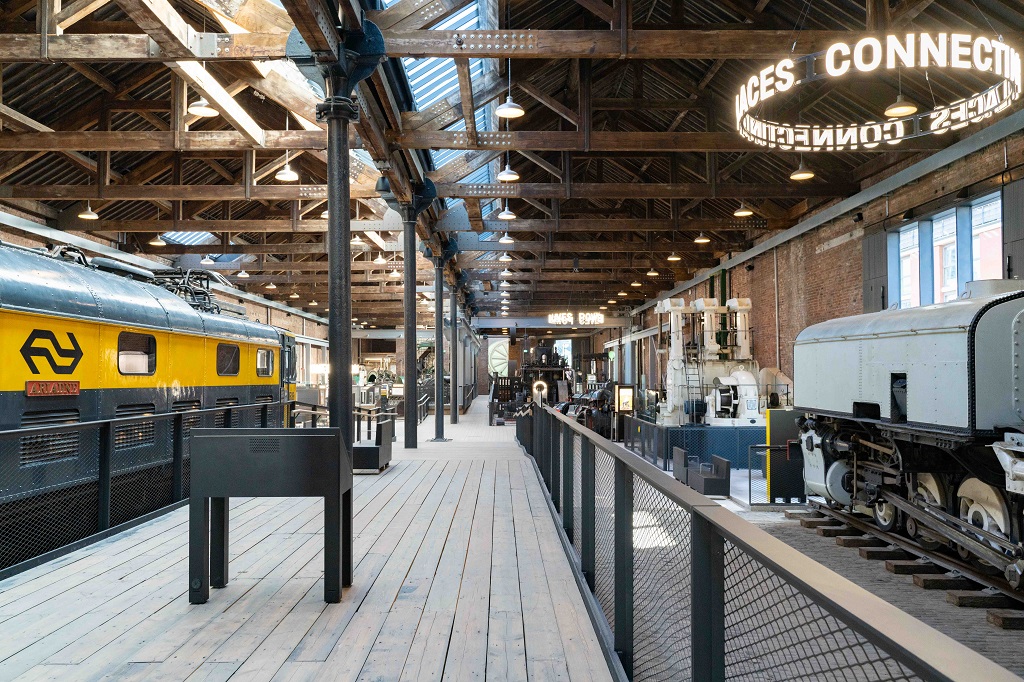
- Credit: Dave Bewick, Science and Industry Museum
- Credit: Dave Bewick, Science and Industry Museum
- Credit: Dave Bewick, Science and Industry Museum

- Credit: Dave Bewick, Science and Industry Museum
- Credit: Federico Farinatti, Carmody Groarke and Science and Industry Museum
- Credit: Dave Bewick, Science and Industry Museum

- Credit: Dave Bewick, Science and Industry Museum

- Credit: Lee McClean, PA Media Assignments
- Credit: Lee McClean, PA Media Assignments
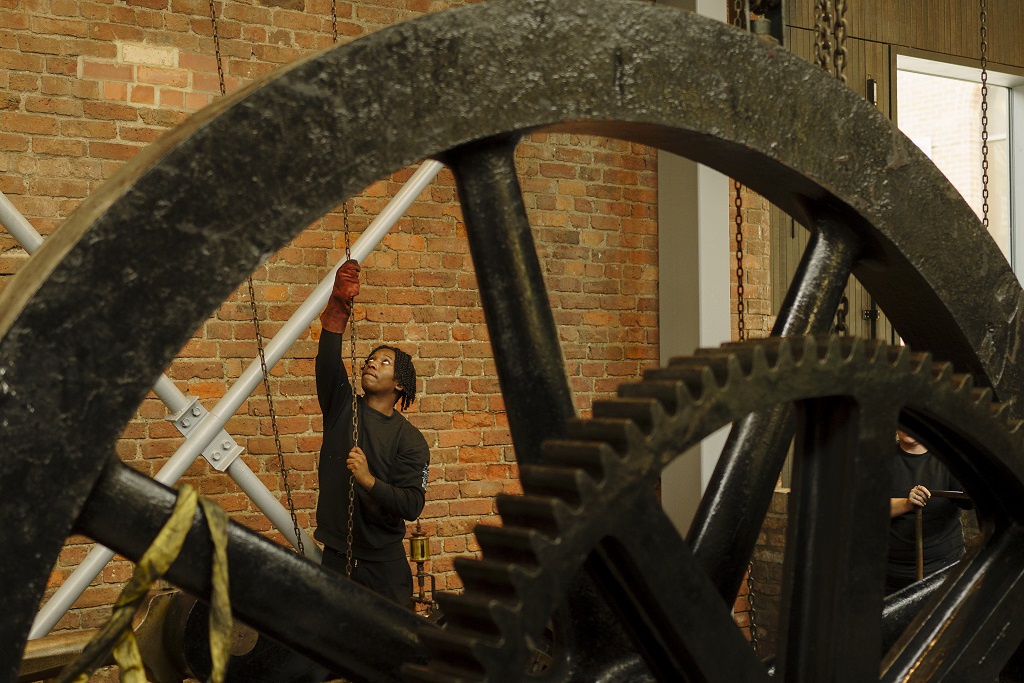
- Credit: Drew Forsyth, Science and Industry Museum

- Credit: Lee McClean, PA Media Assignments

- Credit: Lee McClean, PA Media Assignments
Related Articles

Analysis - Commentary
VIDEO | Wigan is being built on delivery, not promises
Wigan Council has an ambitious vision for its borough and is actively working to turn these plans into reality. Director of place Aidan Thatcher walked Place North West through the local authority’s approach.