Budget 2026 reactions: Is the government on the right course?
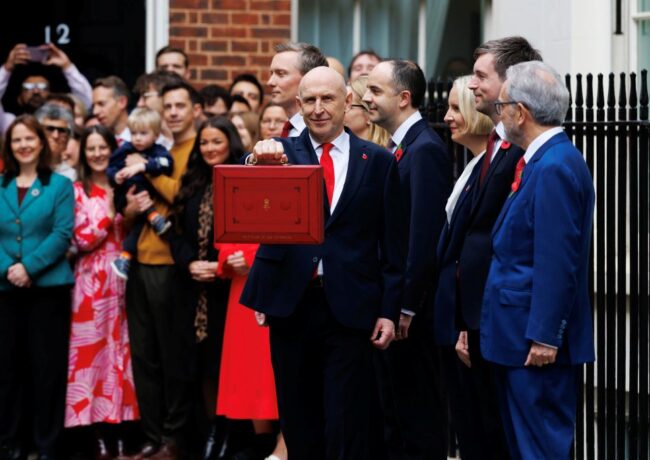
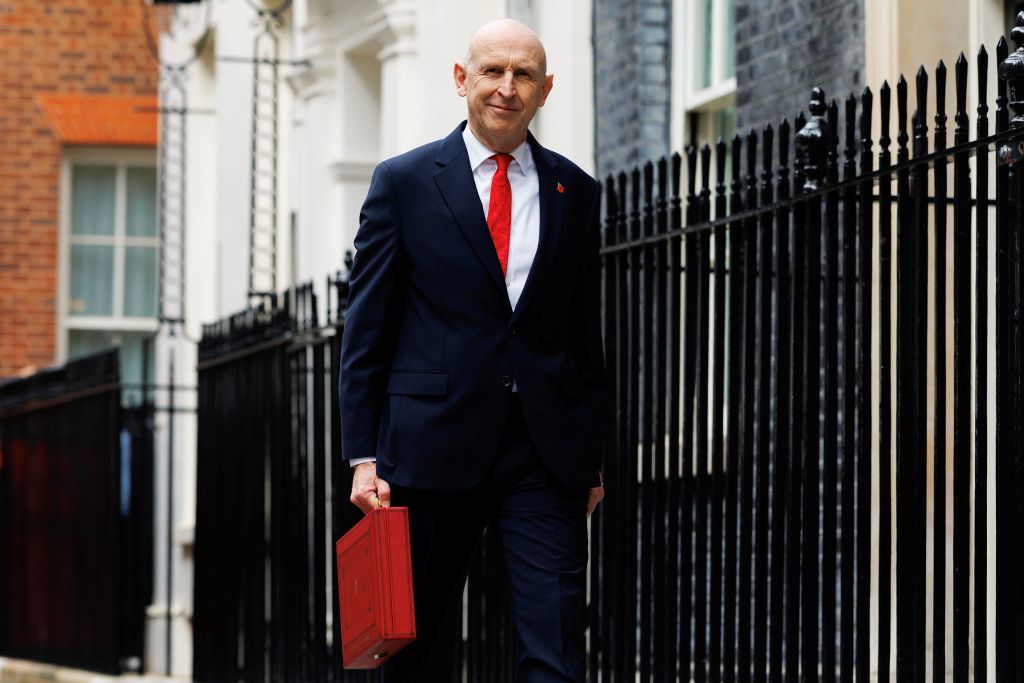
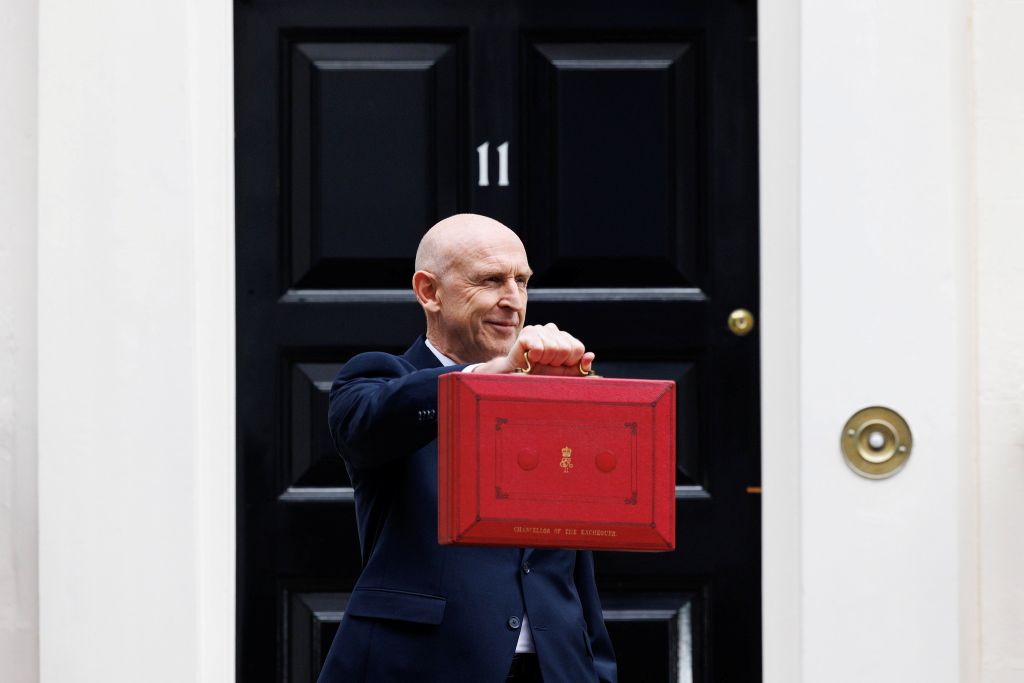
Property industry, public sector leaders, and business gurus were conflicted on chancellor John Healey’s Budget and what it meant for the North – with some welcoming increased fiscal devolution and others concerned that it had failed to go far enough to improve viability and encourage development.
Read their responses, which have been edited for clarity and brevity, below.
The Budget the North has been waiting for
Liam Didsbury, partner at Lowick Hedry, said: “This is the Budget the North has been waiting for, though developers will need patience. A share of income tax, business rates retention zones across the North’s city regions and a £1.5bn borrowing facility from 2028 give mayors real tools to back development. The quicker wins are exempting smaller brownfield sites from Biodiversity Net Gain and freezing building regulations. The test now is whether councils have the capacity to turn new powers into planning permissions.”
A step in the right direction
Tracy Harrison, chief executive of Northern Housing Consortium, said: “We welcome the Budget’s focus on devolution. Place-based investment by people that know their areas best is the most effective way to drive growth and create thriving Northern communities. As the chancellor said, housing is at the heart of this…
“The £1.5bn additional Social and Affordable Homes Programme investment is welcome, but funding must be accessible to housing associations with development plans ready, as well as councils, to deliver much-needed homes quickly.”
“Today’s announcements are a step in the right direction but stop short of providing long-term, flexible, dedicated regeneration funding for the North. Our Renew research found a that a policy framework that includes a ten-year £5 billion fund for housing-led regeneration could unlock 500,000 good quality homes across the North, driving growth in every postcode.”
VAT changes for social housing welcome news, but questions remain
Jonathan Woodall, partner at Winckworth Sherwood, said: “The government’s announcement today that it will introduce VAT zero-rating for sales of ‘any land’ to registered social housing providers from 1 April 2027 is welcome news for the UK’s residential property sector. This follows a consultation earlier this year where respondents ‘overwhelmingly’ thought a new relief would accelerate housing delivery…
“We do not yet have the implementing legislation, so that will need to be scrutinised carefully in due course. One rather confusing section of the response document [to the government’s consultation] suggests that the legislation might need to provide for ‘consequences’ where the ‘intended qualifying use is not achieved’ – it is not immediately clear how this can be squared with zero-rating applying to ‘any land’ sold to RPs.”
Delivery needs to be the focus
Ken Norbury, Mott Macdonald’s Northern England regional director, said: “For the North, the real opportunity from this Budget is turning devolution into delivery. Giving local leaders greater control over investment should help unlock the homes, infrastructure and regeneration, while giving businesses confidence to invest.
“Projects mentioned today such as Liverpool’s Littlewoods building and Bury Market show what that can mean on the ground. The bigger opportunity is unlocking more projects like these, bringing underused sites back to life and creating homes, jobs and investment across the region.”
A welcome direction of travel
Adrian Spawforth, managing director of Spawforths, said: “It is unlikely that today’s Budget will have a significant effect on the North’s development industry in the short term. However, providing our regional bodies and mayors with greater spending powers to accelerate better-informed local decision-making on investment priorities and delivery is reassuringly consistent with previous efforts to empower our regions to think and act with increasing independence from Whitehall. Unfortunately, the full impact of these measures is unlikely to be felt during the lifetime of this Parliament, but the direction of travel is to be welcomed.”
A good roadmap for devolution
Henri Murison, chief executive of the Northern Powerhouse Partnership, said: “We welcome the roadmap and the local retention of business rates, a proportion of income tax as well as the power to introduce an overnight visitor levy. There will be limits set in due course on authorities borrowing which is why we must consider private finance as well as funding so that major projects like Northern Powerhouse Rail can be effectively supported through local contributions as well as the £45bn national funding envelope committed by the previous Chancellor earlier this year.”
“Investment in infrastructure will generate jobs immediately as well as raise long term productivity, with Bakerloo line trains to run on the new extension in London mentioned by the Chancellor able to be built in Goole on the Humber.”
“Cutting the size of the civil service alongside devolution to ensure development of strategic authorities doesn’t ultimately increase the size of the state is right.”
Regions are at the centre of the growth agenda
Dominic Pozzoni, head of national offices at Colliers, said: “Today’s Budget places the regions firmly at the centre of the government’s growth agenda and signals a meaningful shift towards greater fiscal devolution. The ability for mayors and local authorities to retain more of the economic value they create should give regions greater control over investment decisions, enabling funding to be directed towards the infrastructure, regeneration and development projects that matter most locally…
“We’re also seeing tangible commitments to place-based regeneration. The £20 million investment in Liverpool’s Littlewoods redevelopment demonstrates how targeted public funding can help unlock complex sites, attract private capital and deliver transformational projects that support employment, innovation and business growth. Similar investment commitments across the North, Midlands, Bristol Temple Quarter, and other key regional markets underline the Government’s intention to support growth beyond the South East.”
Budget is a missed opportunity
Ian Scott, chief executive of Ocasa Homes, said: “Today’s Budget appears to have eased pressure on the bond market, which should provide greater stability for investment yields in the coming period.
“But it is time the government recognised housing as essential infrastructure. Delivering the homes the UK needs will require a more joined-up approach that connects housing supply, infrastructure investment and economic growth.
“Overall, it feels like the Budget was somewhat of another missed opportunity for housing and the wider built environment. While there is welcome support for social and affordable housing, there is little to address some of the viability challenges holding back development across the UK. In particular, the absence of a UK-wide housing delivery fund may risk another year of minimal new starts.”
BNG exemptions disappointing
Penny Simpson, partner and head of environmental law and natural capital legal team at Freeths, said: “While not unexpected, this is a disappointing decision. Brownfield sites can be rich in biodiversity, and exempting further developments from biodiversity net gain requirements risks weakening demand for biodiversity units. That demand is vital if the government wants private investment to support nature recovery.
“There is a clear tension between today’s announcement and the government’s commitment earlier this week to grow private-sector demand for nature. Ministers cannot expect natural capital markets to flourish while simultaneously removing demand drivers.”
Wait and see
Richard Cook, senior director of economics at Pegasus Group, said: “While today’s Budget contained a number of positive announcements, it remains to be seen whether it provides any sort of long-term boost to our growth prospects…
“Despite an unforgiving economic environment, measures such as residential brownfield developments on sites up to 1.5 hectares in England being exempt from biodiversity net gain requirements and the updated NPPF are very welcome and show that the government recognises the need to improve the planning system as a way of kickstarting growth…
“Once the government fully takes the regulatory handbrake off, and actively champions development across all regions, Britain can get building again and we will be able to see real tangible progress. Visible outcomes, such as planning approvals and construction starts, will go a long way to bolster the housing market in the final quarter of the year and into 2027.”
Construction industry needed more
Katie Saunders, partner at Trowers & Hamlins, said: “Disappointing that the changes to encourage prompt payment under the Commercial Late Payment Bill have not been pushed forward which will have a significant impact on improving cash flow for SME construction companies and protect the vulnerable supply chains which support the sector.
“Unfortunately, there is limited scope for the government to reduce the cost of fuel which are inevitably pushing up construction costs and impacting viability across the country, which was acknowledged by the chancellor and therefore the importance of construction alliances to work collaboratively on projects and across programmes to control decisions, delays and costs is needed more than ever.”
The Budget supports skills
Leeds College of Building was awarded £15m in the Budget.
Nikki Davis, principal and chief executive of Leeds College of Building, said: “We are absolutely delighted to be mentioned by name in chancellor John Healey’s Budget speech to Parliament today.
“This funding will allow us to open our campus up to more than 2,000 new learners.
“Back in the summer, Prime Minister Andy Burnham said he wanted to see a Britain that values the hard hat as much as the graduation cap.
“That is a future we’ve been working towards since the inception of our great college in the 1960s.
“The government has put their money where their mouth is and we couldn’t be happier; we will use this money to continue to meet construction sector needs.”
More needs to be done to help NEETs
Michele Steel, chief executive of Regeneration Brainery, said: “The most important measure of this Budget will be whether it creates more opportunities for young people, not just for their own economic futures, but for the economic fortunes of the country as a whole. There are currently 1m young people struggling to find jobs, which is a scandal that this country can’t afford. The North continues to be disproportionately affected by the NEET challenge, facing a higher-than-average risk of young people becoming disconnected from work and education. The continued focus on devolution means that youth employment can be connected to local economic development and regeneration investment.”
A win for Leeds and West Yorkshire
Tracy Brabin, Mayor of West Yorkshire, said: “The government is backing our ambitions with £300 million to transform Leeds station and investment in the Leeds College of Building, the use of Artificial Intelligence across our public and private sector alongside community protections around data centres, and for our bid to bring the Olympics to the North of England.
“Radical devolution of income tax will mean we no longer have to go cap in hand to Whitehall, and the changes made to business rates means we’ll keep more of the West Yorkshire pound here in West Yorkshire.
“These new financial flexibilities will help to drive the development of Leeds South Bank and Bradford Southern Gateway to deliver thousands of homes, create a better-connected region, and build a region of learning where everyone has the skills they need to succeed.”
Good news for the North East
Kim McGuinness, Mayor of the North East, said: “After years of fighting for the investment we deserve, I’m delighted we now have a North East Good Growth Fund helping us to deliver projects like a new arena in Gateshead and film and TV studios in Sunderland and these will just be the start.
“We will also get new powers to keep tax raised from these major developments and others. It’s about time we stopped sending all of our tax to Westminster and instead use it right here in the North East. It’s good to see the Government agrees. This will be used for initiatives that directly cut the cost of living like cheaper fares on public transport in years to come.
“We need to see more good jobs in our region too. That’s why we insisted in September the International Investment Summit should be held in the North. And now thousands of investors from across the globe will see what we have to offer when they come to Gateshead in the Spring. We will make sure this directly leads to opportunities for people on their doorsteps across the whole of the North East.”
A Mayor for Lancashire
In the Budget, the government said it was in the final stages of agreeing a mayoral strategic authority for Lancashire and £7.3m in good growth funding.
Stephen Atkinson, chair of the Lancashire County Combined Authority and Leader of Lancashire County Council, said: “This is an important step forward for Lancashire. Securing greater investment is vital if we are to deliver better opportunities, stronger communities and sustainable growth for our residents and businesses.
“We are expecting more information from the government next week, and as a CCA we will consider the proposals before deciding on next steps.
“It is vital that Lancashire residents also have a voice in any discussions about further devolution and as we develop the proposals, we will undertake widespread consultation with residents and business.”
Cllr Lynn Williams, Leader of Blackpool Council, said: “Having a mayor for Lancashire is something we should be ambitious about. We have so much potential here in Blackpool and across our county, we need the powers and investment to make the most of it.
“Setting up the Lancashire Combined County Authority was the right thing to do. It took a lot of work to get us to this point, but without that groundwork we simply wouldn’t be in the position we are in today. This is the next important step in giving Lancashire a stronger voice and the ability to attract the investment our communities need.
“We have seen what mayors have achieved in other parts of the country, bringing in millions, and in some cases billions, of pounds to improve transport, build homes, support businesses and create opportunities for young people. This is also really important for our businesses, giving them the confidence to invest and grow, helping us attract new employers and creating more good jobs for local people.”
Henri Murison, chief executive of Northern Powerhouse Partnership, said: “Lancashire has significant economic opportunity and will be a critical part of the Prime Minister’s re-industrialisation plans. A Mayoral deal will help ensure that those in some of the most deprived communities in the North benefit from the economic opportunities in their county. We must ensure that we put prosperity in reach for those growing up today from whatever postcode they may be from.”
“We recognise all the political and business leaders who have backed this as well as Minister Jim McMahon MP for all their efforts and will support them as they come to finalise their deal.”
Cautious optimism
Ed Hutchinson, chief executive of Henry Boot, said: “Growth in every postcode has to be underpinned by a healthy housing market and the decision to introduce the ‘Your First Home’ package for first time buyers is a step in the right direction towards stimulating demand that creates the conditions housebuilders need to get on and build. This, coupled with improvements to the planning system could result in housing being delivered at speed across the country over the next 12 months, although challenges around persistently higher interest rates, broader economic uncertainty reducing consumer confidence and construction costs remain.”
A missed opportunity to back Northern business
Richard Greenhalgh, Manchester office head at Rathbones, said: “For business owners across the North, this Budget feels like a missed opportunity, albeit with some important positives. The support for founders is a real boost and should provide a welcome tailwind for entrepreneurs looking to start, grow and ultimately scale their businesses. That matters in regions like ours, where turning more promising start-ups into successful scale-ups is critical to long-term growth.
“But the government could have gone further for established SMEs and family businesses that remain the lifeblood of regional economies. They were hit by the changes to business relief and many are facing rising employment and operating costs; more could have been done to send a stronger signal that the Government backs those willing to invest, grow and create jobs.
“The government has effectively kicked the can down the road ahead of next year’s spending review, but businesses need action sooner.”
A noticeable omission?
Kenneth Wood, Managing Director at Drees & Sommer UK, said: “While nothing is going to change overnight, the proposed plans to implement ‘deep reform’ of the system will be beneficial. Leveraging GB Grid to build faster and cheaper connections, introducing a cost control framework, moving away from international gas prices, and implementing the British Industrial Competitiveness Scheme all indicate long term productive thinking…
“While the government’s ambition to unlock growth, innovation, and development was on display, mentions of the built environment sector itself was conspicuous by its absence. The industry faces a complex series of challenges that need to be unpicked, ranging from capacity and skills, to regulation, thin margins, and ballooning costs. If the government wants to see more infrastructure, defence and housing, then addressing these barriers will be required, else plans will be stymied.”