Event Summary
Place RESI | Summary + gallery
How do we design places for the next 100 years? How can we kick-start affordable housing delivery? What should be on Prime Minister Andy Burnham’s first Budget?
Place North brought together experts from across the residential sector to debate those questions, as well as provide a snapshot on the state of the market, at Place RESI on 20 October.
Held at Bridgewater Hall in Manchester, the event was chaired by Place North West editor Julia Hatmaker and delivered in association with Brookbanks, Onward, Winckworth Sherwood, and WSP.

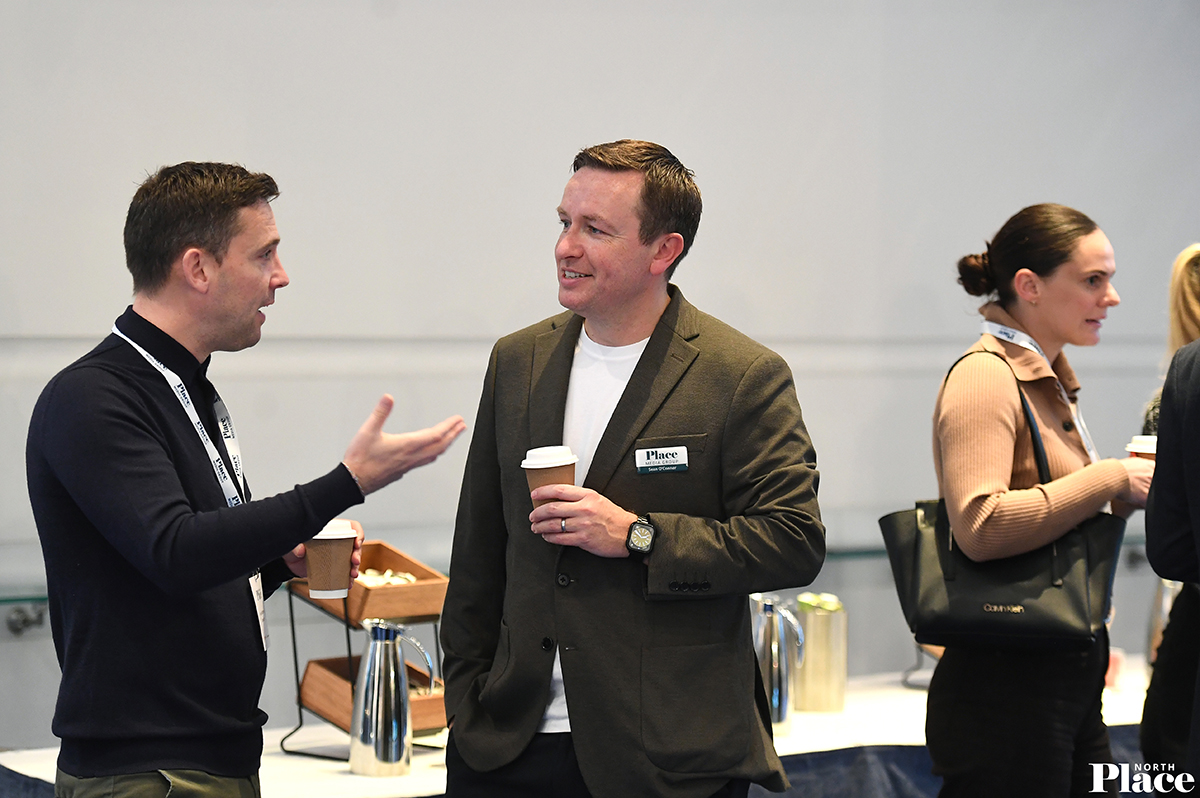
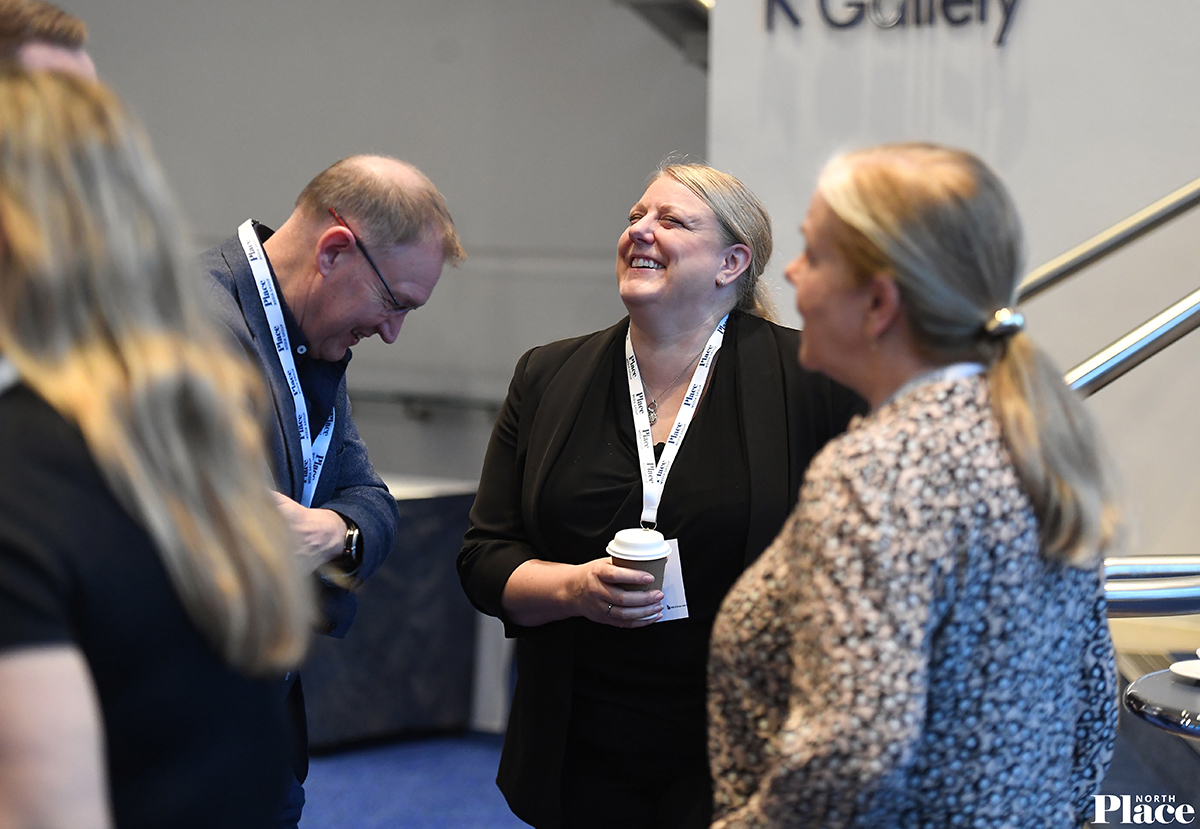
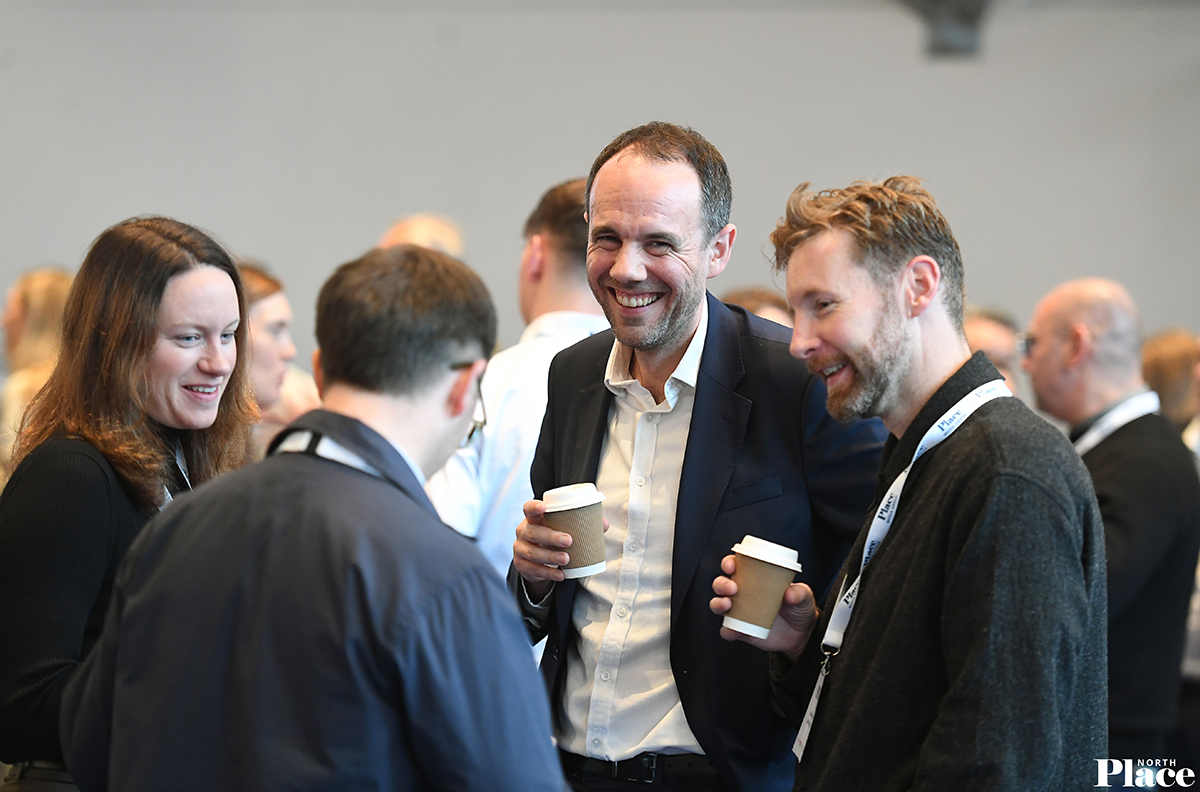
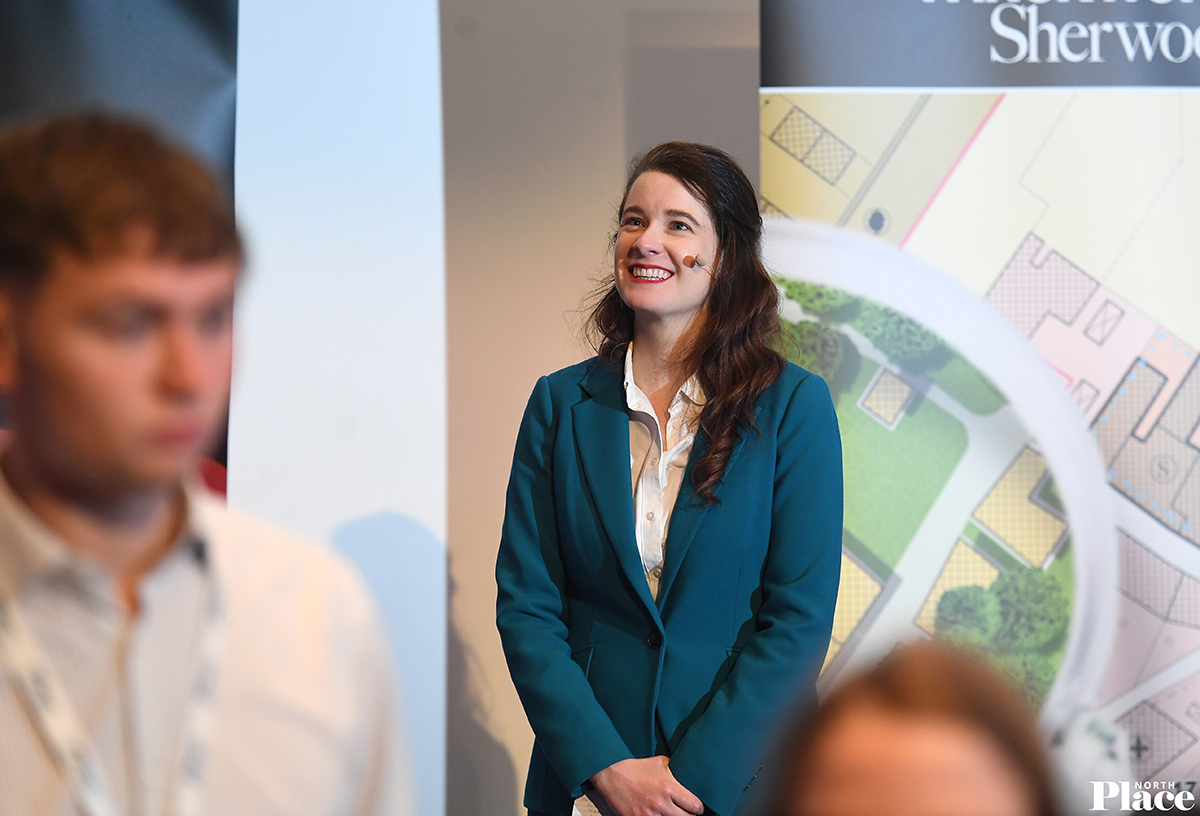
Scroll down to the bottom of this story for a gallery from the event.
Expert speakers
- Catherine Holmes, assistant director for the North West at Homes England
- Tim Heatley, co-founder and director of Capital&Centric
- Rob Chesworth, head of housing and strategic land at The Crown Estate
- Cllr Gavin White, executive member for housing and regeneration at Manchester City Council
- Sandy Kelly, interim director of growth and regeneration at Onward
- Joanne Morrison, North West managing director at Gleeson
- Tori Hall, group director of development management at Brookbanks
- Rebecca Jason, partner at Winckworth Sherwood
- Matt Ollier, director of Ollier Smurthwaite Architects
- Adrian Rooney, managing director of J Greenwood Builders
- Andy Teage, director of planning consultancy at WSP
- Seb Verity, head of research at Allsop

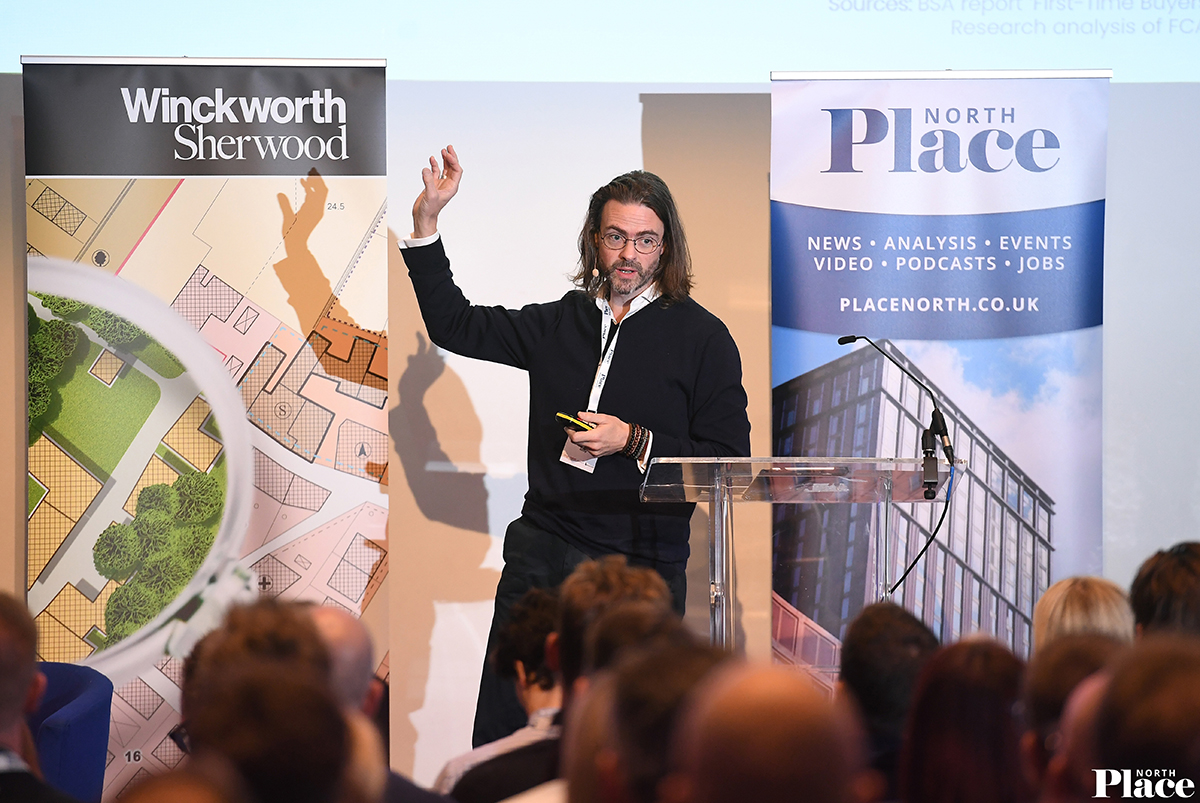
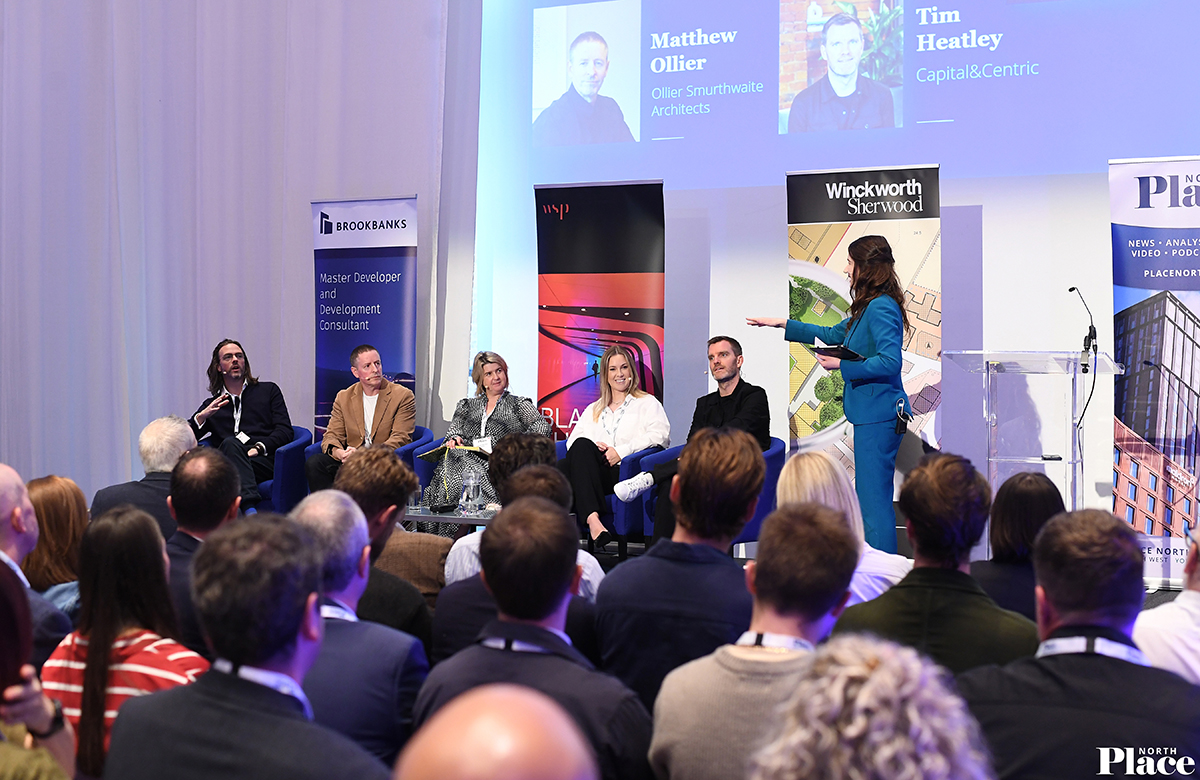
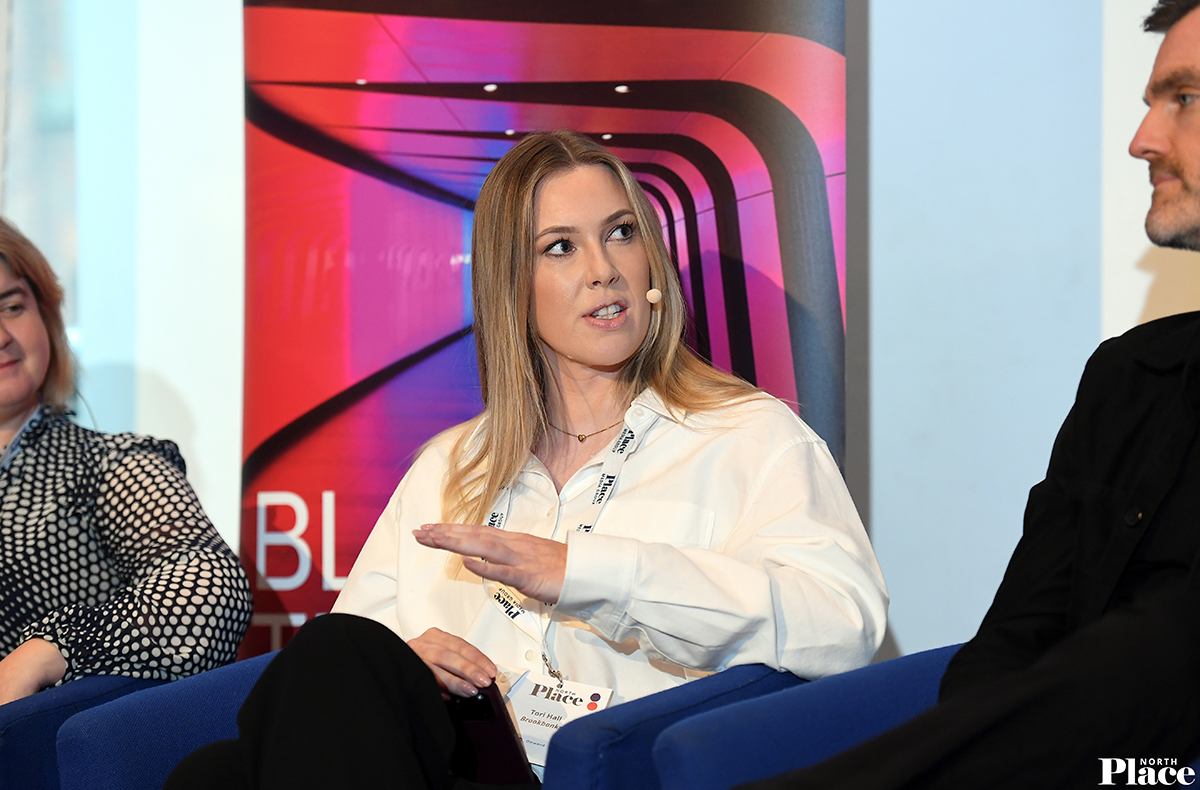
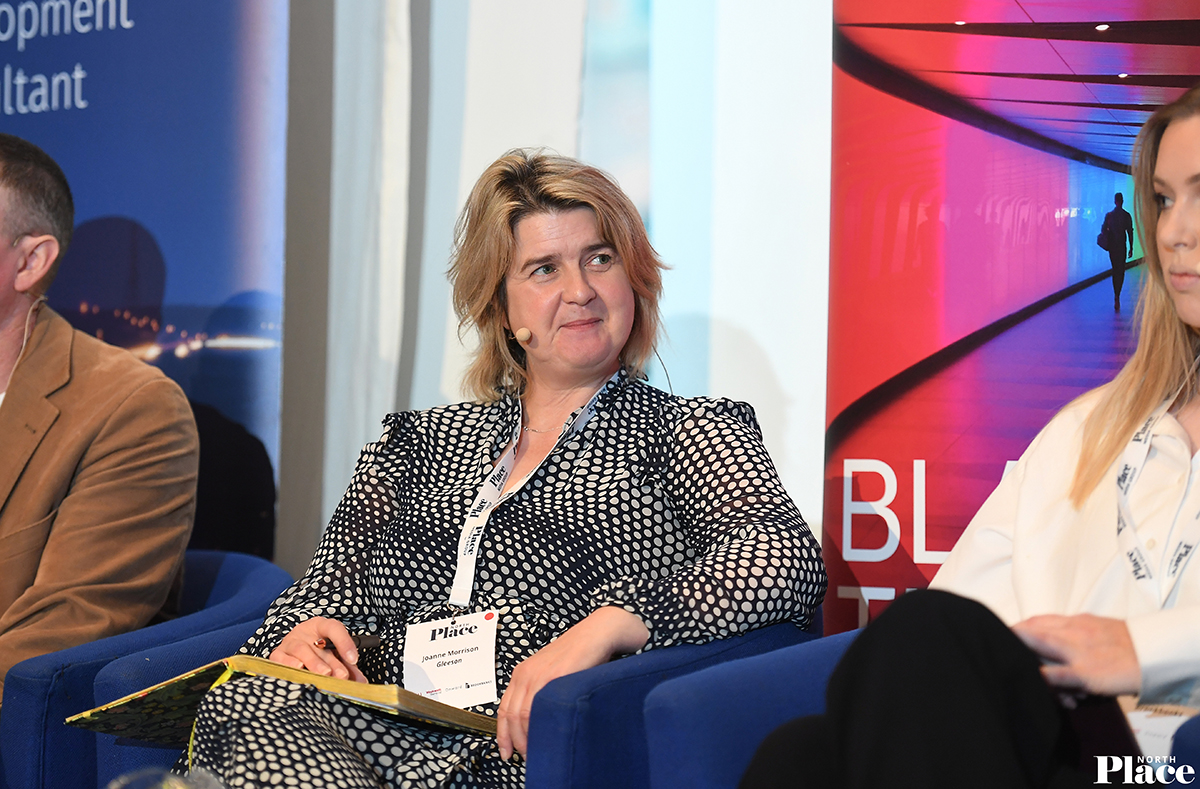
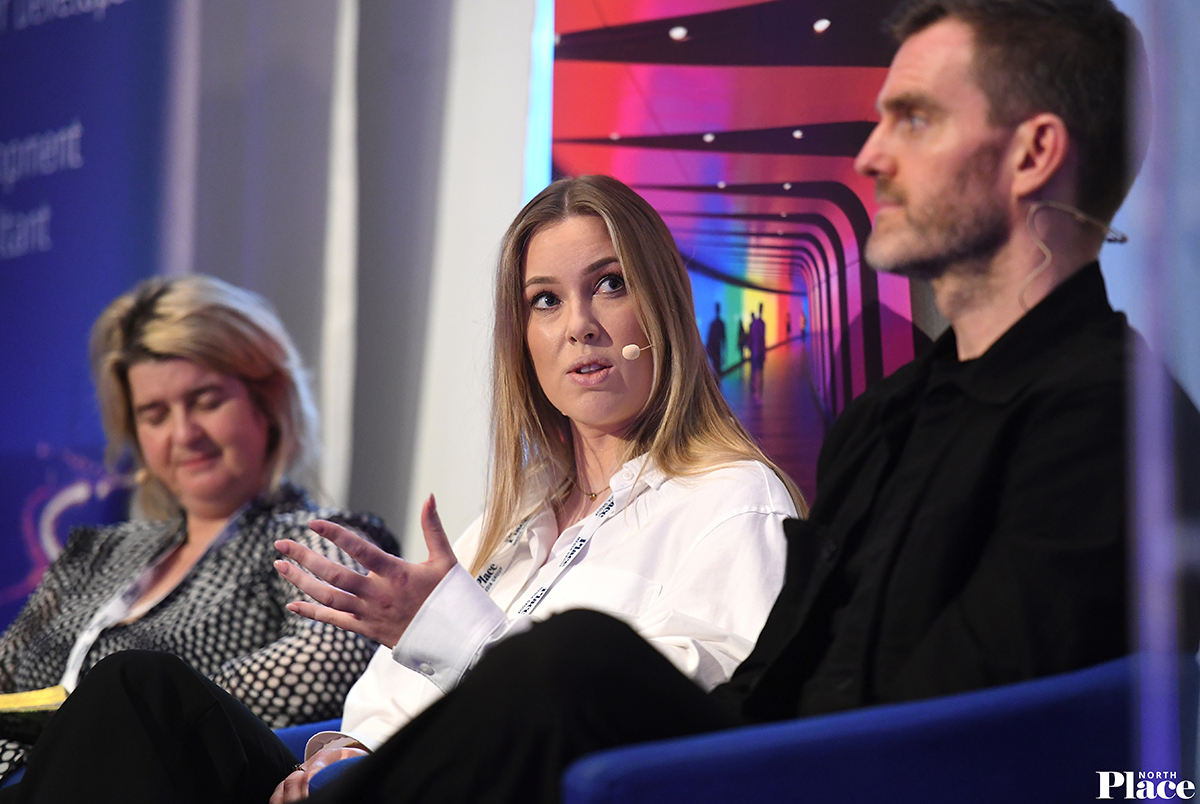
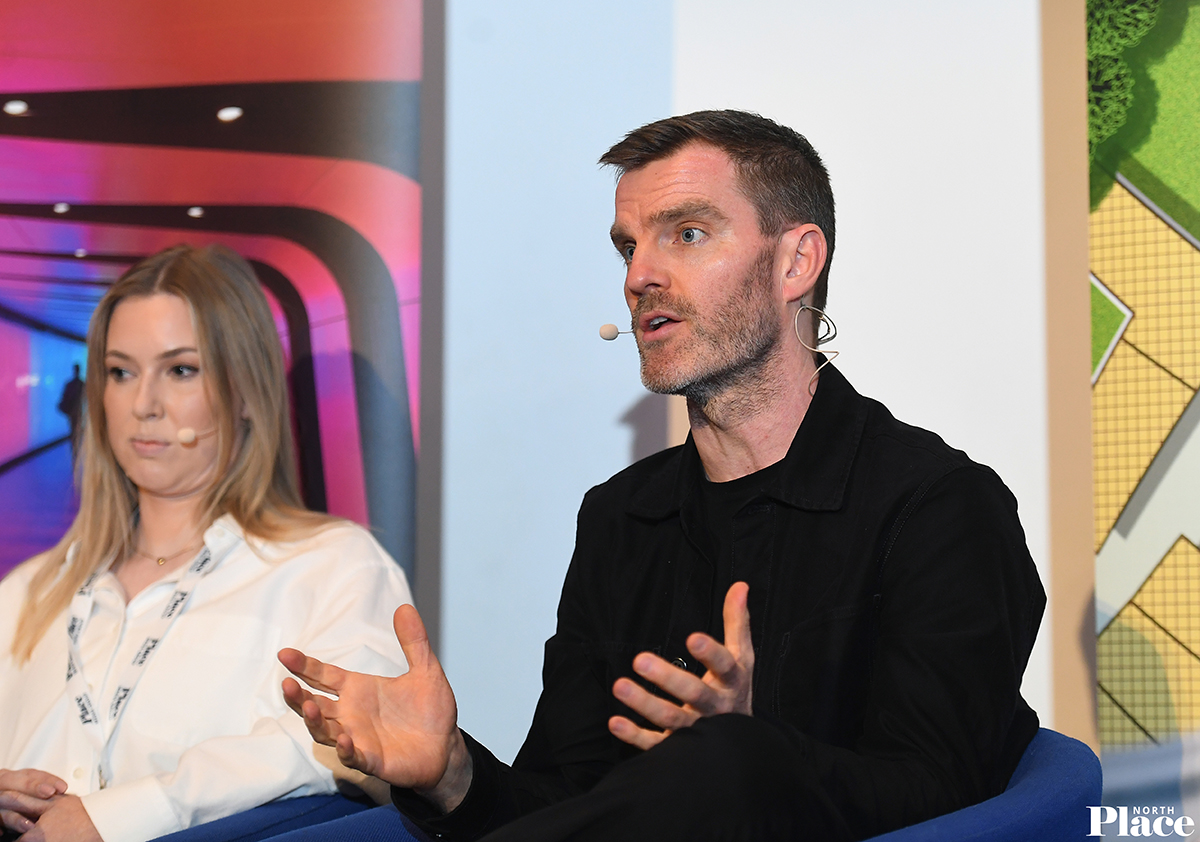
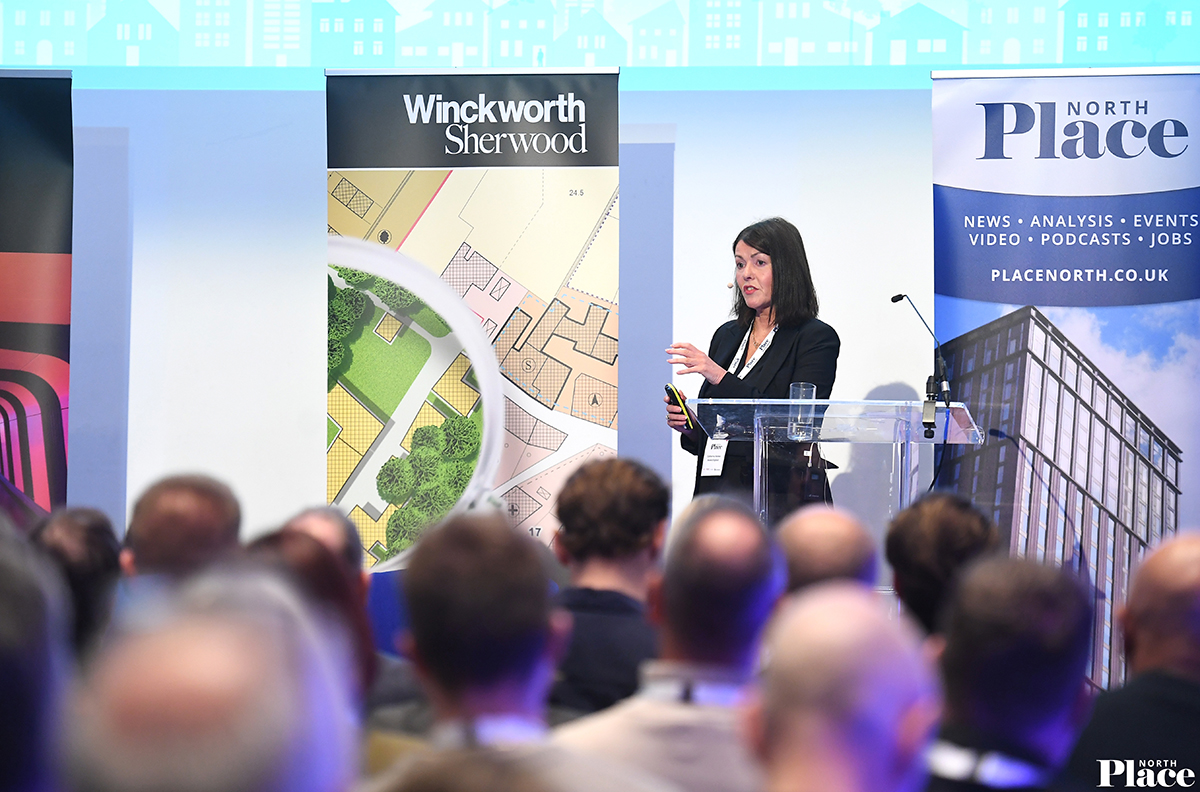
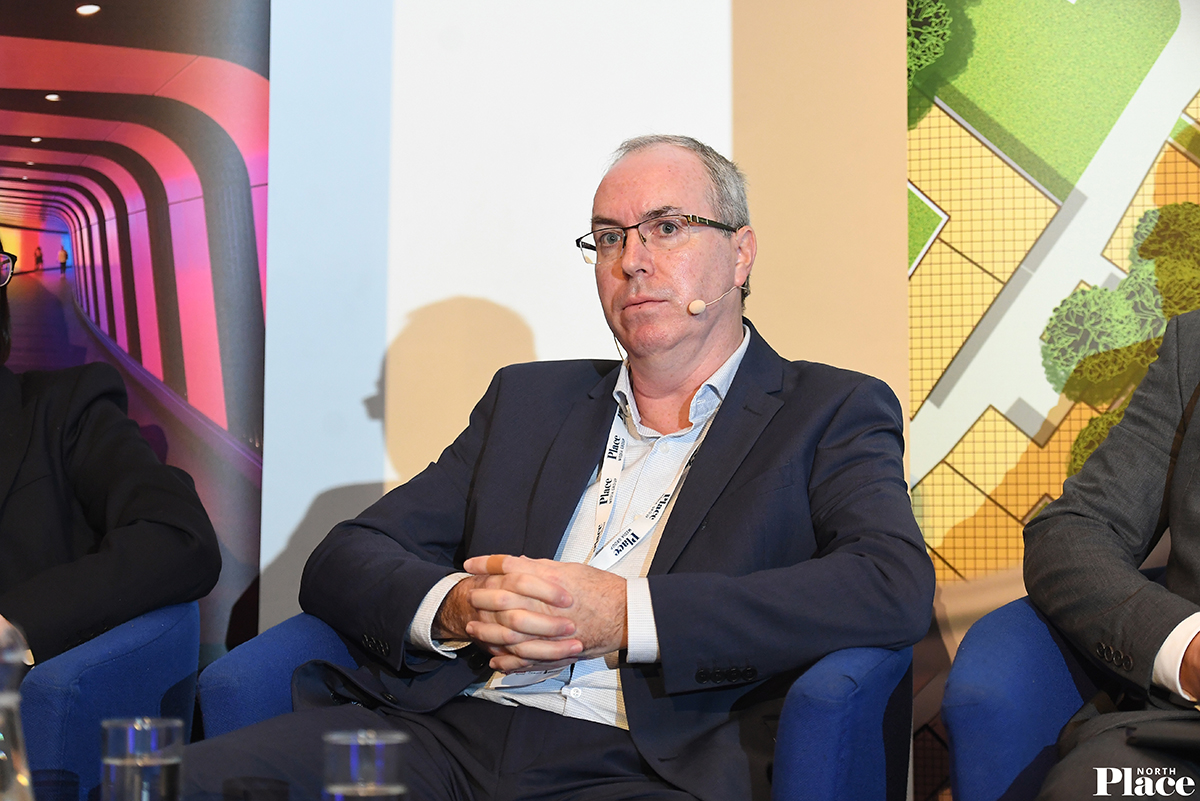
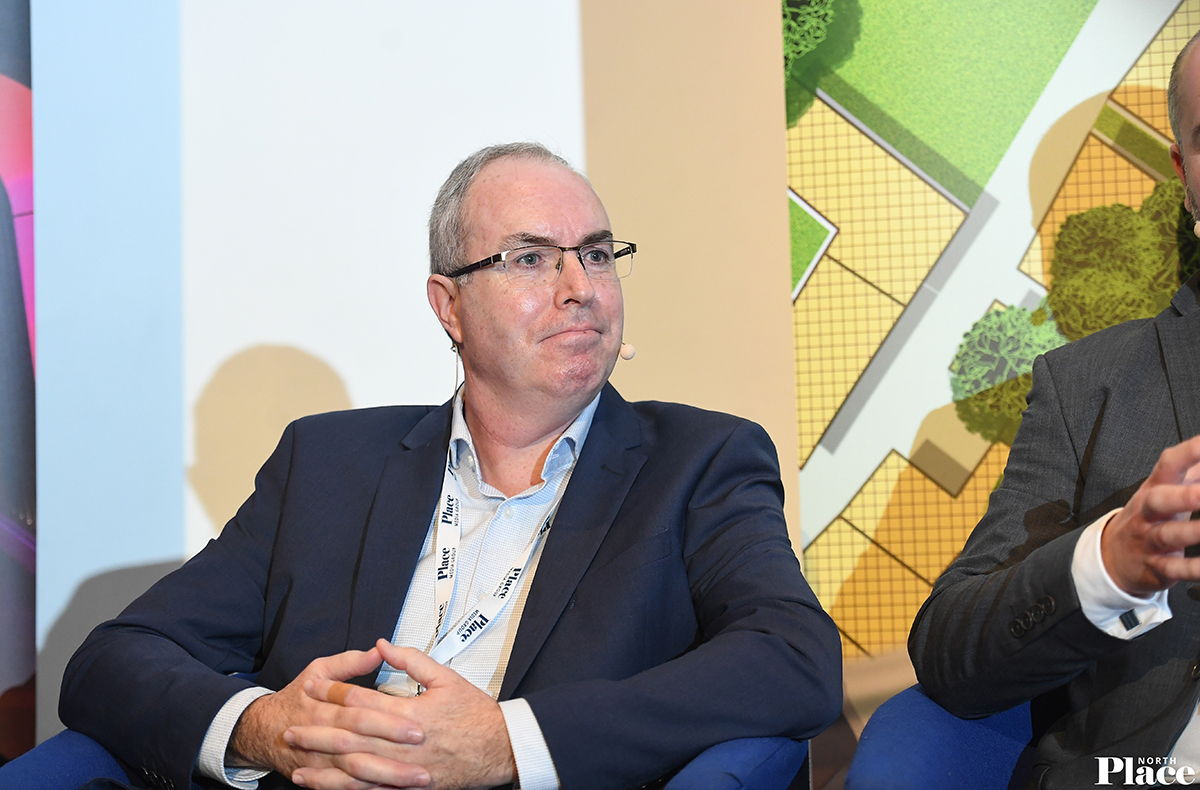
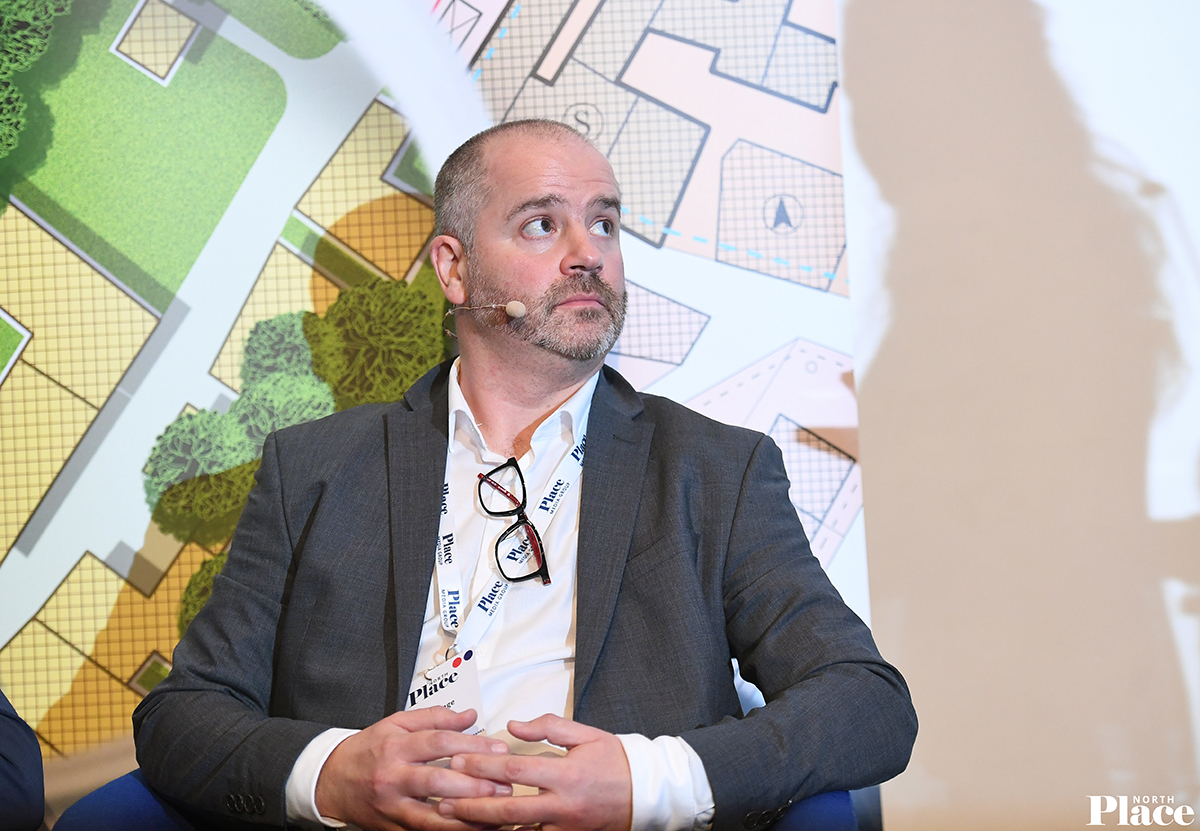
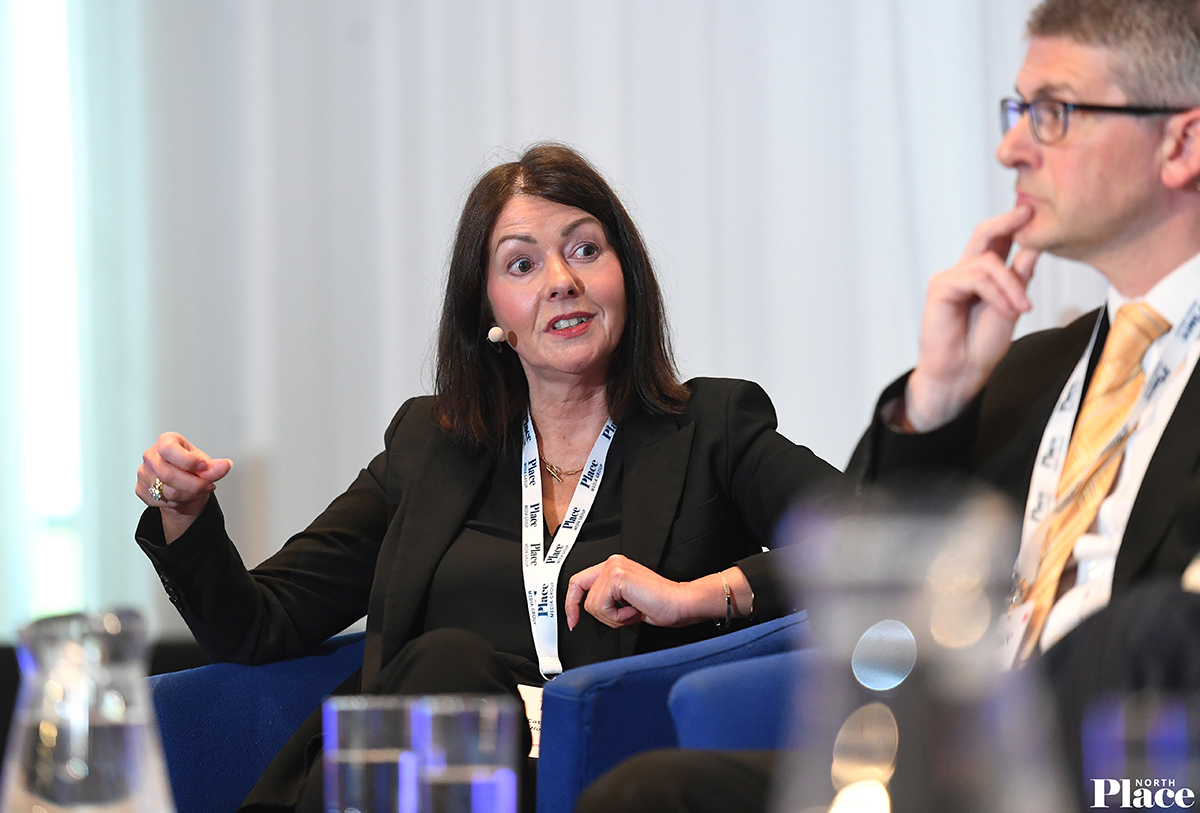
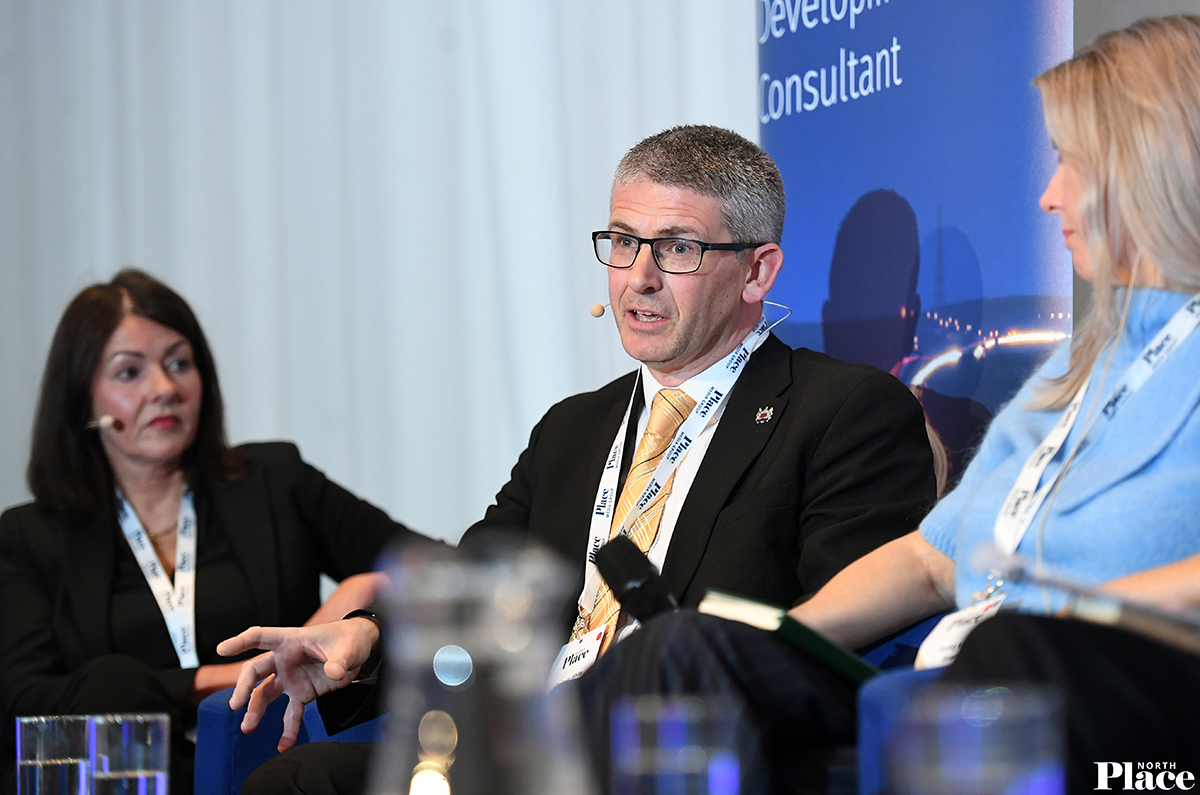
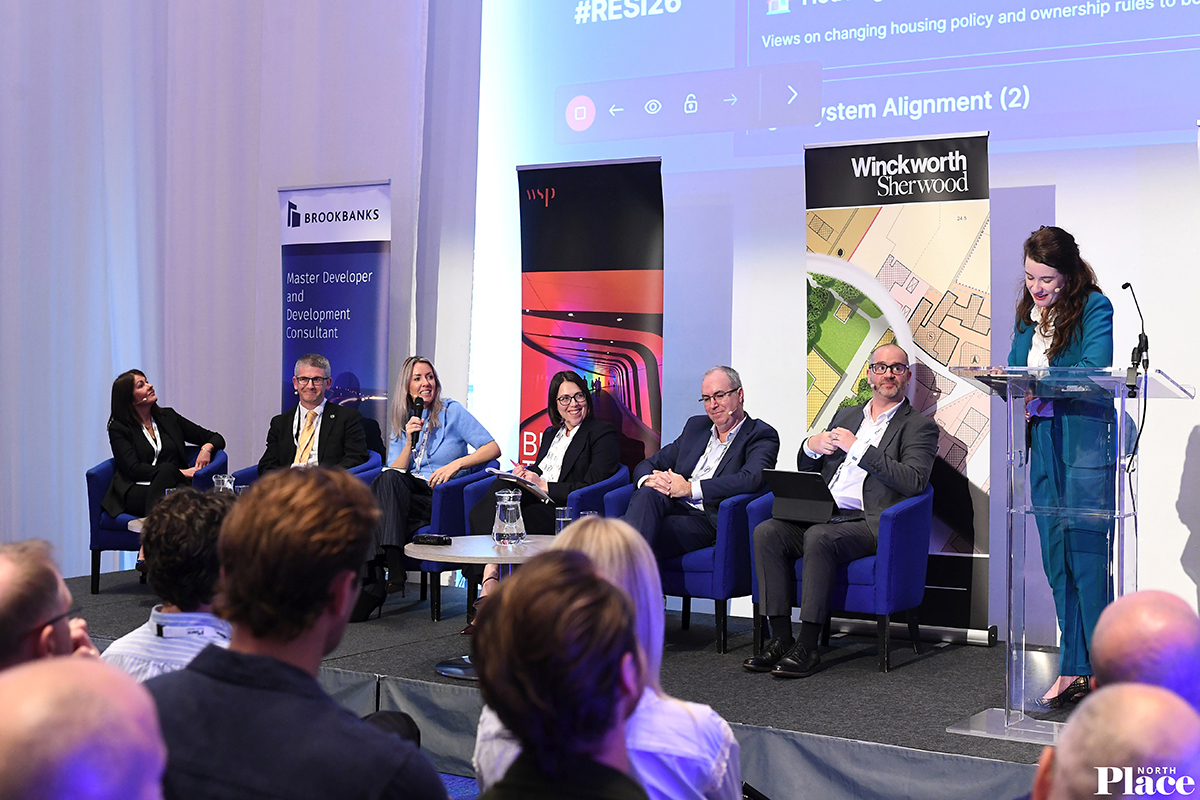
The first panel of the day featured Allsop’s Seb Verity, Ollier Smurthwaite Architect’s Matt Ollier, Gleeson’s Joanne Morrison, Brookbanks’ Tori Hall, and Capital&Centric’s Tim Heatley. Credit: Place North
Change needed
The rental market is in a precarious position, with more than 2m properties with EPC ratings below the soon-to-be required C and the loss of 200,000 homes from the private rental market since October 2022.
Combine those facts with the 21% drop in BTR units under construction now compared to last year and you have a market that is crying out for help, argued Allsop’s Seb Verity.
Other panellists emphasised the stark reality of viability and just how hard it is to make projects stack up – especially those with affordable housing.
Substantial changes are needed. Here were a few of the ideas thrown around:
- Crowdfund developments – real estate tokenisation is starting to take off across the globe, perhaps it is time for it to make its way to the UK?
- Get government to buy and keep properties – the keeping here is key, with Capital&Centric’s Tim Heatley arguing that this does not have to only apply for affordable housing. Read more about his idea.
- End right to buy – although panellists noted this has pretty much been done with the already-introduced 35-year freeze.
- Put public land to work – file this one as a soon-to-be reality suggestion, with mayors across the country already looking at how they can bring underutilised sites in their ownership back into use.
- Streamline planning – an oldie, but a goodie, reducing the time between planning submission, decision, and work starts could resolve a host of viability challenges.
- Introduce tax incentives for brownfield development and retrofit – a simple idea that would encourage more sustainable development.
- Eliminate stamp duty – a way to get the market moving.
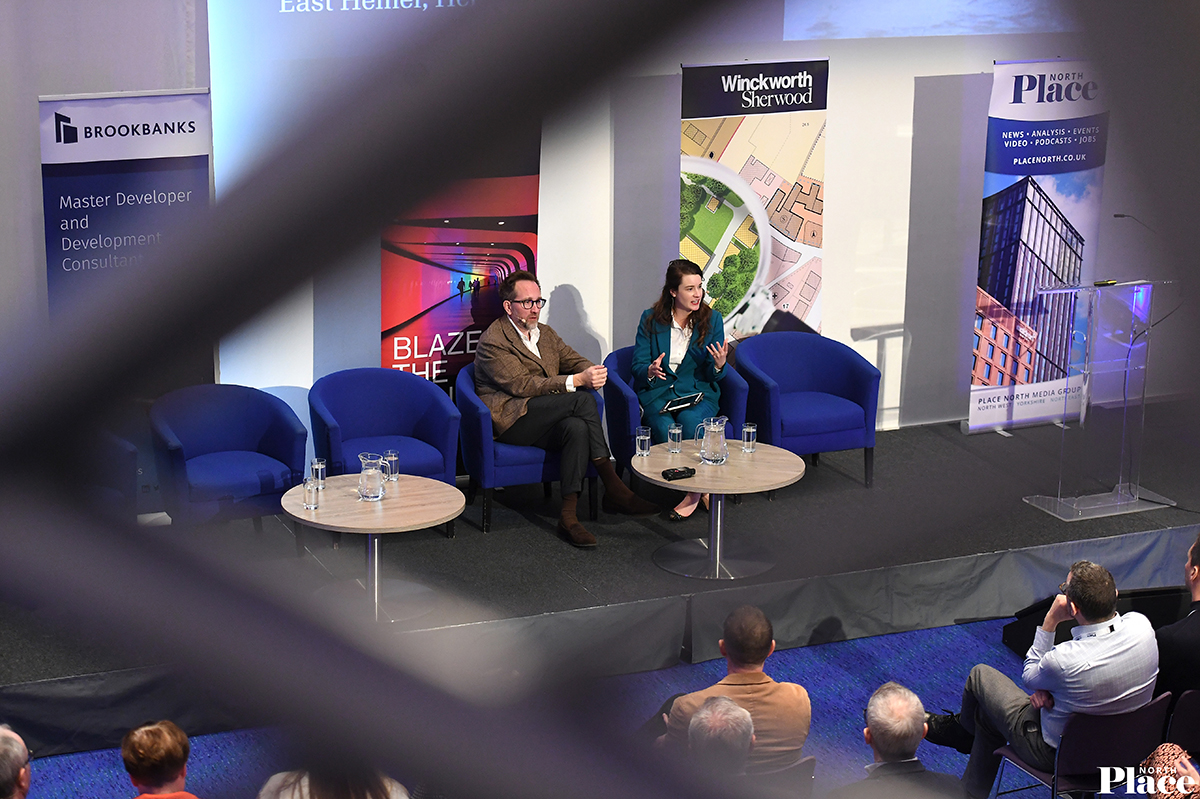
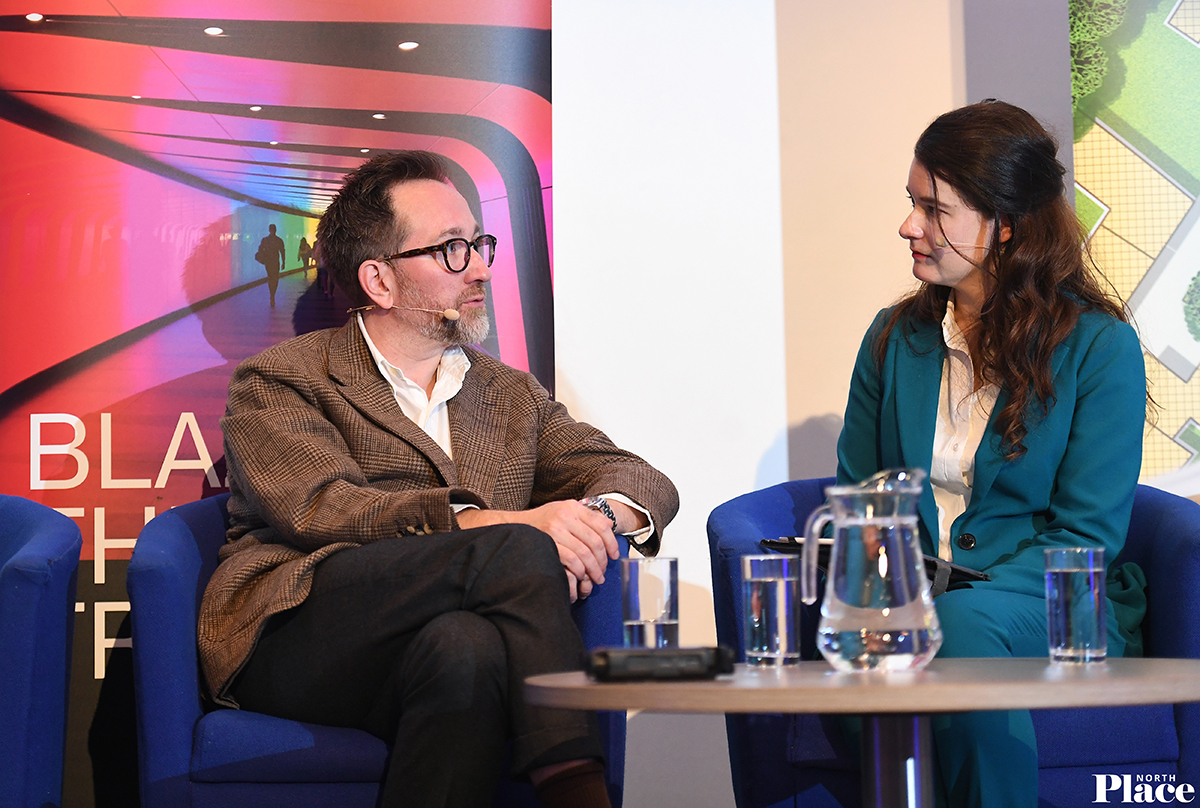
Rob Chesworth from The Crown Estate spoke with host Julia Hatmaker in a one-to-one conversation about how the group is driving innovation in development. Credit: Place North
The long-term view
The Crown Estate has given itself a challenge – to view its developments with a 100-year lens. Rob Chesworth told the audience how that perspective has changed how The Crown Estate approaches public realm, landscape architecture, multigenerational housing mixes, and sustainability.
Homes England’s Catherine Holmes shared the virtues of patient capital and how the government agency is partnering up with developers and banks to spearhead development. Winckworth Sherwood’s Rebecca Jason, Ollier Smurthwaite’s Matt Ollier, and Chesworth spoke about how pension funds are uniquely placed to provide viability solutions.
The key to all of this is having that long-term view.
For the Crown Estate, it has set up a development management agreement with incentives and penalties around key targets – such as a delivering housing projects using less than 300kg/m2 of embodied carbon.
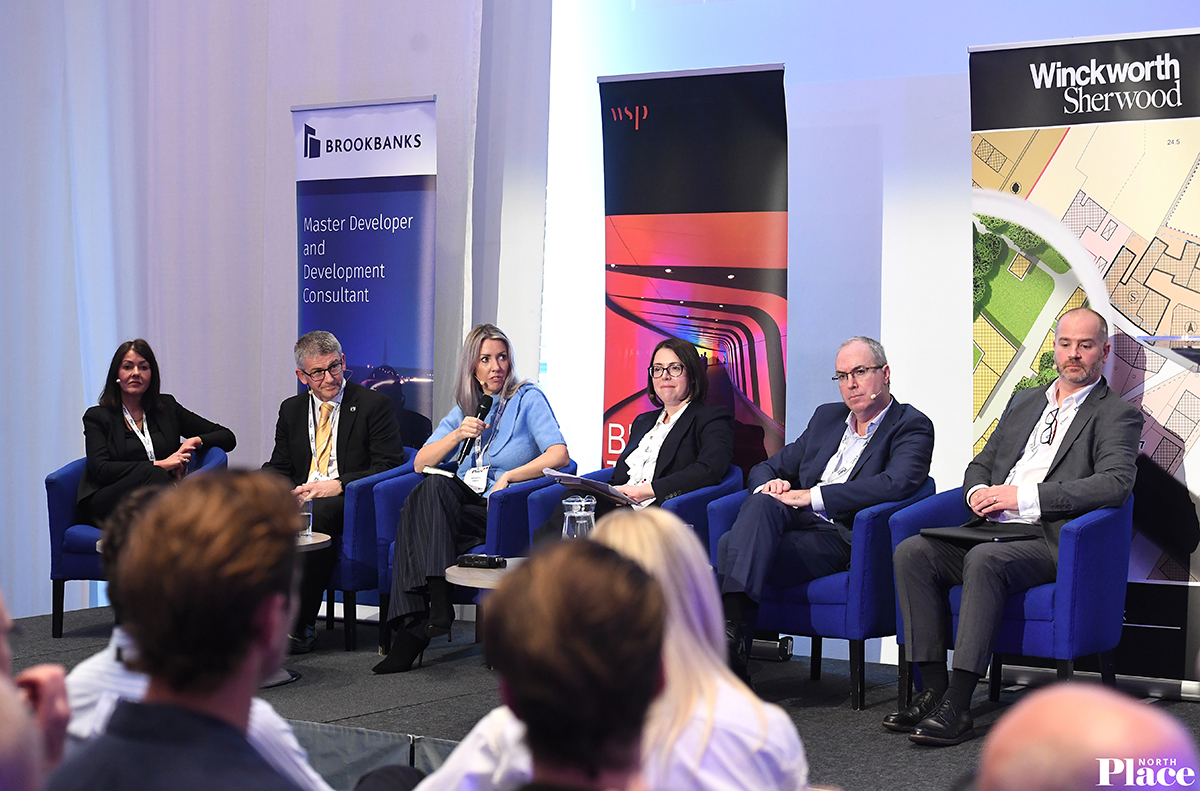
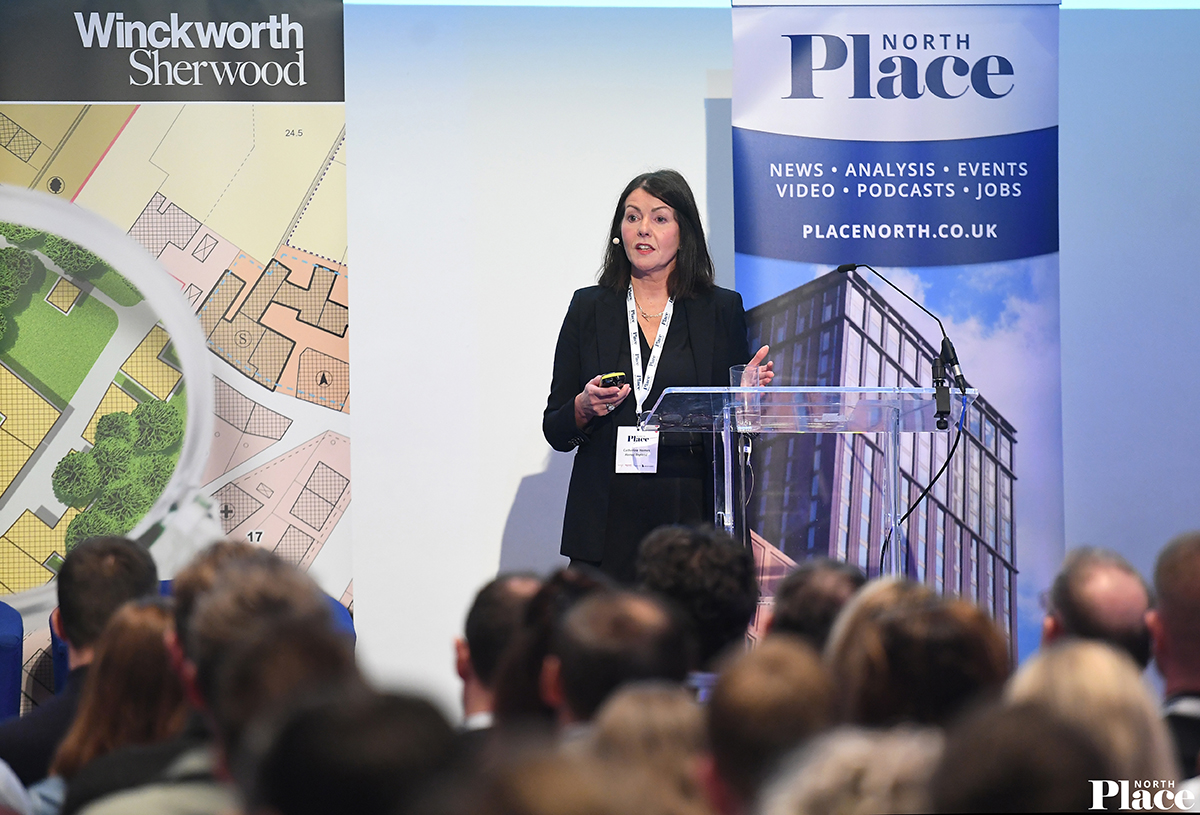
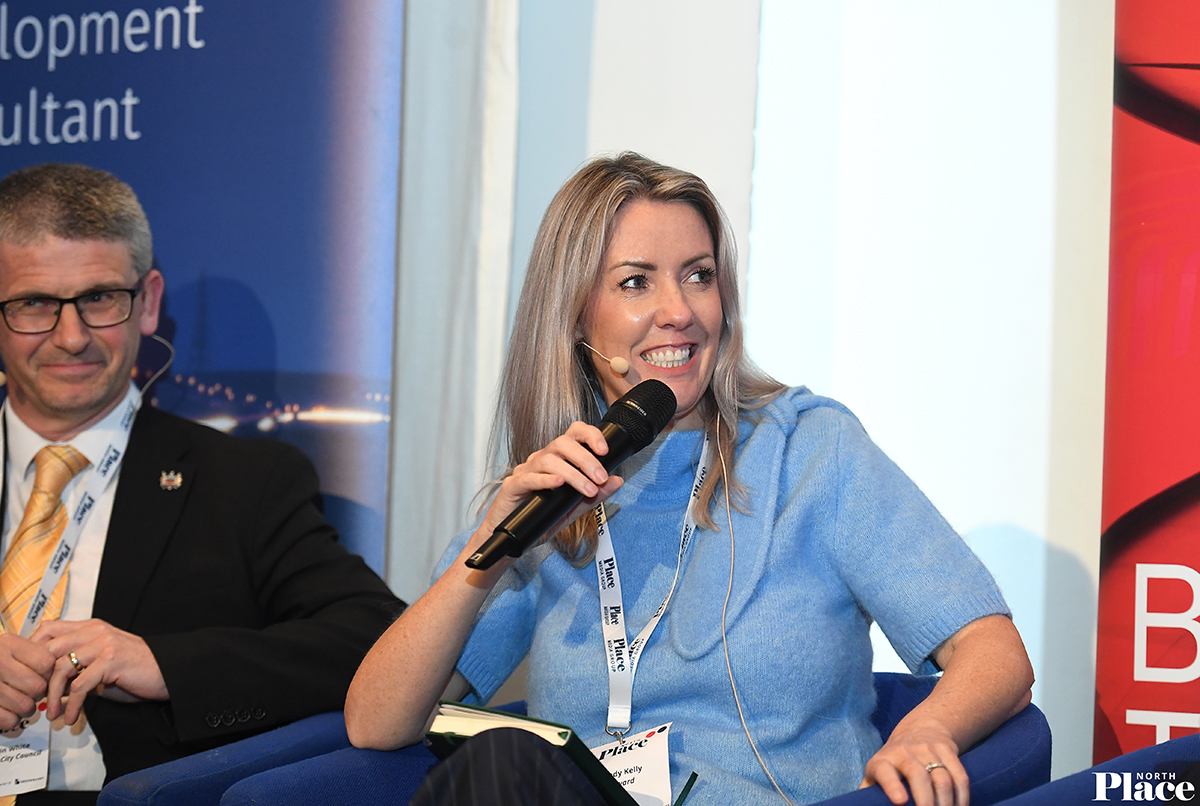
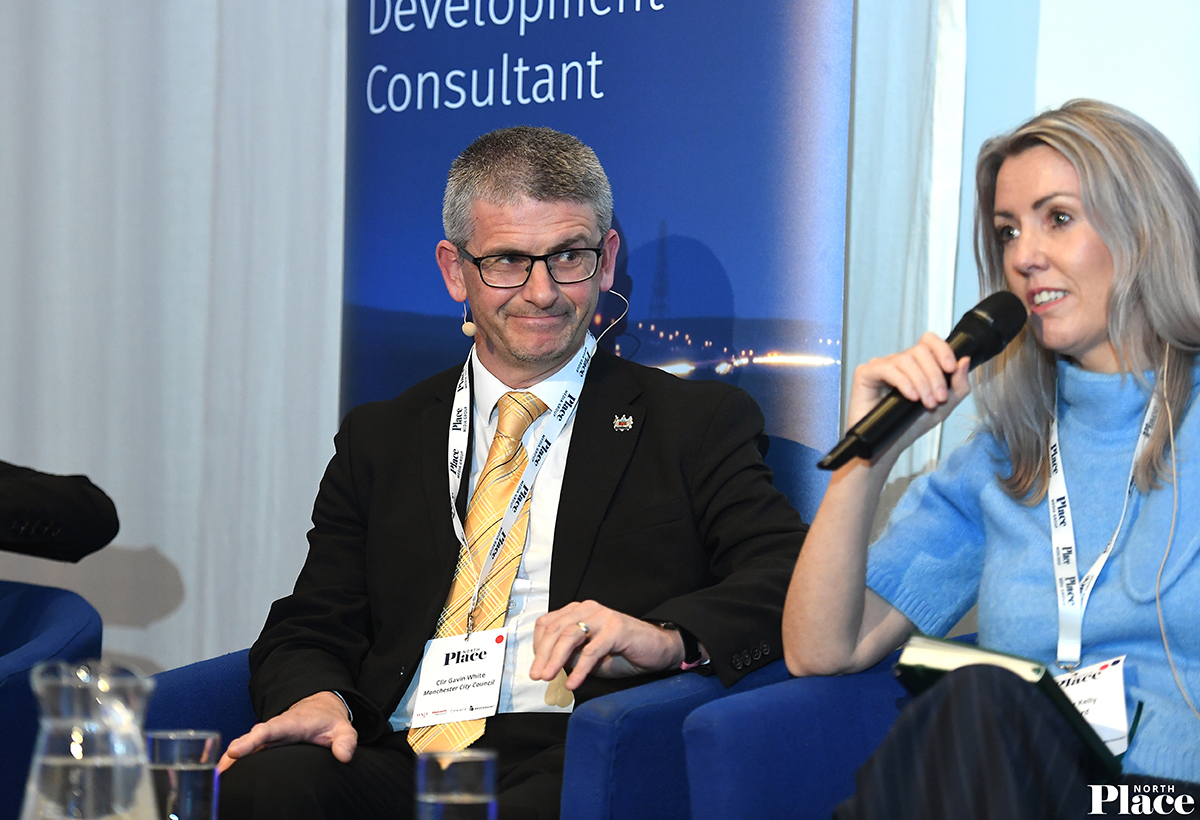
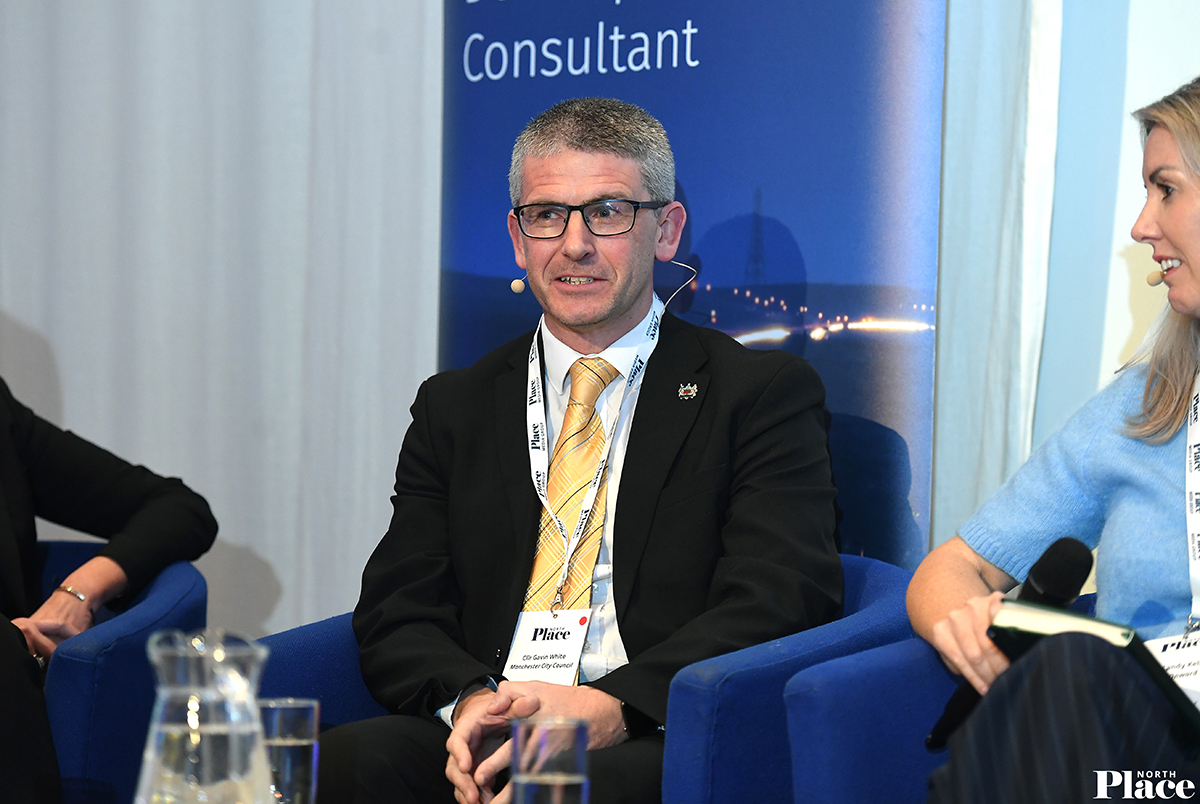
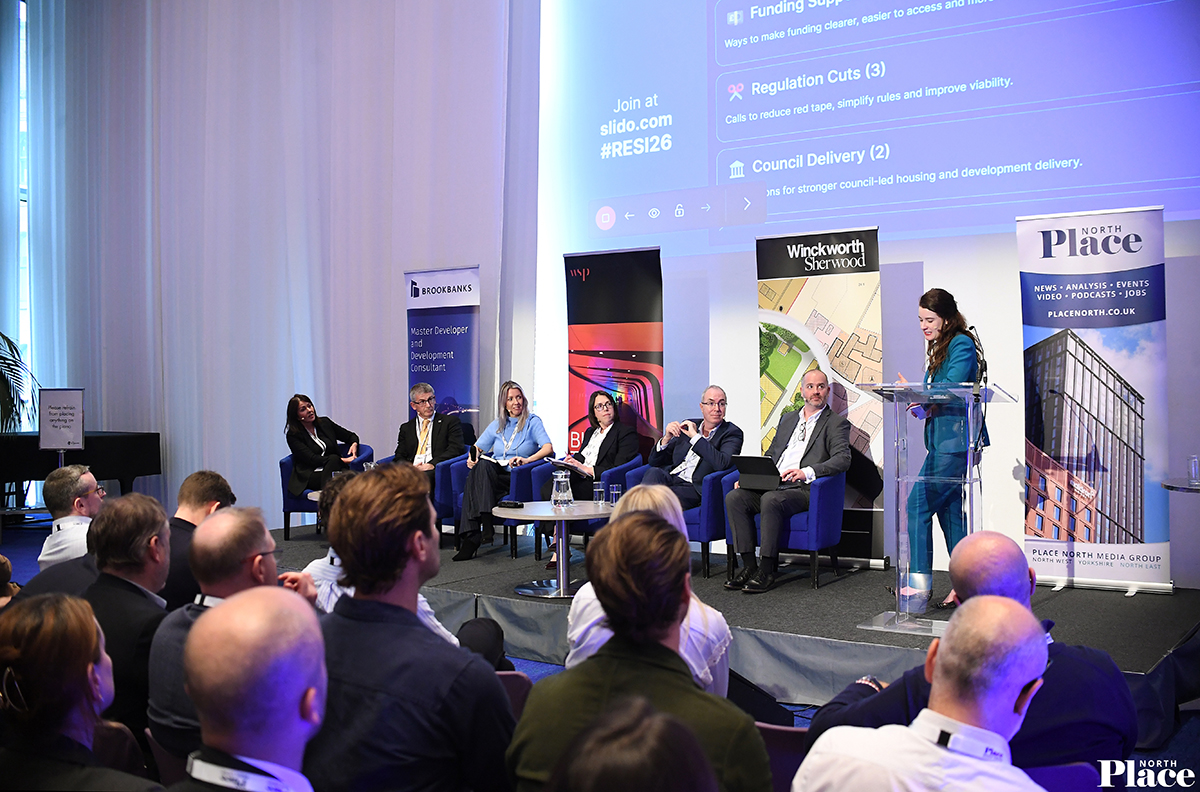
The second panel of the day featured Homes England’s Catherine Holmes, Manchester City Council Cllr Gavin White, Onward’s Sandy Kelly, Winckworth Sherwood’s Rebecca Jason, J Greenwood Builders’ Adrian Rooney, and WSP’s Andy Teage. Credit: Place North
Homes of the future
The love of green spaces is never going away, said Gleeson Homes’ Joanne Morrison. Tim Heatley had a similar point and mentioned how depraving projects like the one he is doing in Wolverhampton, have a whole slew of additional benefits around reducing flood risks, building community, and urban cooling.
To sum up the day’s discussions: come 2050, we can expect more multigenerational communities, council-built homes, green spaces, energy-efficient residences, brownfield sites brought back into use, and car barns – and most will be built by robots.
What’s next?
5 November – Liverpool City Region Development Update
12 November – MIPIM | North of England Update
19 November – Life Sciences Update
2 December – Economic Forecast Lunch: The North in 2027
28 January – Lancashire Development Update 2027
Gallery
Click any image to launch gallery