



Commentary
Resilient grids in a net zero world
Power cuts, once rare, are now a strategic risk. Recent outages at Heathrow and across the Iberian Peninsula have highlighted just how fragile modern infrastructure becomes when the grid goes down, and how unprepared many systems remain, writes Peter Ridge of Cundall.
As we transition to net zero, we’re placing more reliance than ever on electricity as a single source of energy. Heating, cooling, transport, communication, manufacturing, even critical safety systems, all increasingly depend on a stable, always-on grid. But what happens when that grid goes down?
This is a strategic risk that must be considered. If we don’t design our systems holistically – anticipating outages and their knock-on effects – we risk facing consequences that are operationally, commercially, or societally unacceptable
Resilience is not just redundancy
It’s easy to assume resilience means ‘a second, or backup connection’ to the grid. But what if that second supply fails – or doesn’t transfer, as at Heathrow? What if both supplies fail, as in Spain and Portugal?
Many buildings rely on backup diesel generators to provide electricity in the event of a grid outage. But that model has problems such as poor environmental performance, limited runtime, and slow or unreliable switchover. All this in addition to regulatory pressure to reduce fossil fuel dependency.
In response to this pressure, some are exploring ways to mitigate the environmental impact of generators by looking at alternative fuels like Hydrotreated Vegetable Oil (HVO) or hydrogen-ready engine generators. Others see renewables as the answer. But it is not that simple.
Most solar panels, wind turbines and battery energy storage systems (BESS) are designed to work with the electricity grid, not without it. They operate with grid-following inverters, electronic devices that synchronise their output to the voltage and frequency of the existing grid. This means they need a stable voltage reference to function, and if the grid collapses, they disconnect from the grid.
This is what happened recently on the Iberian Peninsula in April. With too many grid-following inverters and not enough self-supporting generation, the grid couldn’t recover from the disturbance, resulting in a complete system outage.
Grid-forming inverters – which can operate independently and help stabilise the grid – are no longer just experimental. In the UK, their use is becoming mandatory for many new stability services, and across Europe, they’re increasingly required in transmission-connected renewable projects. But while the technology is maturing, widespread deployment at scale is still emerging, and comes with cost, integration, and control complexity challenges.
Resilience isn’t just about having backup, it is about considering every risk scenario and having a credible plan to deal with it.
Microgrids aren’t a silver bullet
Microgrids – self-contained energy generation, storage and distribution systems – often get cited as a resilience solution. But most microgrids today are technically complex and expensive.
Some domestic energy storage systems, like Tesla Powerwall, can operate off-grid. And this is great for domestic use, but when we talk about them as a solution for resilience on larger sites, the real issue is scale. Running a fridge and a few lights is one thing. Running a complex building or critical infrastructure site like a hospital, is something else entirely.
We’ve seen commercial microgrid projects shelved because the cost of true autonomy just didn’t stack up.
Heat, buildings, and the overlooked risk
As buildings become more energy-efficient, they often rely more on active systems like mechanical cooling, ventilation, and digital controls. That’s perfectly reasonable, especially in large, complex, or high-performance environments.
But what happens when those systems go offline, say, during a 35°C heatwave?
How long can the building remain safe and functional? What’s the thermal response? What happens to IT loads, medical fridges, air quality, or even basic comfort?
We often model energy use under standard conditions, but do we model long-duration power failure? And do we assess what that means for occupants, systems, and operations?
Implementing design solutions
Cundall is working with clients across commercial, energy, infrastructure, and data centre sectors to design solutions that build resilience into the crucial systems that power our projects. These include private substations with independent switching capability, BESS and synchronous condenser integration for local stability, microgrid architectures that can genuinely work independently if needed, and hybrid resilience strategies that combine renewables, smart controls and low-carbon backup like HVO.
We’re also challenging the standard N+1 resilience approach and instead modelling real-world outage scenarios, not just in terms of failure rate, but in consequence and duration.
What we should be doing?
There’s no single answer of course. But there are better questions.
How long can this facility function with no power? What happens if that time frame is exceeded? What are the critical loads, and what’s the realistic outage plan? How quickly can systems switch, stabilise, and recover? Can backup systems operate in a sustainable way, or are we just burning diesel by default? Are design teams aligned on what “resilience” means on this project?
Resilience should be considered as part of the initial design strategy, not just as an afterthought. It spans architecture, engineering, operations and commercial strategy, and as an industry we need to ensure this is happening if we are to avoid critical failure in the future.
Final thought
Resilience is not just technical. It’s cultural. It’s about designing with uncertainty in mind, not just ticking a compliance box.
The grid will get greener. But it may also get more complex, more volatile — and more exposed to extreme weather, cyber risk, and system events.
The question isn’t just whether we can keep the lights on, it is whether our buildings and systems are ready for the moment they go off.
Resilience in power systems is about more than just having a backup. It’s about considering every risk scenario and having a strategy to address it. This might raise more questions than it answers, and I hope it does. We should be prepared as an industry to be seeking solutions to this very real strategic risk scenario.
- Peter Ridge is director of power systems at Cundall

Related Articles
Analysis - Event Summary
Energy and Power 2026 | Summary + gallery
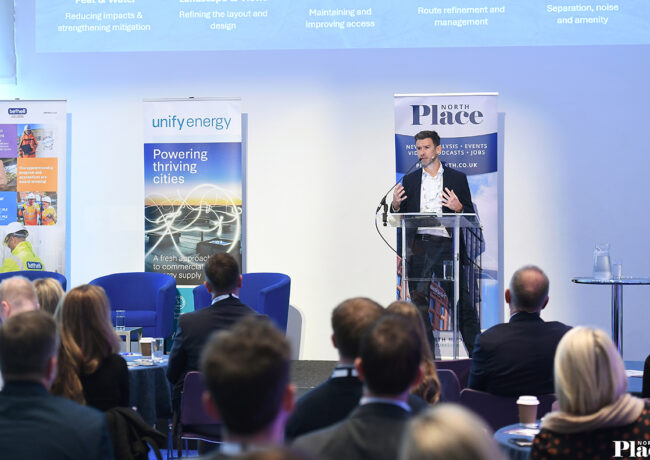
Providing 50% of England’s renewable power and 40% of the UK’s electricity, the North is ready to write the nation’s next chapter in its energy future. To make that chapter as illustrious as it should be, Place North’s latest conference delved into the obstacles to be overcome, opportunities to be realised, and the work to be done.
Analysis - Commentary
Curtins publishes latest embodied carbon data with key sector findings
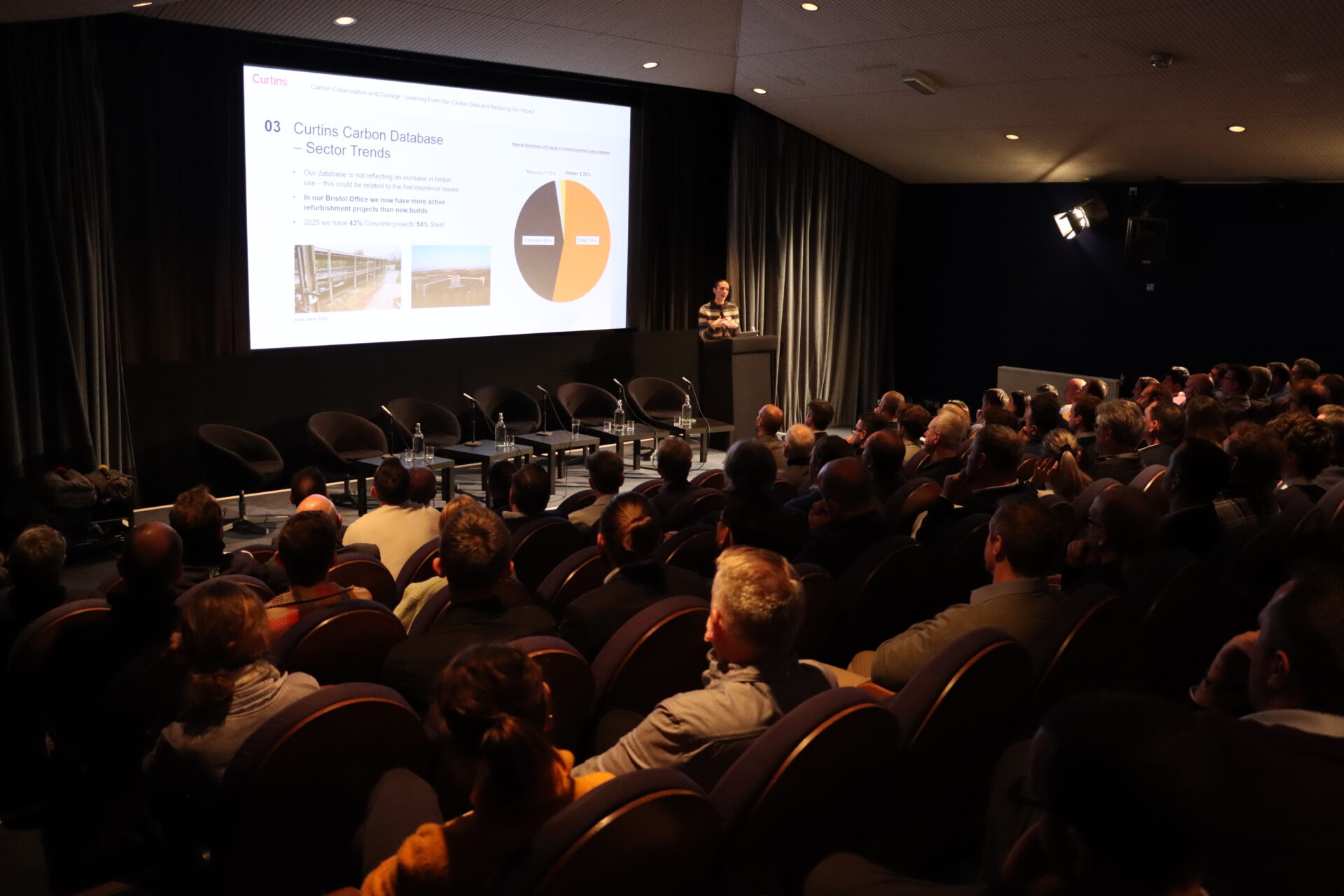
Engineering consultancy, Curtins, has released data for 2025/26, reinforcing its commitment to transparency, collaboration, and accelerating low‑carbon design across the built environment.