


Event Summary
North West Industrial & Logistics | Summary + gallery
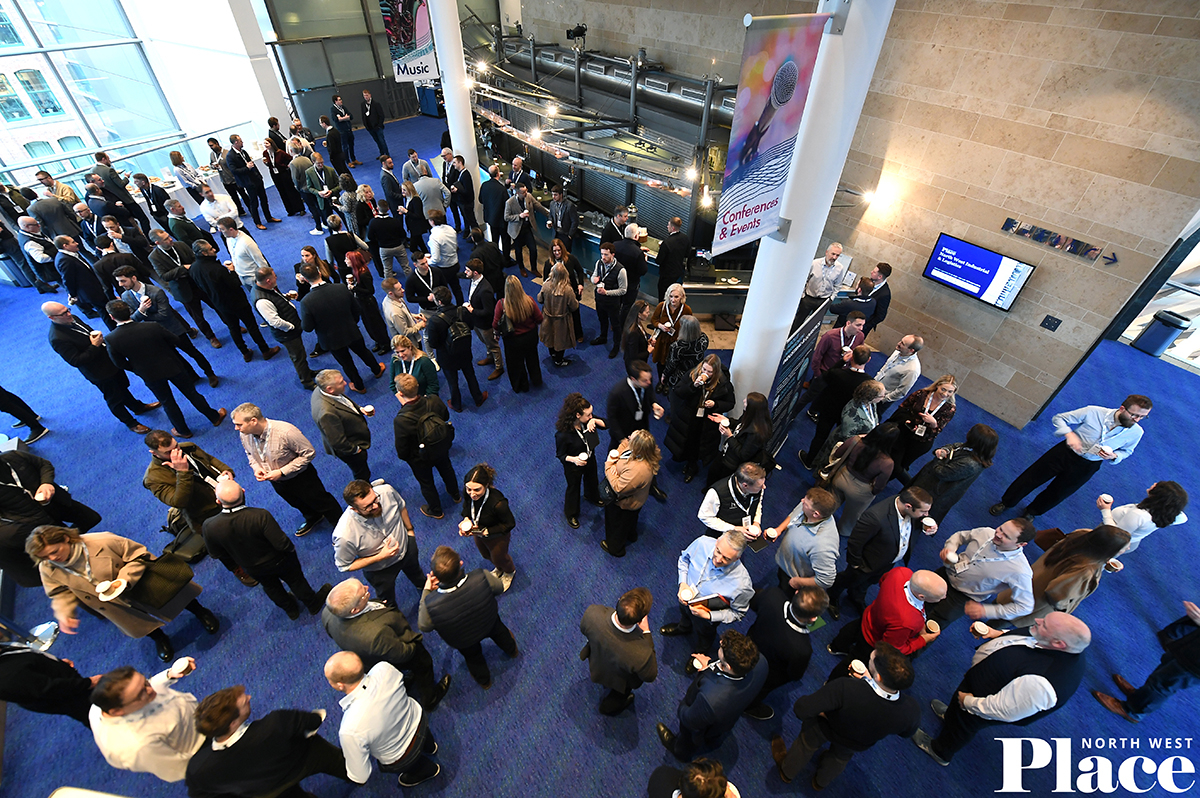
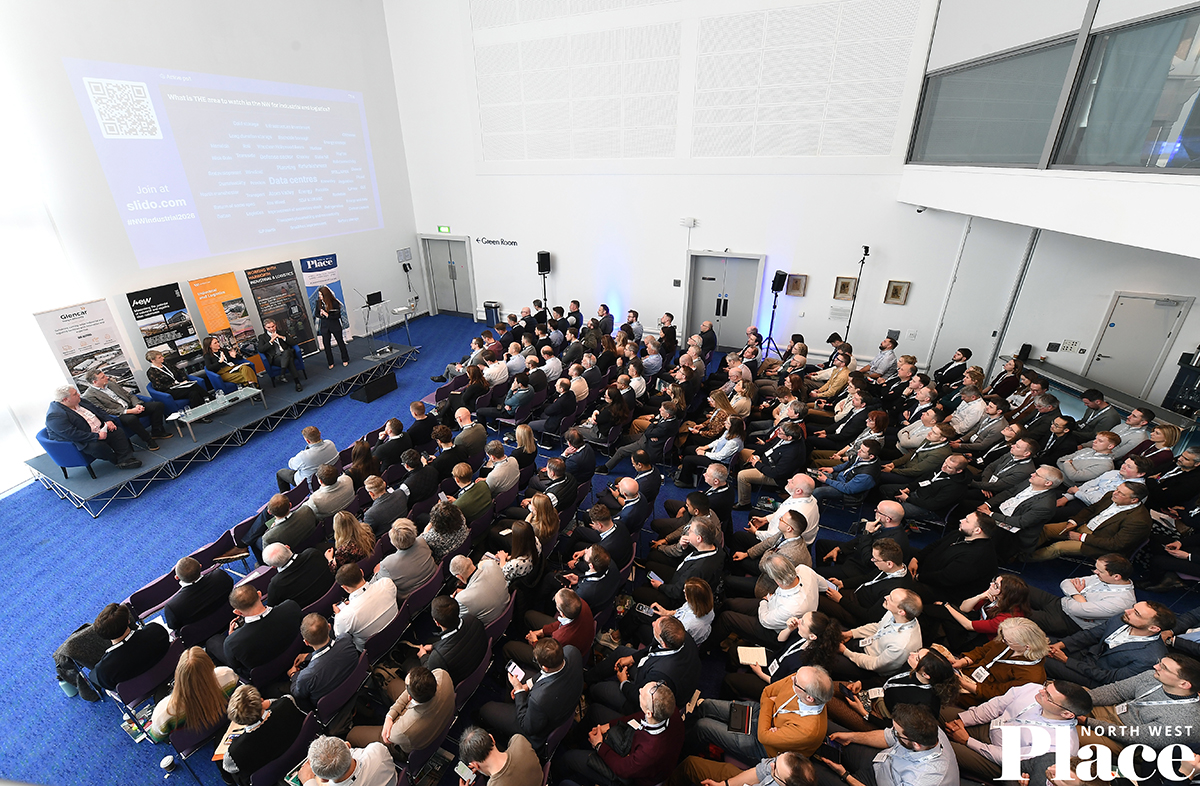
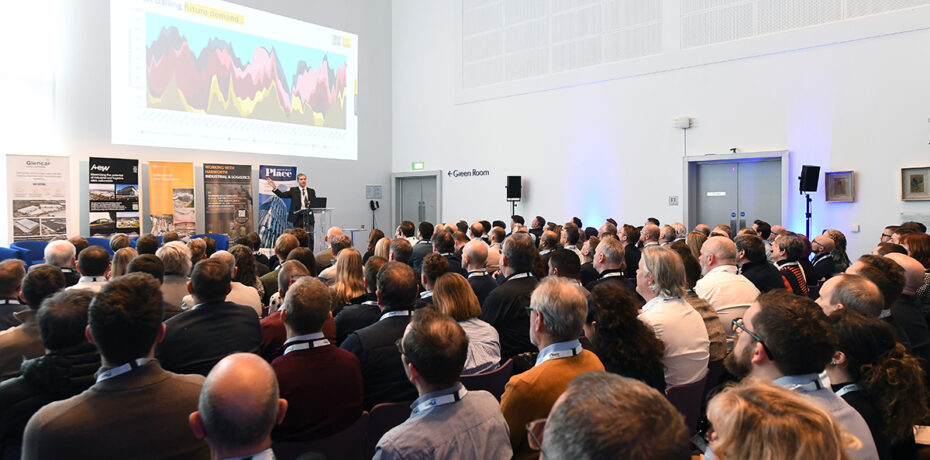
More than 260 property professionals gathered together for the sold-out annual briefing on the sector in the region, including the latest market trends, current challenges, and future opportunities.
North West Industrial & Logistics was held on 12 February at Bridgewater Hall in Manchester. The event was sponsored by AEW Architects, Harworth, Waterman, and Glencar.

Expert speakers
- Joe Burnett, development director at Network Space
- Rob Haslam, North West head of planning at Harworth Group
- Kate Howe, development director at Tritax Big Box Developments
- Malik Azhar Hussain, EMEA sustainability and building energy technology lead at Amazon
- Alan Lamb, director at AEW
- Chris Lloyd, investment director at Tandem Investments
- Fiona Lomas-Holt, director and head of sustainability and ESG at Turley
- Lewis Rapley, logistics research associate at Savills
- Alice Routledge, co-owner and partner of Asteer Planning
- James Scott, head of sustainability at Glencar
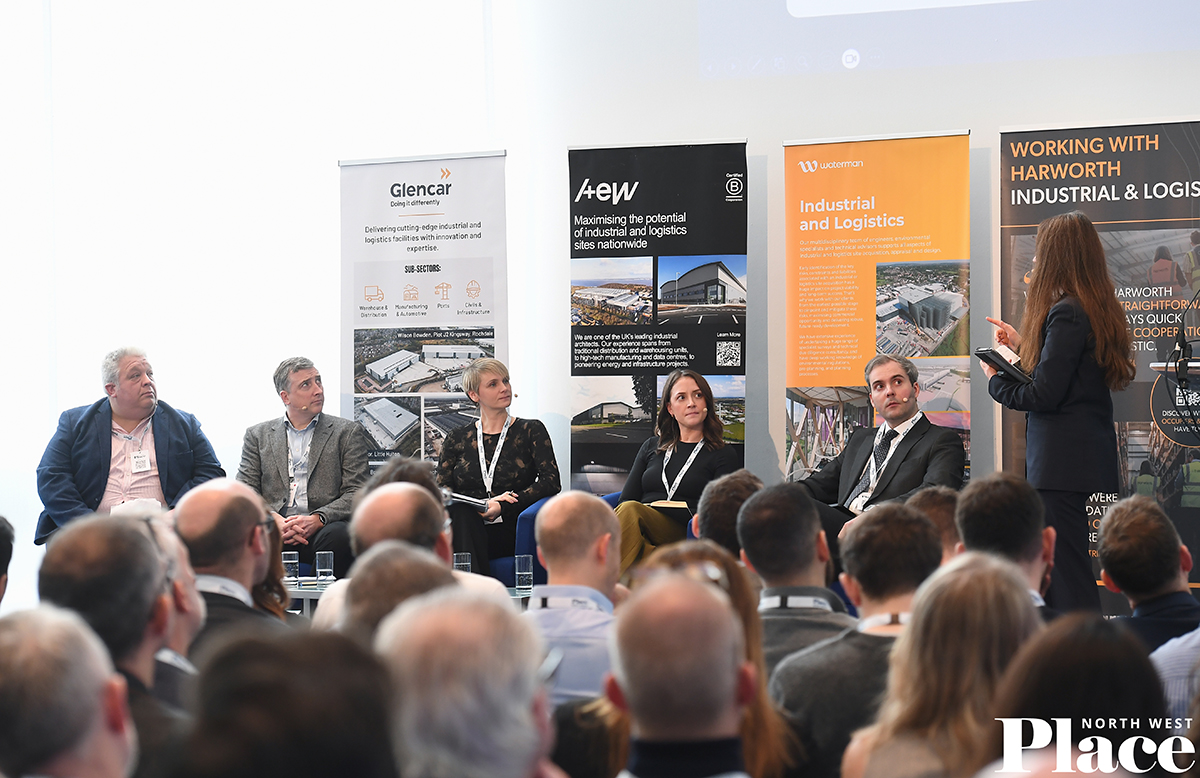
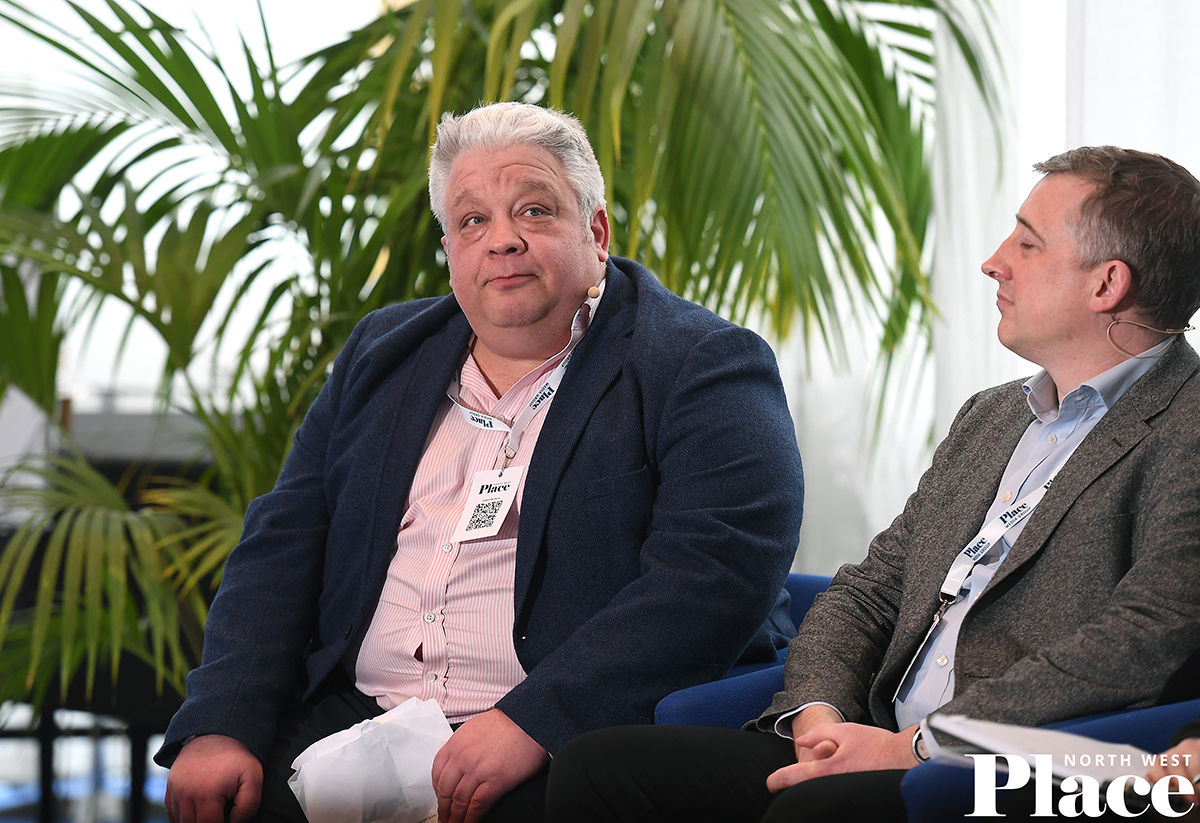
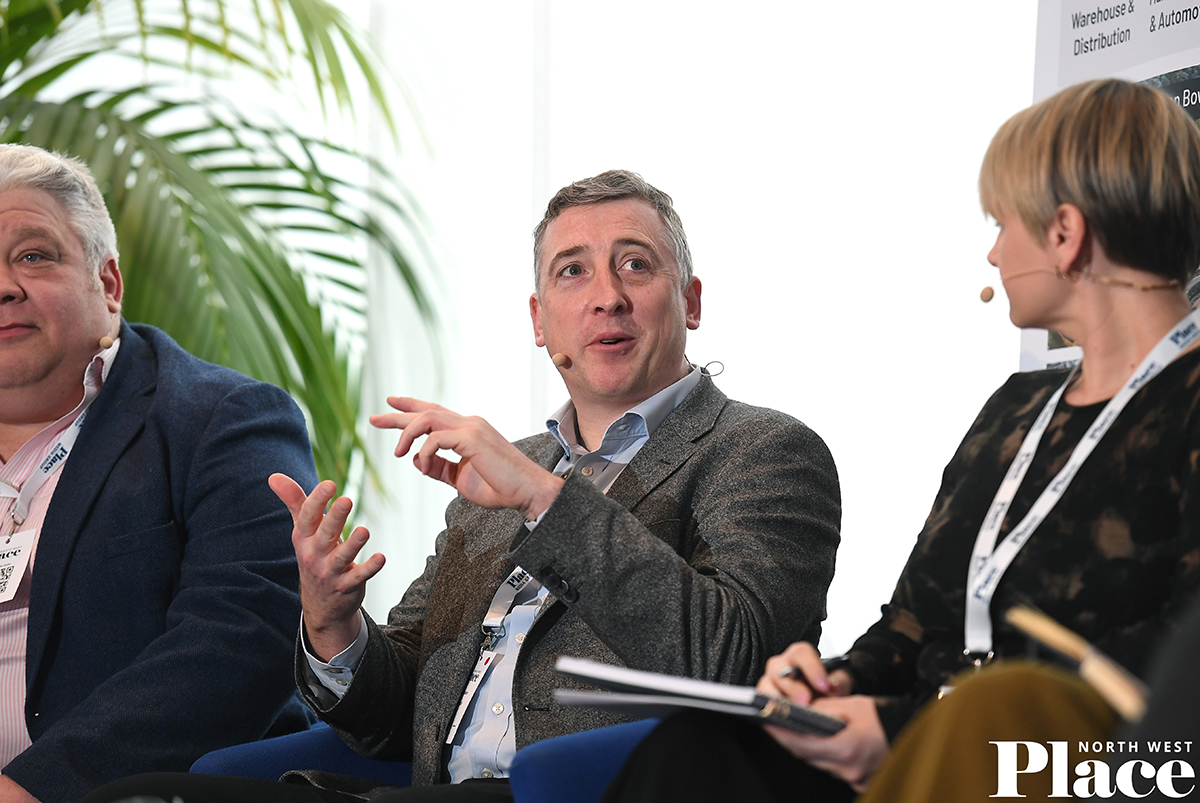
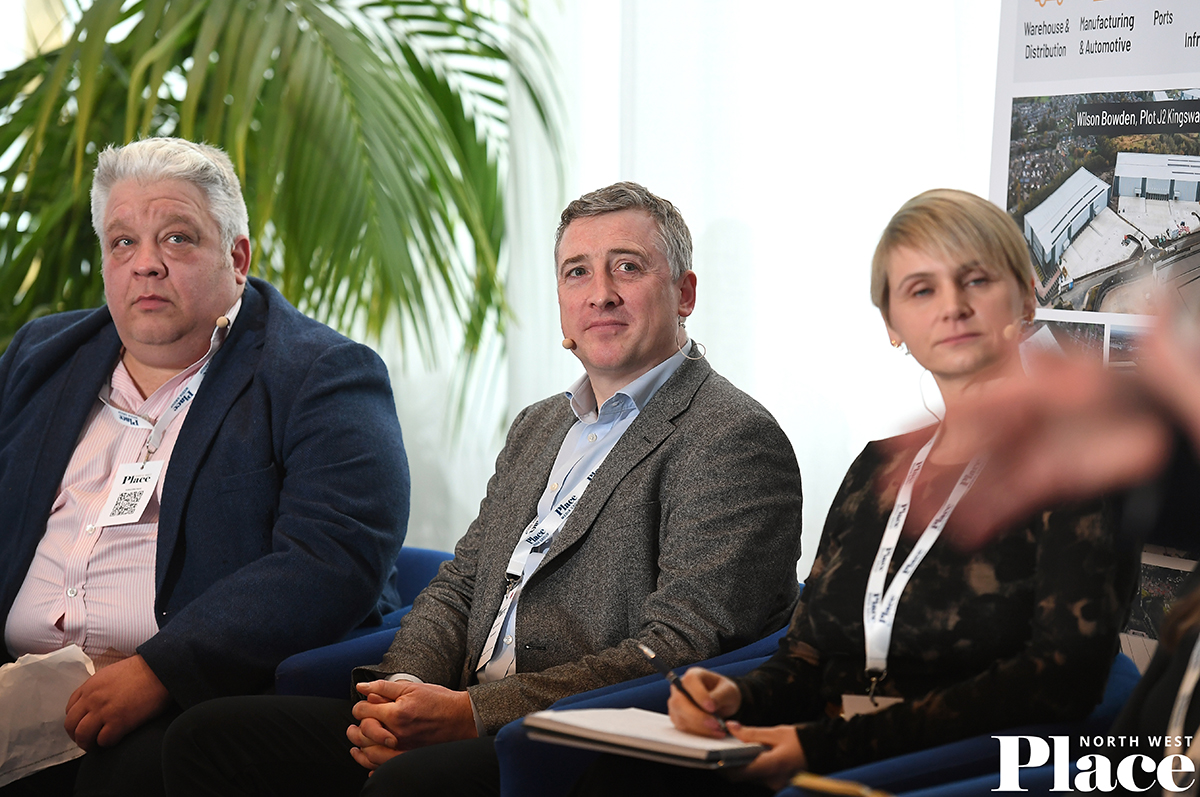
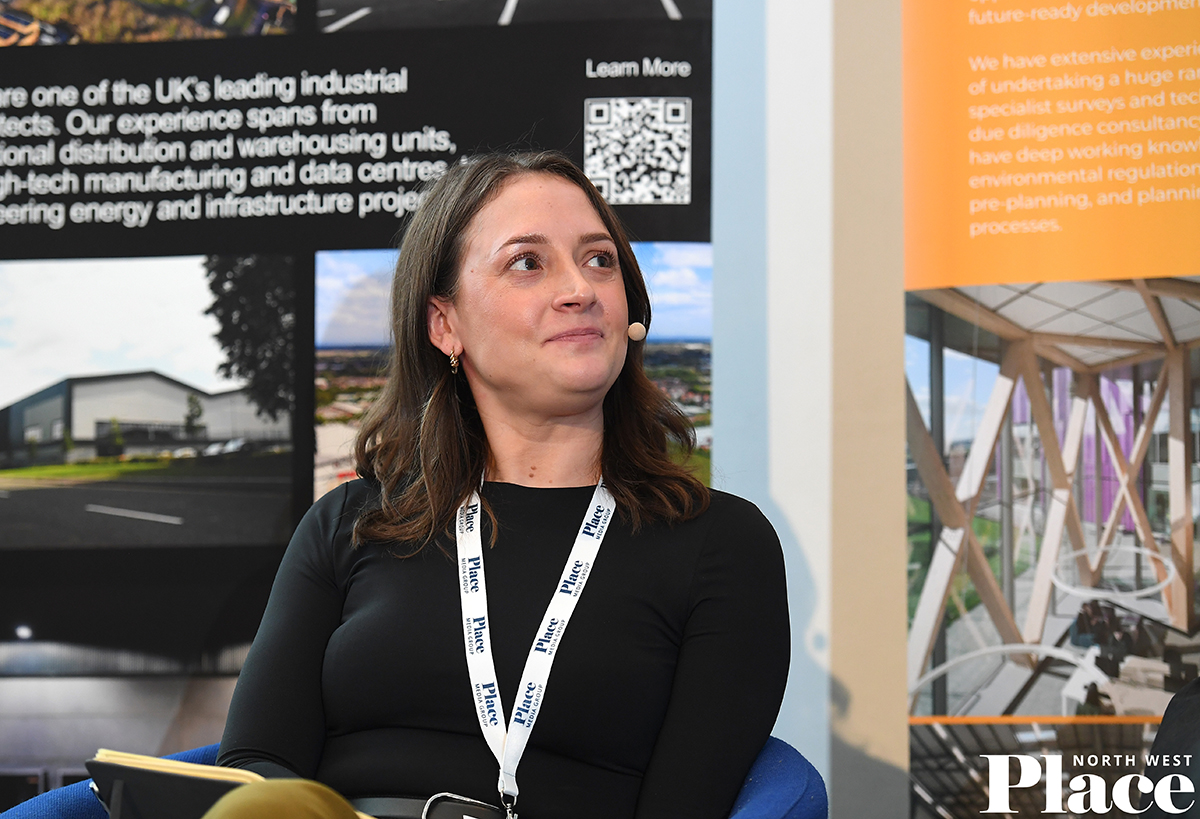
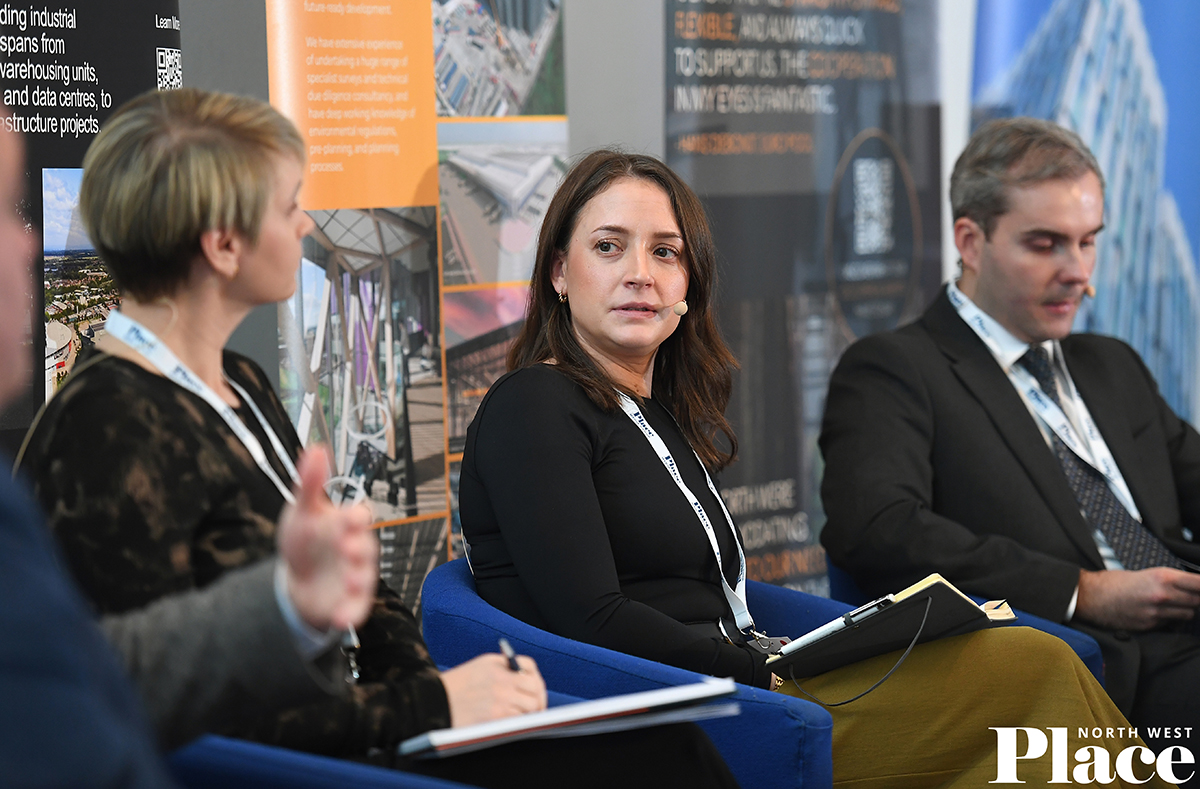
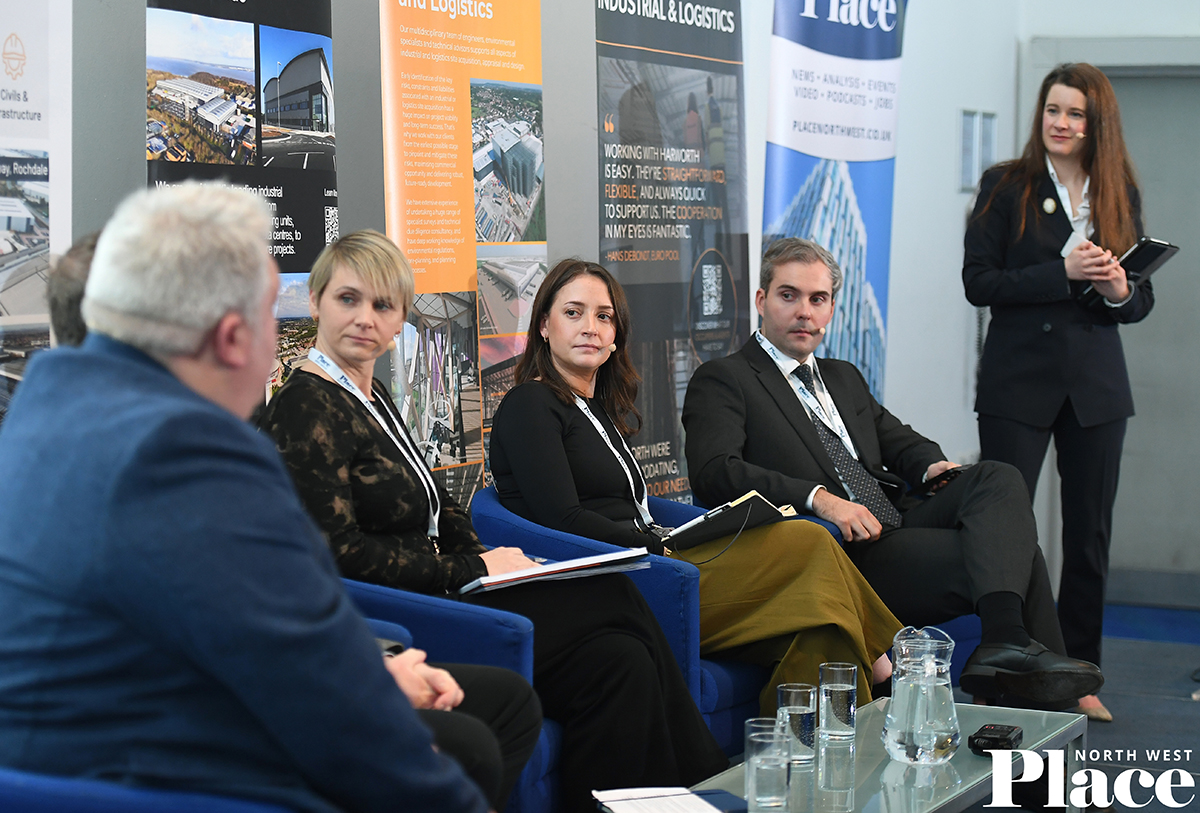
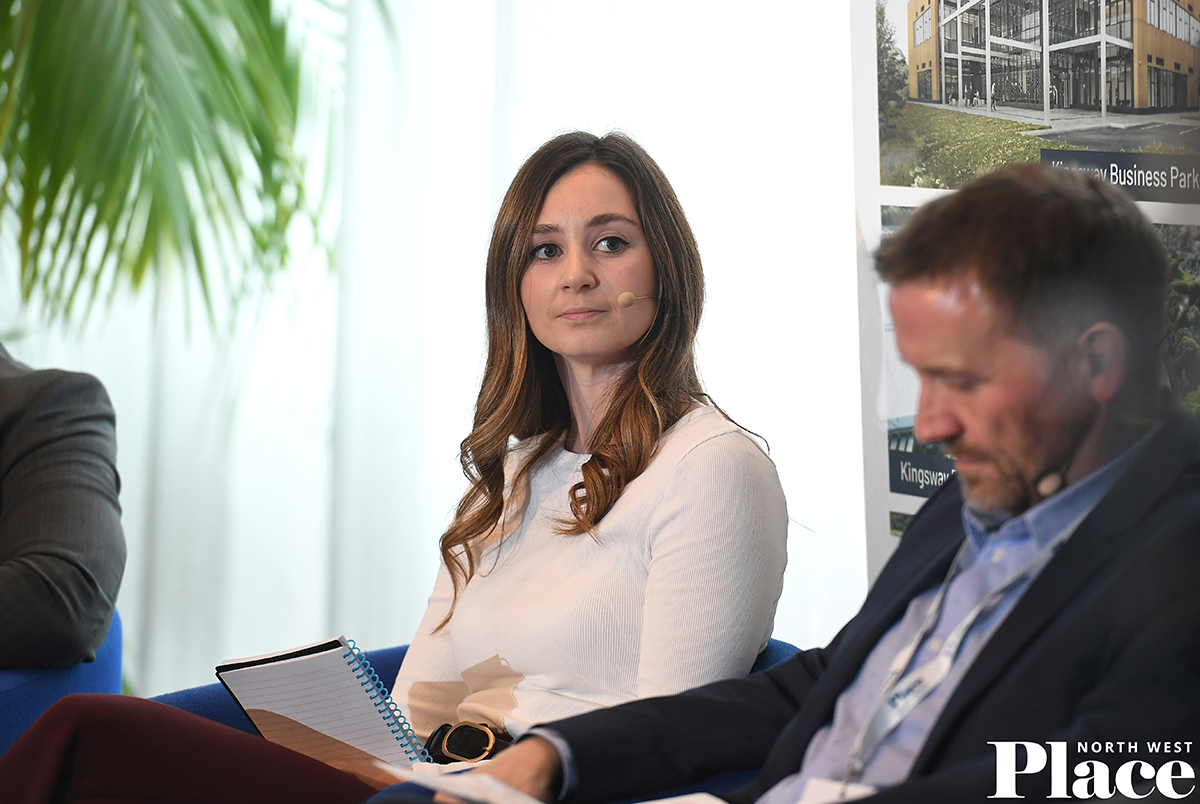
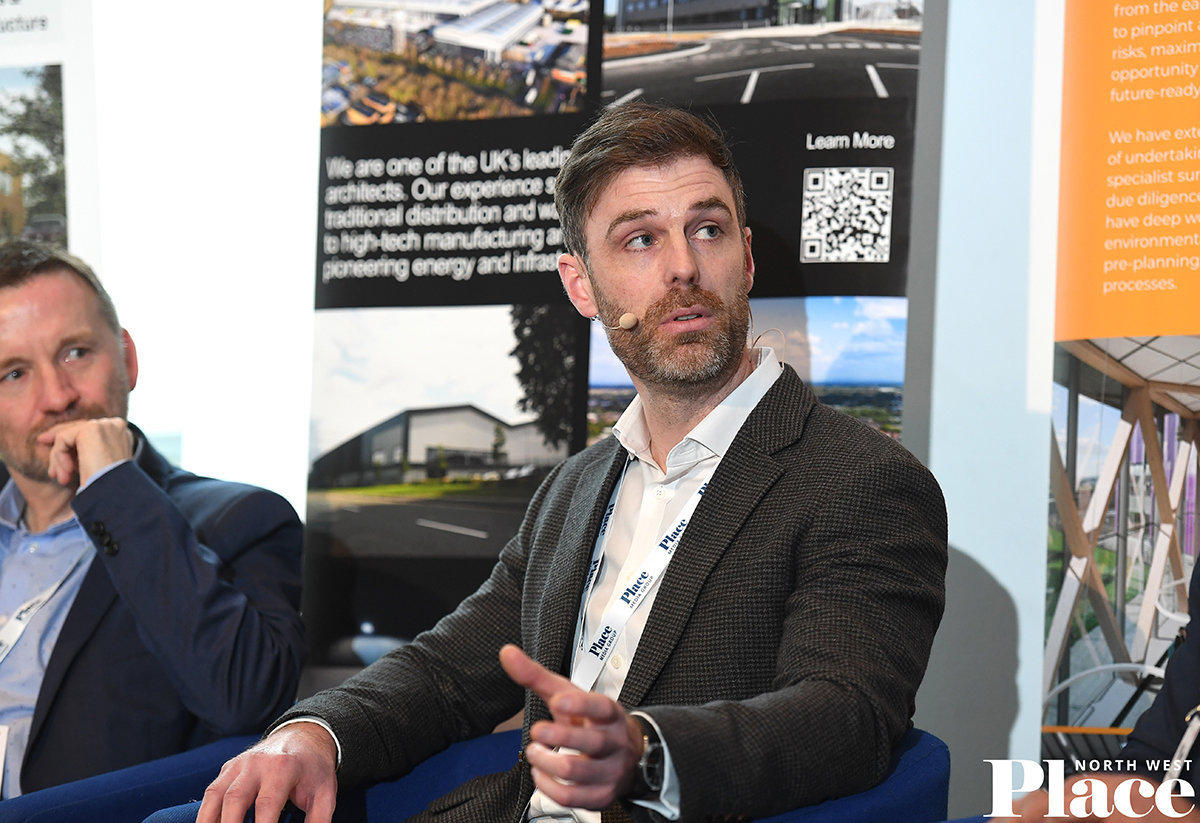
The first panel featured Tandem Investments’ Chris Lloyd, Harworth’s Rob Haslam, Tritax Big Box’s Kate Howe, Asteer Planning’s Alice Routledge, and Savills’ Lewis Rapley. Credit: Place North West
State of the market
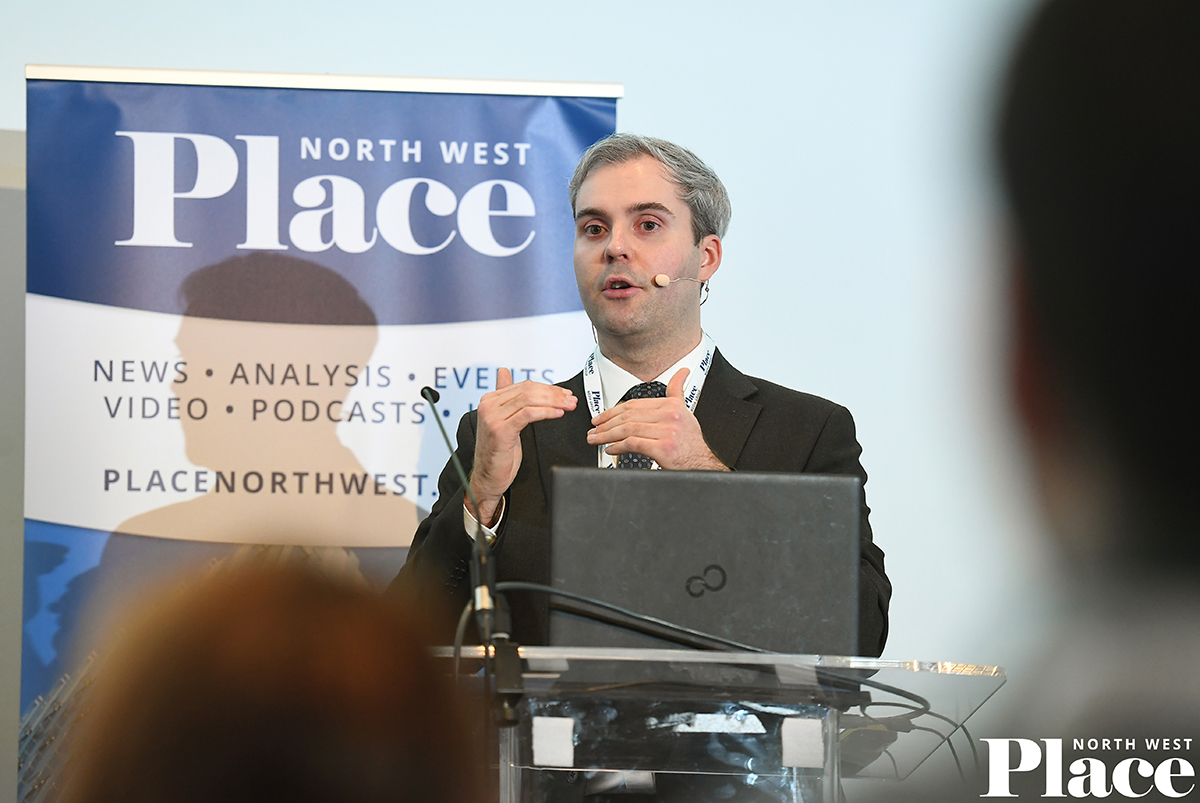
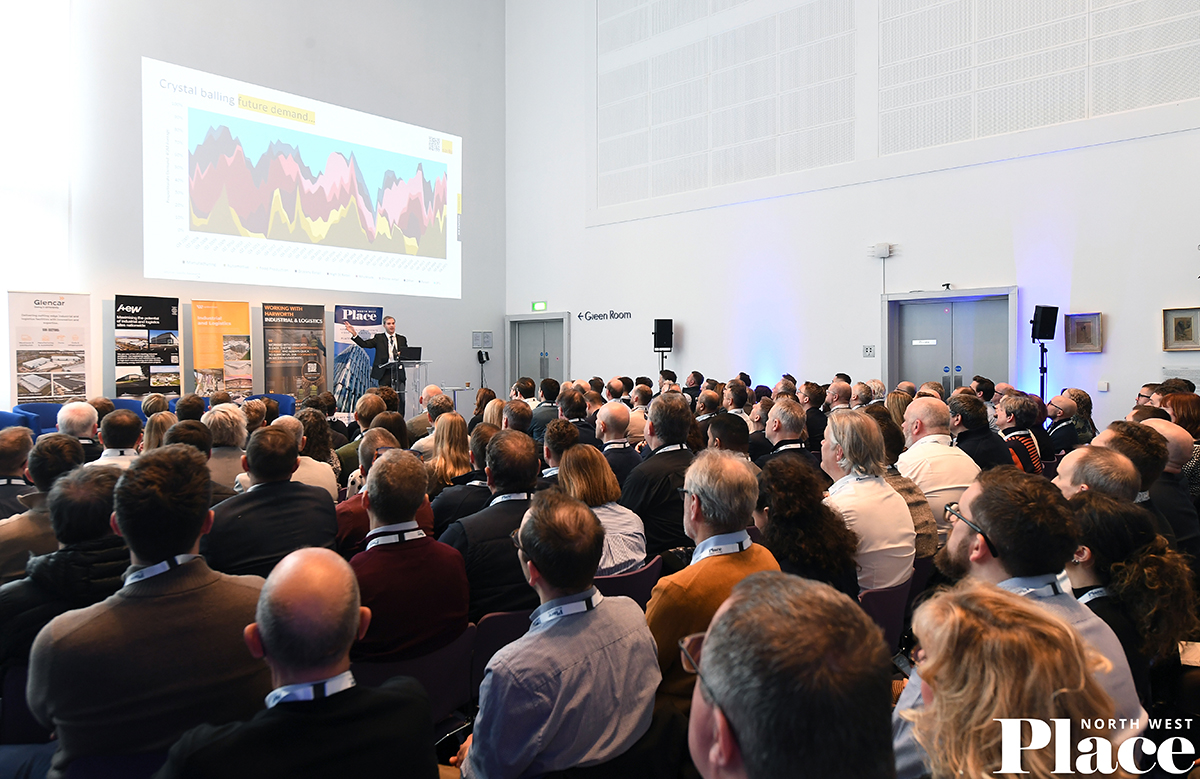
The North West industrial sector remains strong, with good size appetites for second-hand stock and opportunities for development as pipelines slow, according to Savills’ Lewis Rapley, who delivered the opening presentation.
Occupiers are optimistic, with Tritax’s Kate Howe sharing the results of the developer’s latest survey showing that 60% think they will take more space over the next three years and 60% think they are going to increase their labour force during that same time period.
Harworth’s Rob Haslam introduced the audience to the four challenging “P”s for development: people, planning, politics, and power. He noted that in terms of politics, the current mood has been favourable in terms of the push for local plans and the industrial strategy but he worries that there will not be enough time to take advantage of it given possible electoral changes.
Power was hailed as the chief concern for the sector, with everyone agreeing that it takes too long to connect to the grid or even to upgrade current supply. Accordingly, more and more developers are looking to include onsite energy generation and microgrids to reduce reliance on National Grid.
Planning continues to be slow, the audience heard Asteer’s Alice Routledge say. She noted that there are still growing pains associated with the changes to the National Planning Policy Framework and more and more projects are going to appeal.
The audience felt overwhelmingly that data centres would dominate the market going forward, with the first panel agreeing that they are forces of nature in the market due to their hunger for power and land – and ability to pay more for a site than an average industrial and logistics scheme would.
Liverpool City Region was deemed the area to watch in the North West, with the panelists noting the benefits of the Freeport, the emerging strategic development strategy, and a lack of development pipeline. Tandem’s Chris Lloyd added that Langtree and St Helens’ Parkside project was the I&L scheme to watch, in his mind.
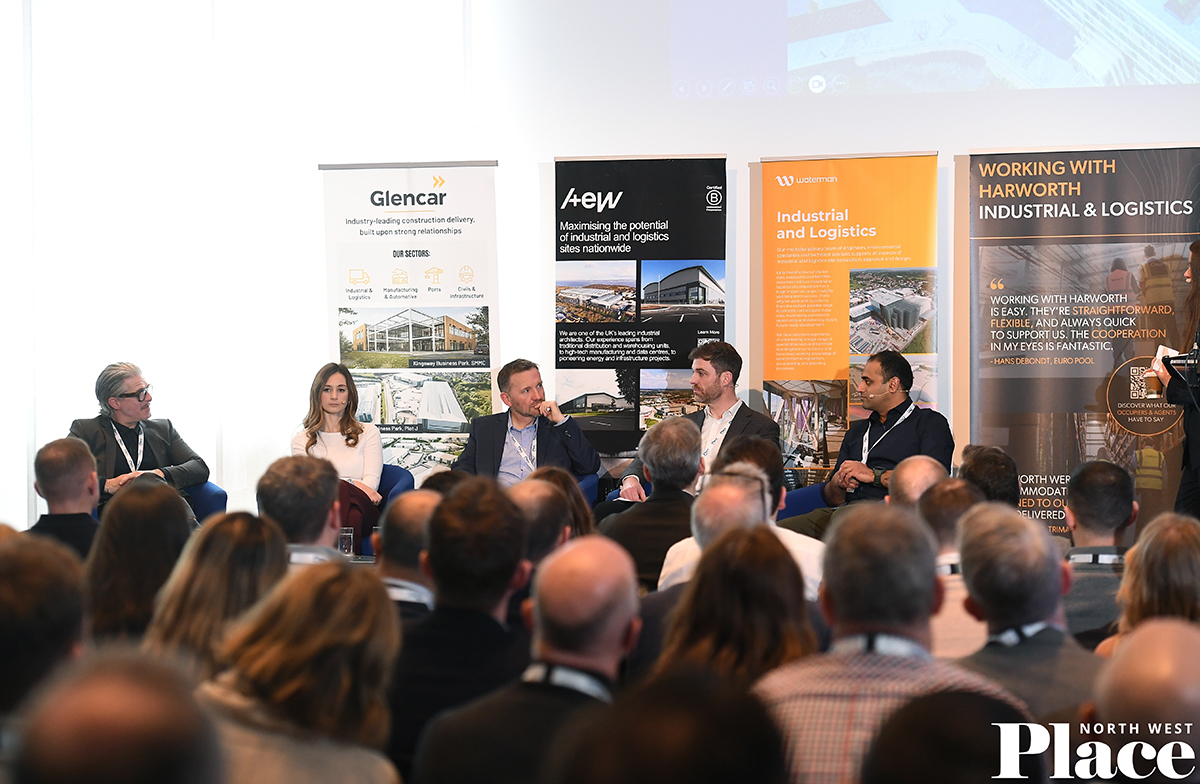
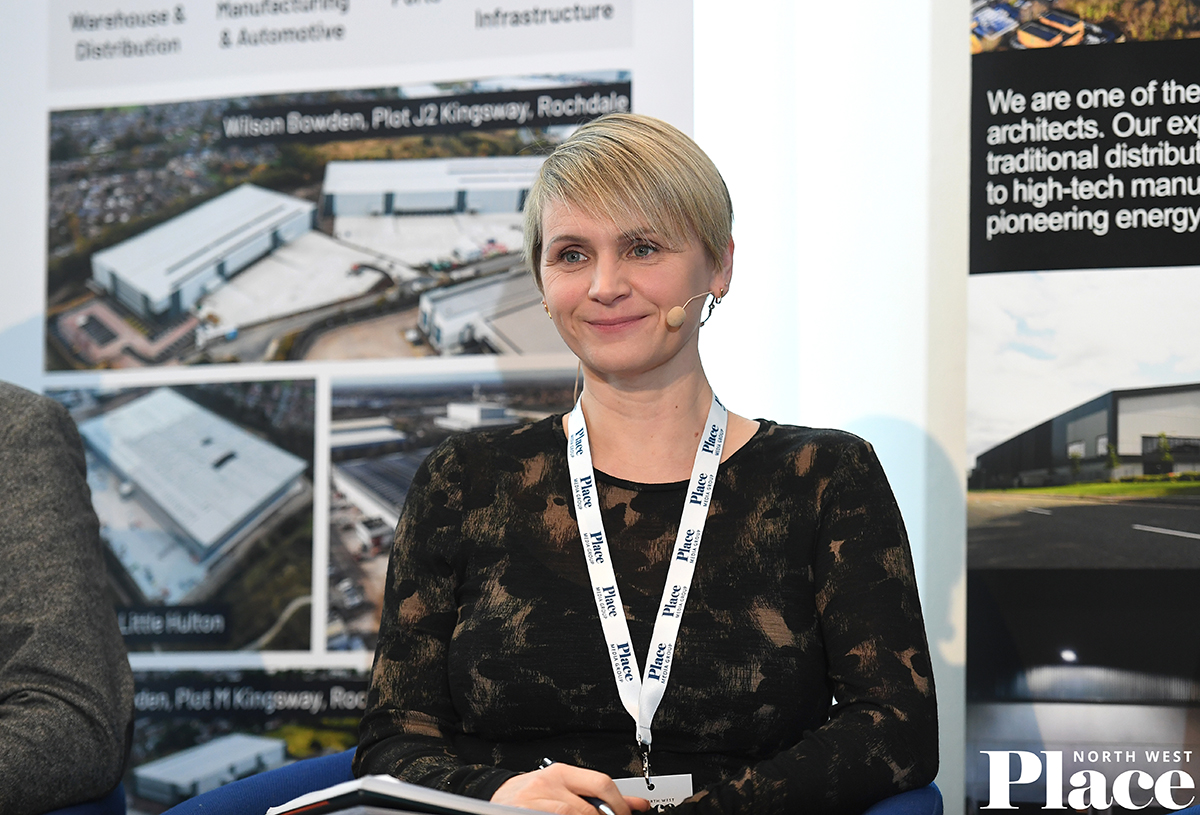
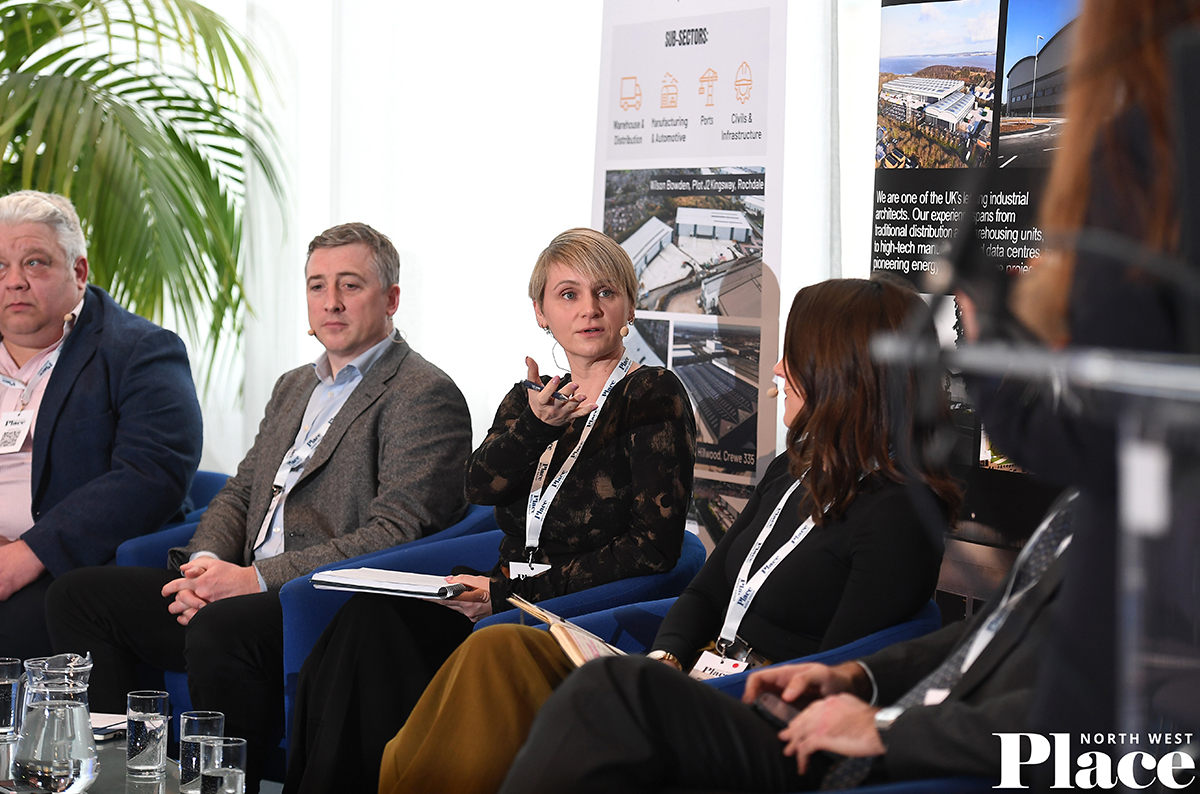
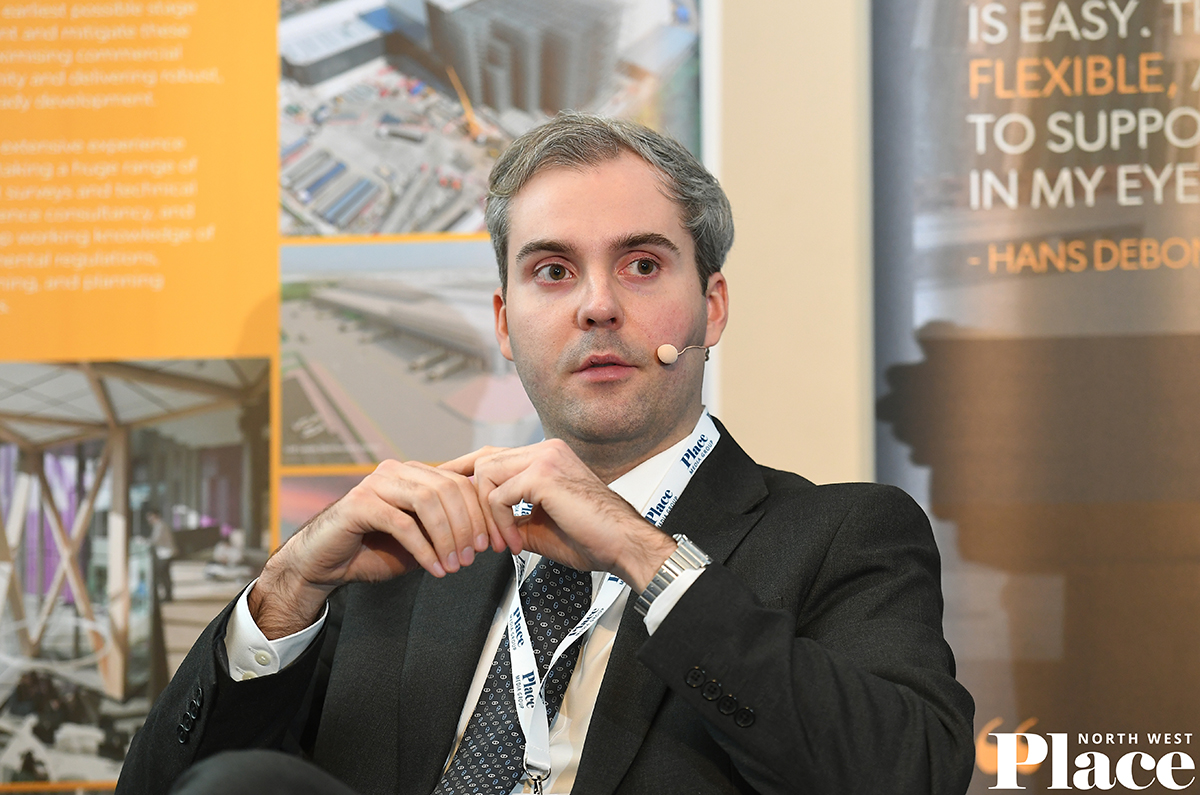
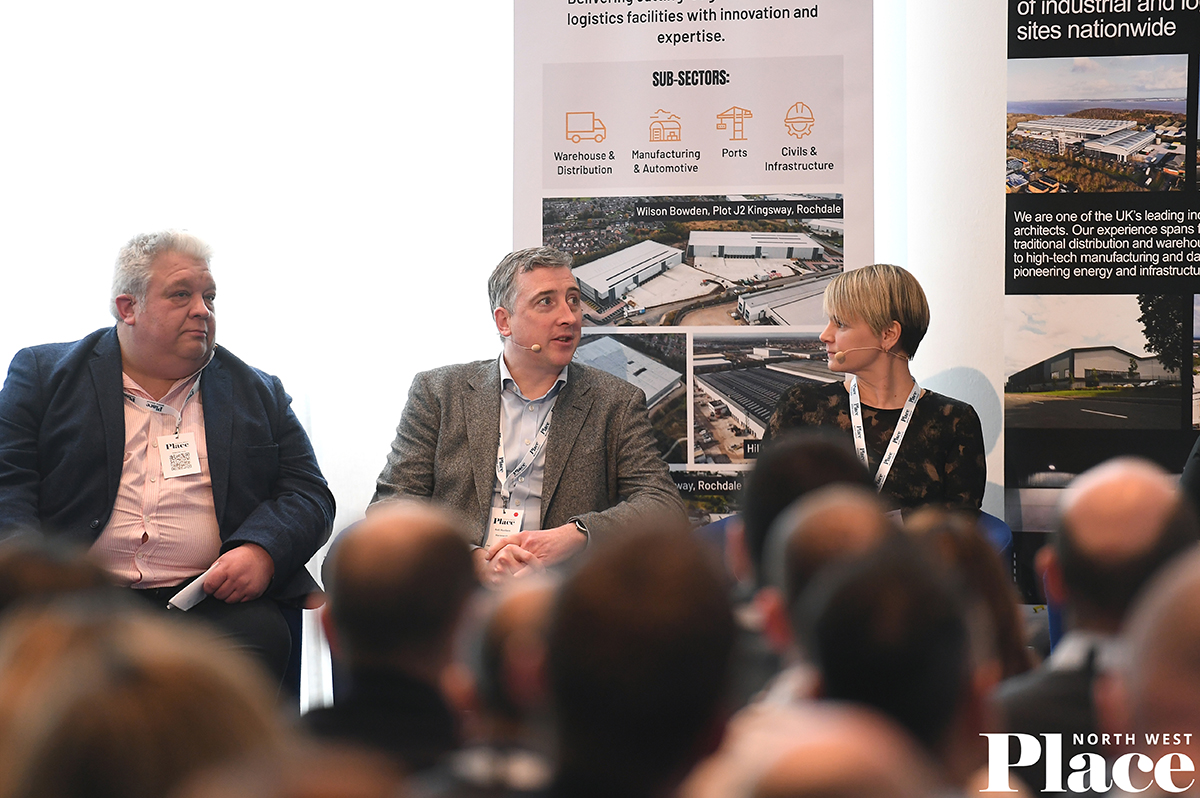
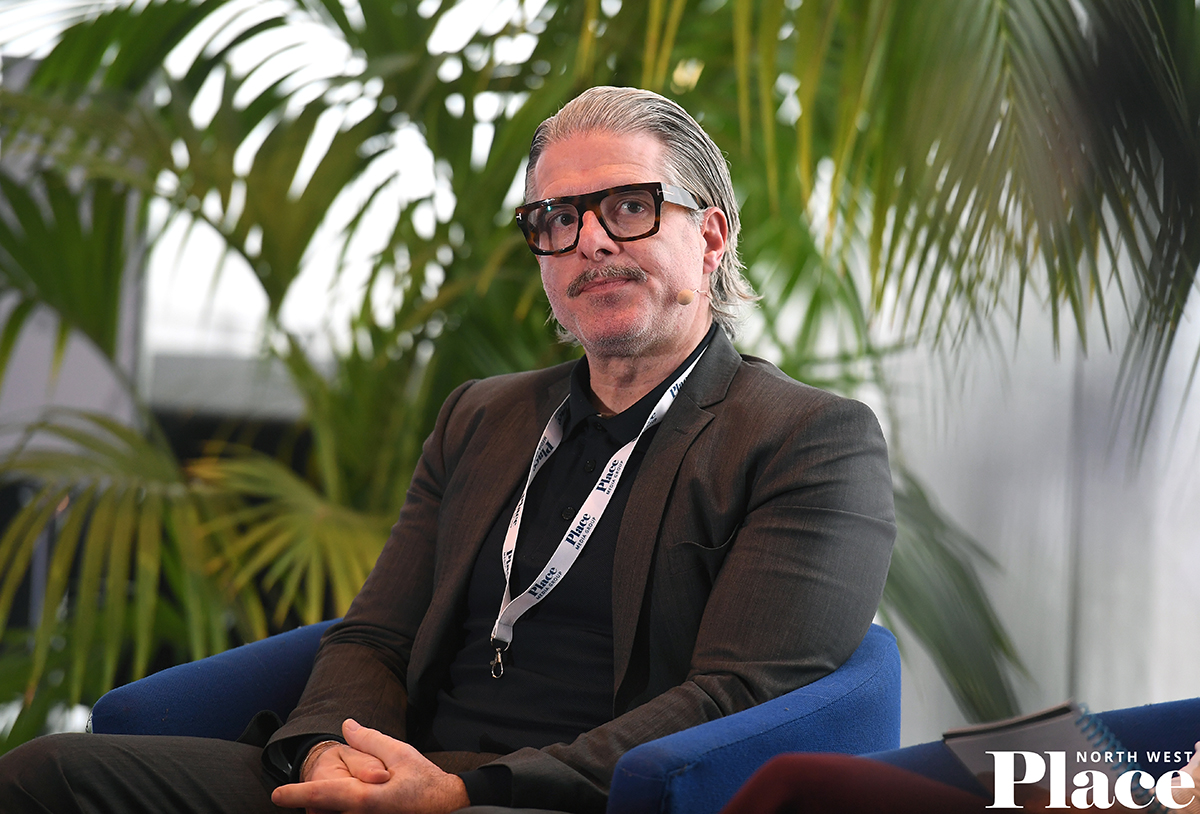
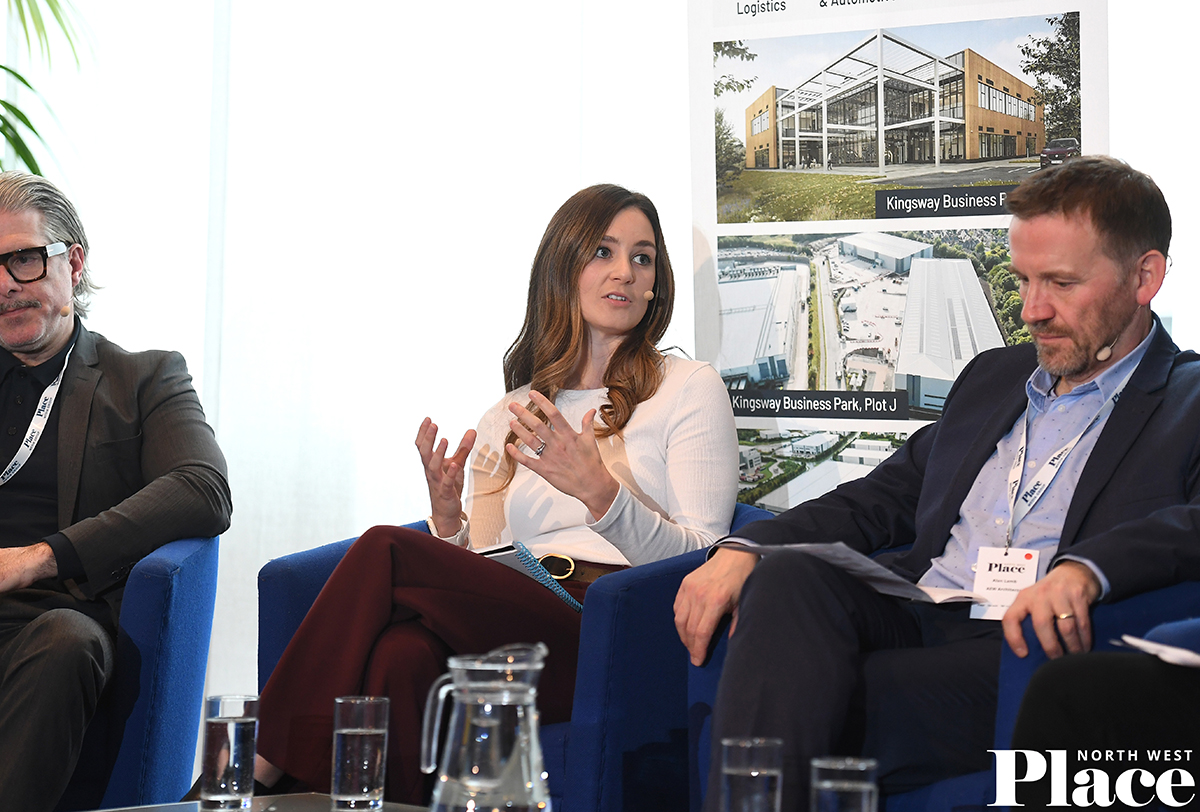
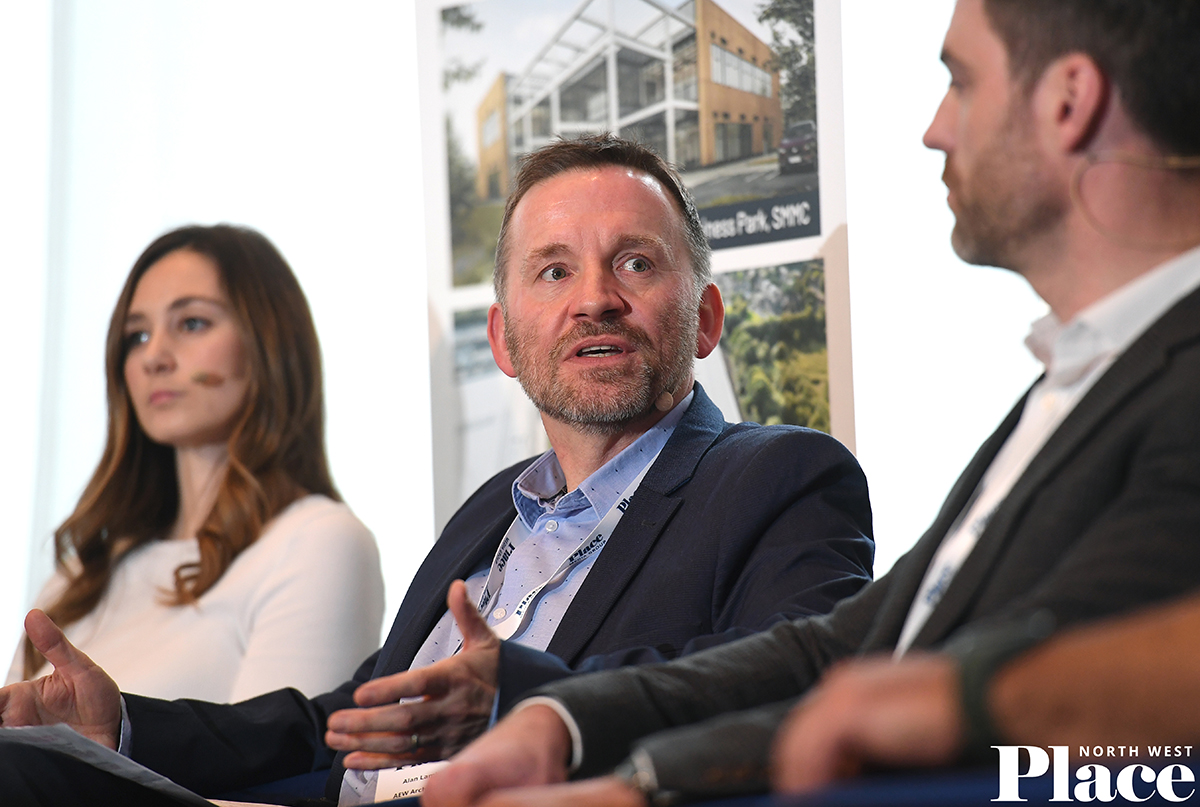
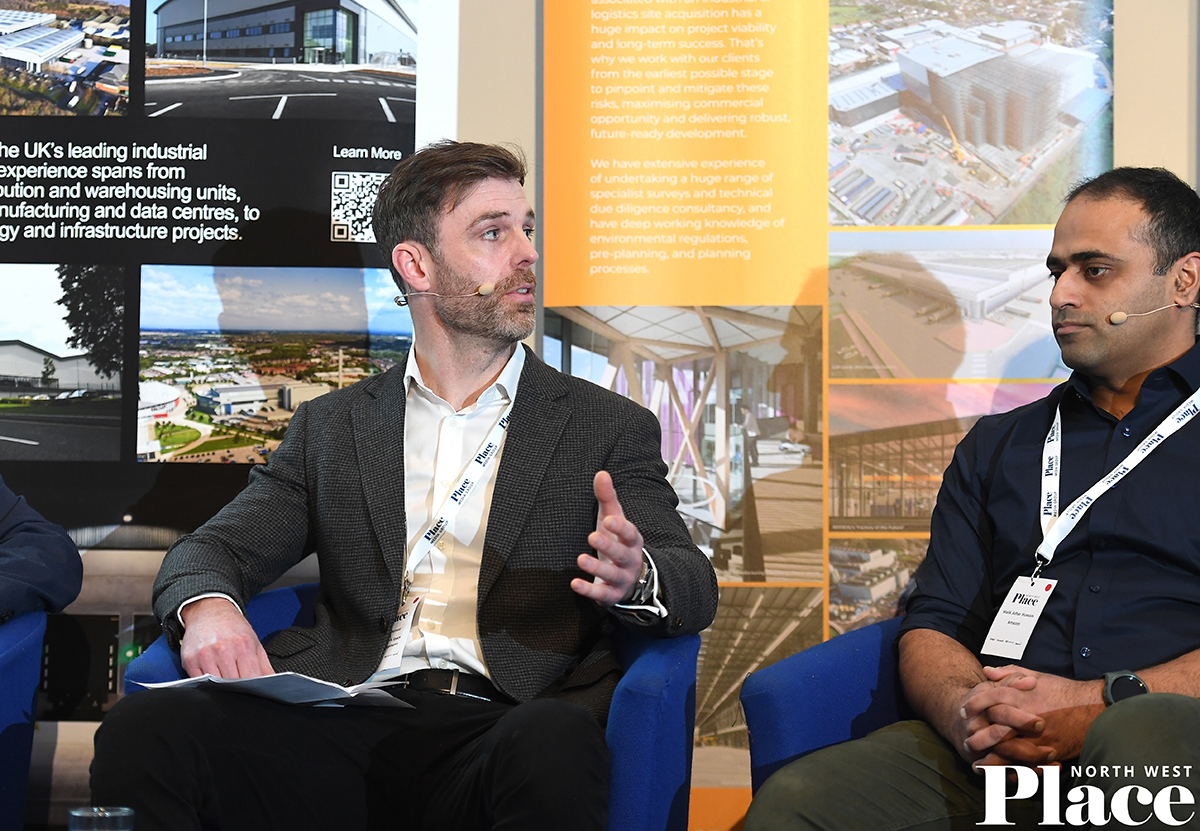
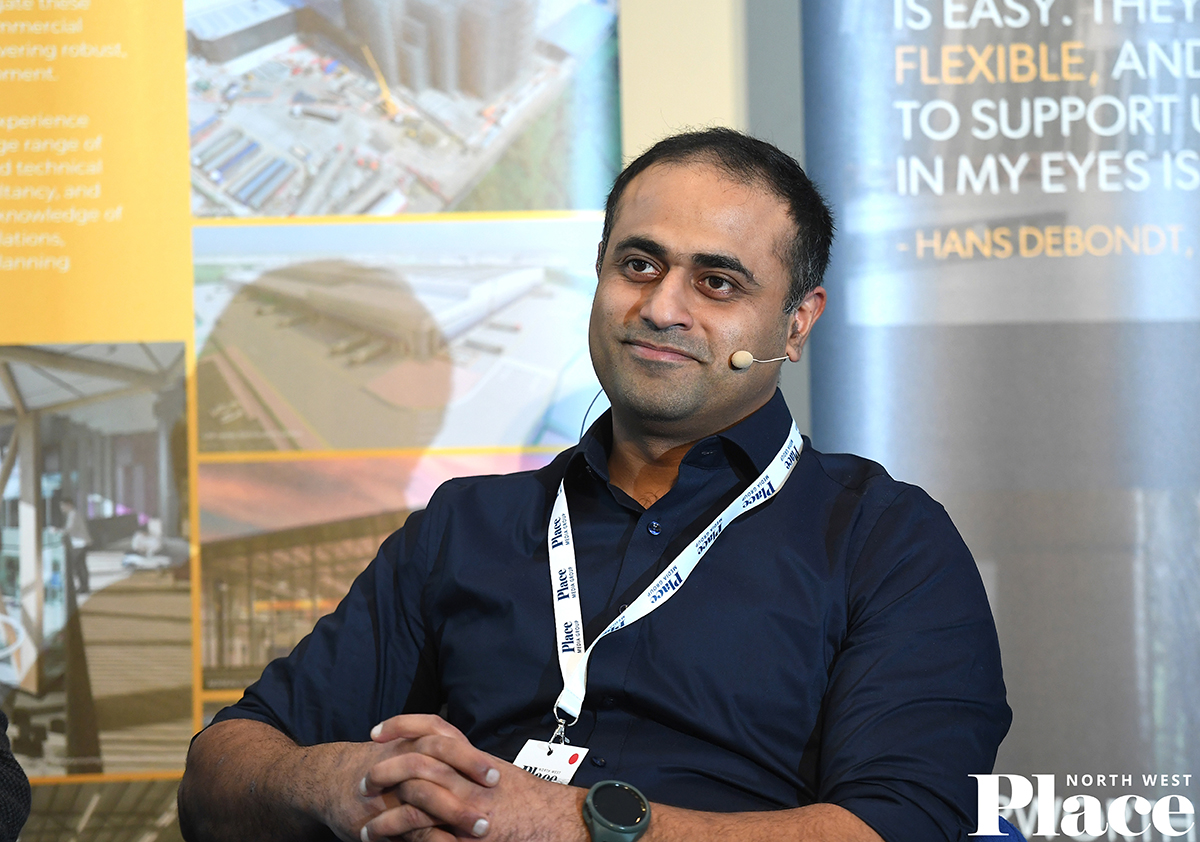
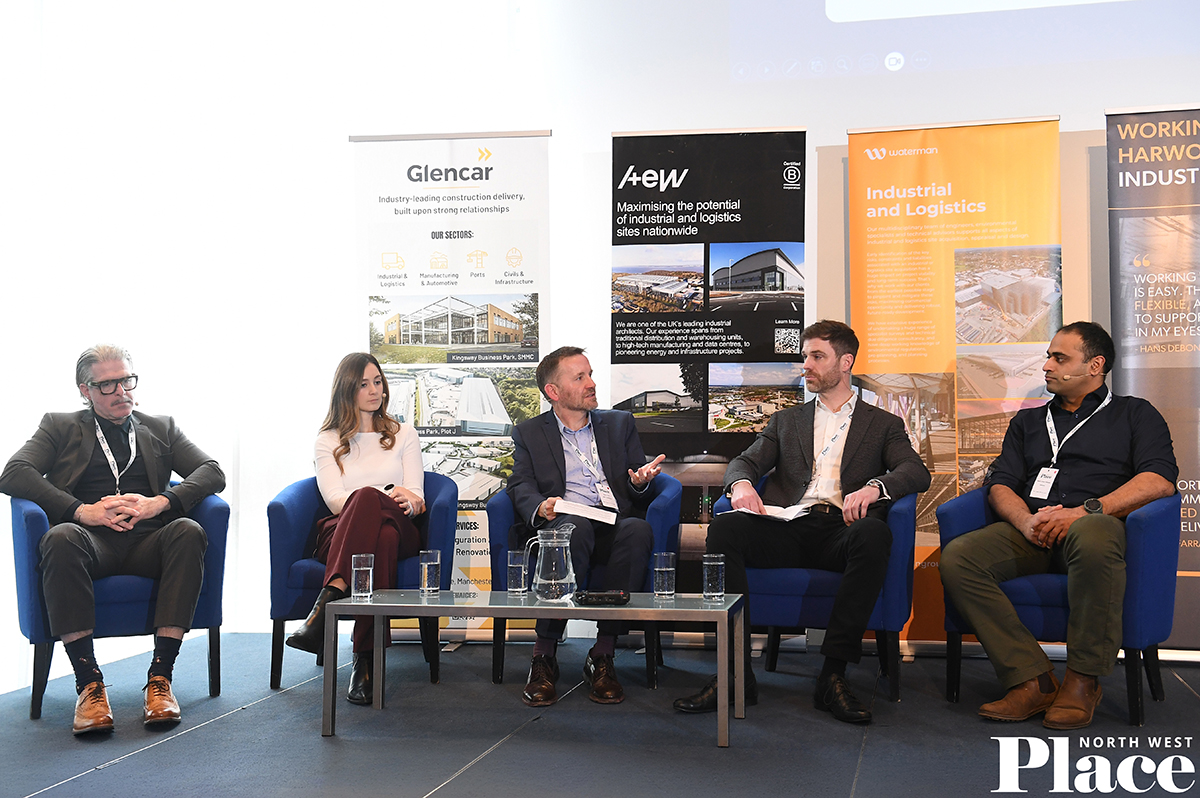
The second panel of the day featured Glencar’s James Scott, Turley’s Fiona Lomas-Holt, AEW’s Alan Lamb, Network Space’s Joe Burnett, and Amazon’s Malik Azhar Hussain. Credit: Place North West
Sheds of today and tomorrow
When looking to inspire in the world of industrial and logistics, look no further than a timber frame. Most of the speakers on the second panel shared a timber-frame project when asked what scheme they found the most inspiring. For Turley’s Fiona Lomas-Holt and Glencar’s James Scott, the project was Baytree Nuneaton (which was also built by Glencar). AEW’s Alan Lamb highlighted the Vitsoe headquarters and production facility in Leamington Spa.
Timber was acknowledged as tricky, however. Despite its benefits, the supply chain expertise and infrastructure to enable the mass production of timber frames is just not present in the region to make it the most viable of choices.
Industrial buildings are becoming more than just functional structures, with projects needing to factor in placemaking more than ever before, Lamb contended. Network Space’s Joe Burnett agreed, highlighting the work done at Advanced Manufacturing Park in Sheffield. He referenced it as a project that was a “really good example of economic-led regeneration, where heavy industry that is no longer relevant has been transformed to create high-skilled jobs without losing the industrial character of the area”.
Thinking of the sheds of 2050, Lomas-Holt reflected that many that will be in use then have already been built. She contended that there will be more retrofits and use of existing stock. Lamb agreed, noting that buildings today are built to be adaptable, flexible, and often have heights that work for automation compared to their predecessors.
Scott argued that the building of the future will have data around its end use to show how materials can be reused and recycled – creating truly net-zero buildings or at the least low carbon. He said we can expect to see these recycling strategies built in early doors.
Burnett said he thought the sheds of tomorrow will look “reassuringly familiar” – it is the way they perform that will change, rather than their appearance.
“I think they’ll look reassuringly familiar. The shift is going to be less about how they look and more about how they perform over their lifetime.” Joe Burnett, Network Space
What’s Next?
14 May | East Yorkshire Development Update
19 May | Place North UKREiiF Tuesday Breakfast
Gallery
Click any image to launch gallery.