



UKREiiF | Themes from Leeds in 2026
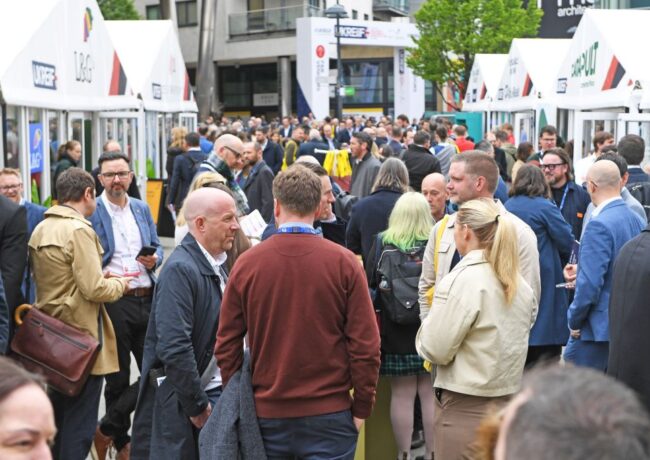
More than 16,000 property professionals descended on the West Yorkshire city en masse for the property expo and its vibrant fringe. Here are the big talking points from this year’s convention for those in the North and Midlands.
Burnham fever
Monday saw Andy Burnham launch his campaign for the Makerfield by-election – and by proxy to become the next Prime Minister – at the Royal Armouries. He then disappeared from UKREiiF, pulling out of at least two sessions presumably to prevent the event becoming the Burnham show and detracting from important things like real estate, investment, and infrastructure. Or perhaps he just didn’t fancy running into Starmer allies Rachel Reeves and Steve Reed who showed up on Wednesday. Regardless, his name was on almost every pair of lips in Leeds this week.
Those Place spoke to thought an Andy Burnham-led government would be a good thing for the North at least. Those in Greater Manchester expressed concern about the vacuum he would leave in the city region – one that Reform would surely look to fill. The jury was out on his chances in Makerfield with predictions ranging from ‘he’ll walk it’ to a Reform landslide.
Devolution
More devolution done faster – that was the consistent promise from government officials – and, it should be said, Burnham – during UKREiiF week. Mayoral development corporations popped up left, right, and centre during the conference as announcements (East Birmingham MDC, Leeds Mayoral Development Zone), justification for investment (Liverpool North Docks MDC), or exemplars of the model (Stockport Mayoral Deveploment Corporation). Housing secretary Steve Reed said the work the government had done on devolution was just getting started, while Treasury minister Dan Tomlinson told a crowd that he was also “bloody impatient” for more of it.
Internet issues
A denial of service attack on the UKREiiF Wi-Fi network on Tuesday left thousands struggling to get online this week. The event organisers apologised “unreservedly” for the outage which endured up until most delegates headed home.
One disgruntled attendee said he had already sent an email to UKREiiF requesting a partial refund. It would be a shame if the 2026 edition of the conference was remembered for technical gremlins but perhaps it is another sign – along with a severe shortage of hotels – that the show has outgrown the infrastructure Leeds can offer?
(More) time for trams
A recurring theme at this year’s UKREiiF was the growing alignment between transport investment, regeneration and long-term economic growth — and nowhere was that clearer than in the renewed push for mass transit in Leeds. Tracy Brabin used the week to reinforce her long-held ambition to bring trams back to the city region, positioning improved connectivity not as a standalone transport project but as the backbone of future housing, placemaking and investment strategies across West Yorkshire.
That wider integration was reflected in Tuesday’s announcement that the Lowy Family Group, owners of Leeds United, alongside Leeds City Council and the West Yorkshire Combined Authority, will work together to align the proposed expansion of Elland Road with new housing development and future mass transit links. The significance of the deal went beyond football infrastructure: it captured a broader consensus emerging during the week that major regeneration schemes in Leeds will increasingly be planned around integrated transport connectivity, with mass transit seen as essential to unlocking both inward investment and sustainable urban growth.
Infrastructure as a driver for change
Conversations went beyond just trams in Leeds – transport projects, and particularly HS2, are gathering a head of scheme as drivers for regeneration, with regional leaders increasingly leaning on transport projects to get growth running on time.
At the launch of the East Birmingham MDC on Tuesday, much was made of the Metro extension – set to run out to the planned £2bn sports quarter and beyond. West Midlands Mayor, Richard Parker, says jobs and skills are key to breaking post-war cycles of depravation in the city, with transport links integral to the 50,000 new jobs intended to be created by the city’s huge linked regeneration-schemes.
HS2 itself has created a £10bn growth corridor, with plans to build more than 40,000 homes directly linked to high-speed rail in the city.
Further north, in Sheffield, a target of building 38,000 homes by 2039 is also heavily linked to transport through city-centre densification plans, while specific schemes targeted at Sheffield Midland Station will provide more direct rail-linked regeneration.
Similar discussion around the Midlands “Golden Triangle” logistics network and Northern Powerhouse Rail all supports a message that transport infrastructure is no longer being viewed simply as support for development, but as a central track on which regeneration, housing delivery and industrial growth strategies can now be rolled along.
Sport regeneration kicks off Midlands ambitions
Another month, and another sport-related regeneration scheme limbers up on the touchline, with the East Midlands the latest to join the action.
The combined authority is lining up its Trent Sports District as a “major driver” of regeneration in the city of Nottingham, and has appointed Gleeds to draw up a master plan to connect Nottingham Forest’s City Ground Stadium with Trent Bridge Cricket Ground and the National Water Sports Centre – a scheme which it says will support regeneration, attract investment and create a better-connected city.
A few hundred yards away, in the West Midlands tent, a huge scale model of the planned £2bn Birmingham Sports Quarter was being unveiled. Not exactly fresh as plans were unveiled last year, but a reminder that a project which will create several thousand homes in a rebooted Bordesley Green, hanging off a 60,000 seat stadium built for Birmingham City FC, would get under way over the next two years.
But it’s not an exclusively Midlands phenomenon, in fact the region is now merely catching up with the wider trend. Birmingham’s plans, impressive as they are, are dwarfed in size by Manchester United’s stadium-anchored regeneration project at Old Trafford, while not a million miles away up the River Mersey, Everton FC’s new home at Bramley Moore Dock opened last year. Over in the Cumbria Pavilion, the Tour de France and its potential economic power was continually hailed as a reason to invest in the county.
Richard Kenyon, Everton’s former CEO who is now chief executive of Nottinghamshire County Cricket Club, told an East Midlands panel event that “not a penny” would have been spent regenerating Bramley Moore but for the stadium project – a reminder of the power of sport to unite a city around a shared goal.
Star power
The athletic theme went beyond just projects though – world-class athletes popped up around UKREiiF. Sir Bradley Wiggins, the Olympic and 2012 Tour de France winner, was there to champion Cumbria as it readies to host the first leg of the 2027 race. His talk on the Wednesday evening was remarkably open, honest, and moving as he detailed his journey from cycling golden boy to drug addict and his subsequent, and continual, recovery.
Former footballer Jimmy Floyd Hasselbaink was also in Leeds, talking about his Football Safety App initiative to make stadiums safer. He spoke twice on the matter – at a Rider Levett Bucknall lunch and a session with Front Five Building Services – both times emphasising the need to ensure the new stadiums being designed and delivered with the communities they serve in mind.
Data centres
Last year, data centre content was light at UKREiiF. This year, the programme may have overcompensated for that. Data centre talks were in abundance throughout the conference – with discussions focussed on navigating their power-hungry natures, their greedy appetite for land, and their tempting economic potential. Expect data centres to continue to dominate industrial and logistics conversations in the months to come.
Vive la Fringe
The Royal Armouries was busy – and so was the entirety of Leeds, it seemed. The fringe was alive and vibrant at UKREiiF with breakfast events (including two from Place), drinks receptions, dinners, roundtables, and more. With or without a ticket to the expo, you could have a packed diary over the course of the three days without too much trouble. One thing was clear though, Leeds was the place to be this week.
Not being able to get a hotel – unless in York, Bradford or Wakefield, is a good excuse not to go to the event. Keep it in Leeds.
By No hotel
No way are Leeds still faffing about with a tram proposal. There was that much moaning a few years ago that I thought it was already built and running.
By Anonymous
Leeds doesn’t need a tram.
By Anonymous
I agree with Anonymous 11:24am. Leeds needs teleporters to immediately transport everyone where they want to go. Or they should jolly well stay at home!
By Anonymous