




Commentary
What the changing face of procurement means for the North West
Public procurement in the UK is undergoing a seismic shift. This could be a gamechanger for the North West, writes Eleanor Hinds of SCAPE.
With the Procurement Act 2023 now in force and the National Procurement Policy Statement setting new priorities, procurement is no longer just a transactional process. It’s a strategic lever for regional development, innovation, and social impact.
With the growing realisation that when procurement is done right, there is positive impact at local and national levels, Manchester has been among the first to grasp the potential of this evolution and is setting an example for the rest of the UK.
The Greater Manchester Combined Authority has already adopted policies that prioritise social value in its procurement, with a 20% weighting for social value in its own tenders over £100,000. With the publishing of the NPPS, more councils will likely be following suit.
From compliance to collaboration
Historically, procurement has been viewed through the lens of compliance and cost-efficiency. But today the emphasis is on value creation, inclusive growth, and local empowerment.
The NPPS mandates that contracting authorities consider social value, SME engagement, and environmental sustainability. Some might argue that these influencing factors are already forming a new way of viewing procurement.
Frameworks such as those offered by SCAPE are helping to shape this shift towards collaborative procurement. They support early contractor involvement, provide flexible routes to market and prioritise long-term outcomes over short-term savings. They also enable projects to move forward quickly, which is critical for public sector delivery.
As a public-sector owned, not-for-profit organisation, SCAPE offers compliant procurement frameworks designed to accelerate project delivery for public bodies and their partners in the UK. Covering areas such as construction, civil engineering, and consultancy, these frameworks connect organisations with pre-vetted delivery partners, aiming to improve efficiency and value.
SCAPE places emphasis on responsible procurement, embedding social value, sustainability, and robust performance management throughout the project lifecycle.
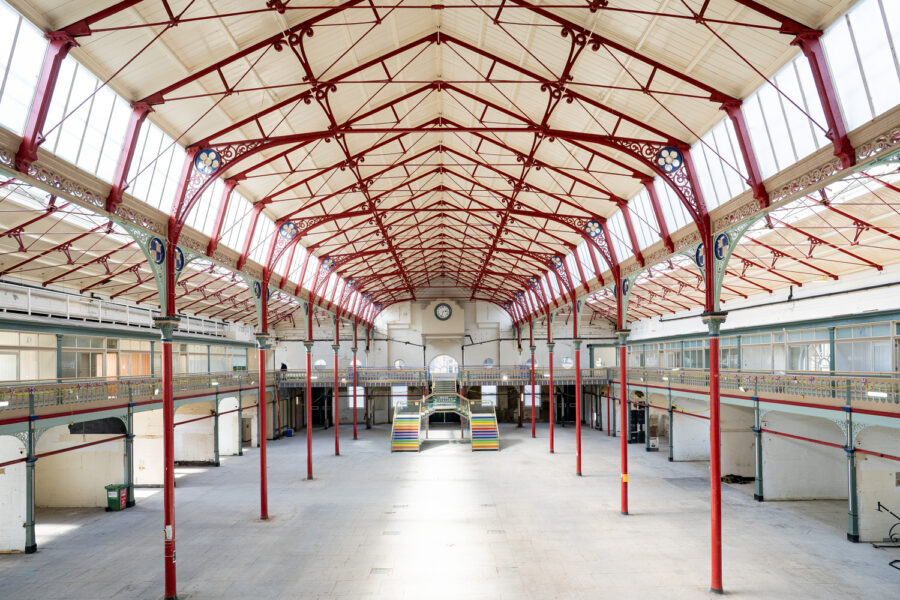
Morgan Sindall completes work to first phase of Accrington Town Square regeneration. Credit: Morgan Sindall
Procurement in practice
The benefits of this approach can be seen in Hyndburn Council’s regeneration of Accrington Town Square, which was procured through the SCAPE Construction Framework and in collaboration with Morgan Sindall Construction’s North West team. This project shows how modern procurement frameworks make it possible to deliver at pace while embedding social value and sustainability into the process.
The first phase of the project was handed over at the end of the summer this year, on time and on budget. Morgan Sindall maximised the use of local and specialised supply chain partners and labour in line with SCAPE’s framework criteria, achieving 41% local labour and 38% local spend within 20 miles while fulfilling its own responsible business commitments.
Social value was a key focus, generating a 30.92% social value return (approximately £2.3m) for the local community. This included 119 apprenticeship weeks, 22 school engagement hours and 39 volunteering hours, helping to create opportunities and strengthen community ties. The project also achieved a 45/45 Considerate Constructors Scheme score, reflecting its commitment to high standards of care and responsibility.
Cllr Clare Pritchard, portfolio holder for Levelling Up Fund, said: “The SCAPE framework was a real enabler in Accrington. It allowed us to procure a capable team quickly, which was particularly helpful given the challenging programme targets we were working to.
“Just as importantly, SCAPE’s emphasis on social value aligned well with Hyndburn’s priorities, and we really appreciated the effort everyone put into maximising opportunities to make a difference locally.”
Regional investment and procurement challenges
The North West is set to benefit from £15.5bn in infrastructure investment, according to the National Infrastructure and Construction Pipeline. Projects range from transport upgrades and housing developments to energy storage systems and coastal defence schemes.
The recent changes to procurement will ensure these projects can deliver the most impact for the region – not just the cheapest price.
In housing, for example, the shift in procurement from the most economically advantageous tender to most advantageous tender allows social landlords to prioritise community outcomes over lowest cost when making procurement decisions.
Despite the promise, the transition brings its own complexities.
Procurement teams are managing supply chain volatility, inflation, and digital skills gaps with resilience. The adoption of artificial intelligence and digital platforms is accelerating, and attention is turning to ensuring data quality and establishing strong governance around AI. These areas are still evolving, but progress is underway.
Local government reorganisation also adds complexity. As councils merge or restructure, existing contracts must be transferred or renegotiated, requiring careful legal and operational planning. This is something SCAPE has experience of and has an excellent track record of making the transition as smooth as possible.
These challenges also present opportunities. A more strategic, regionally sensitive approach to procurement – one that empowers local authorities and engages suppliers early – can drive innovation and economic growth.
What’s next for the North West?
With the scale of planned investment and development in the region, the North West stands at a crossroads – where procurement has the potential to deliver not just infrastructure, but jobs, skills and community resilience.
Realising this potential depends on how public sector bodies, suppliers and policymakers embrace the new procurement landscape. As they revisit their practices and priorities considering the new regulations, leveraging procurement frameworks can help them grasp the huge opportunities for delivering public good as procurement becomes more closely linked to social value than ever before.
With the right partnerships, data and mindset, procurement can become one of the most powerful tools in shaping the future of the North West.
- Eleanor Hinds is business development manager – North West at SCAPE
Related Articles


Analysis - Commentary
Manchester: A beeline for housing growth
“Manchester-ism” has become the word of the moment when it comes to political discourse, but could it also be the watchword for housing growth and investment, asks Ben Beadle of the National Residential Landlords Association.
Since the implementation of the Act in February, There has been a huge reduction of tenders for SME’s. Many local authorities are combining the small tenders into large frameworks at values that are in 6 or 7 figures. They frighten smaller businesses because they think that making the effort to apply for them is pointless.
Around 189 months ago I was curating from 100 to 150 tenders per day for my clients and publishing 150 to 200 per month, now, with the same criteria, I am lucky to be seeing 10 per day to curate from, and sending out 150 to 200 per month. Now, using the same selection criteria, I rarely see even 10 per day and have been sending out less than 30 per month since February’s changes. I wrote to the cabinet office about this on 5th August and apart from regular ‘holding ‘ e-mails I have received no explanation.
By Rob Webb