


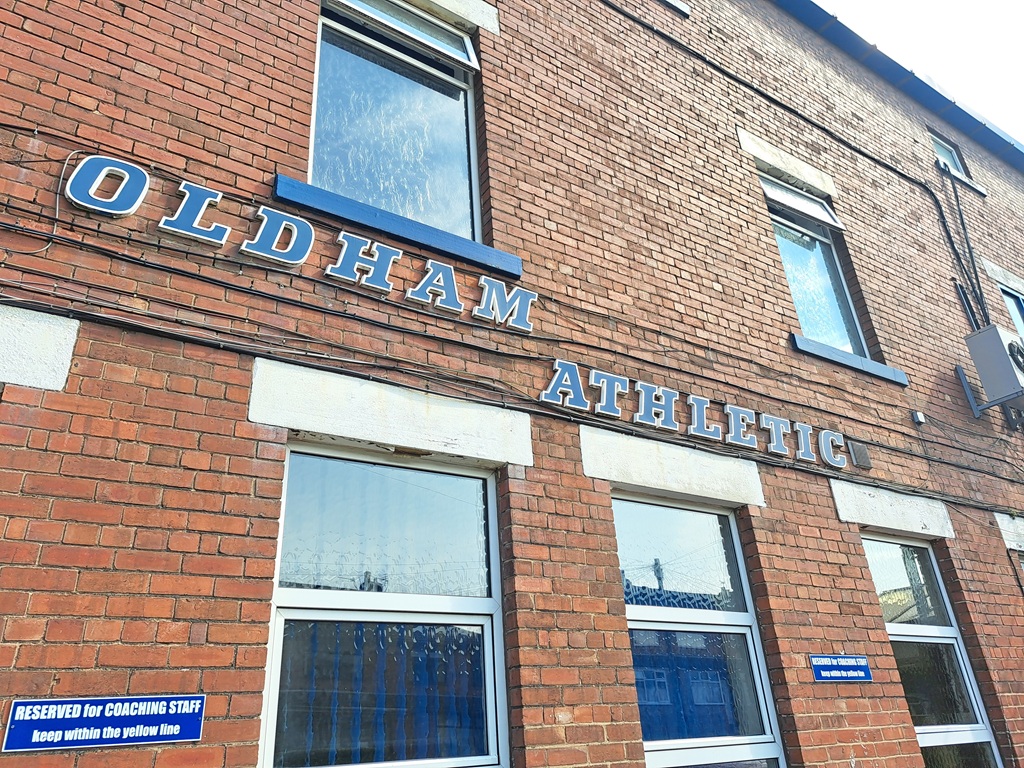
Sporting regeneration | Latics look beyond the boundary
These are heady times at Oldham Athletic.
Founder members of the Premier League after what legendary ex-manager Joe Royle called the “pinch-me” years as the 1990s dawned, the club then entered a long decline, becoming the first ex-Premier club to fall into non-league in 2022.
Acquired that year from near-bankruptcy by local businessman Frank Rothwell – he of the catchy soundbites and trans-Atlantic rowing feats – Latics’ unwanted record of being the club that has gone the longest with nothing to celebrate is now over, following a thrilling promotion play-off victory at Wembley on 1 June.
With Football League status regained, the club is not hanging about. Trailed in March, the SportsTown project brings together the club, Oldham Council, and Northern Care Alliance NHS Foundation Trust. With the replacement of the Boundary Park pitch in the books as phase one, ground has been broken this summer on the masterplan’s second stage.
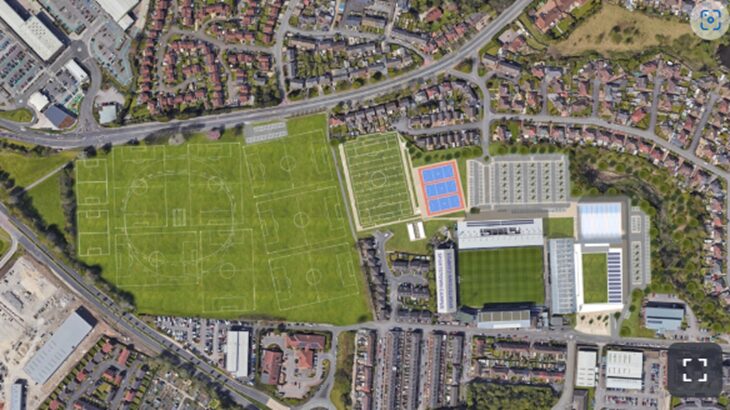
Development is intended around two sides of Boundary Park. Credit: Oldham Council
SportsTown – what’s it all about?
The overarching vision for SportsTown is a £70m campus that will be a centre of excellence for sport, offer the community sports and wellbeing facilities, and improve access to further and higher education for the town.
In March, £5m was secured from the government’s Community Regeneration Fund, adding to £1m previously invested by Oldham Council, which funded Boundary Park’s new playing surface, on the basis that this would also secure a permanent home for the town’s rugby league club and open up facilities to the wider community.
Cllr Arooj Shah, Leader of Oldham Council, said: “SportsTown is another example of the power of collaboration and our shared ambitions to create opportunities for our residents.”
The elevator pitch might run something like this: Boundary Park has developable land around it. It also has a neighbour in Royal Oldham Hospital that the club’s ownership and management can see a way to work with – in a practical, day-to-day sense, that means each using overspill parking spaces, given they’re busy at different times.
That was very much the case on the sunny summer morning when Place North West visited OAFC chief executive Darren Royle, with a teeming car park. Just weeks on from the play-off win, there’s a palpable buzz around the place.
So, SportsTown. As Royle spelled out to Place, the goal initially is to create centres of excellence in football, rugby league, cricket, and netball, all sports with good participation rates locally, but not always enjoying the best of conditions.
To pinch a phrase, Oldham’s got talent – the Blue Coat School regularly hits the heights in national netball tournaments, and the production line of locally born rugby league players is blue-chip, not least among them Kevin Sinfield.
Royle said: “Initially, we’re focusing on those four sports, but there are many more opportunities yet to be identified.
“Some of Oldham’s wards rank among the lowest in Greater Manchester for educational attainment, and Greater Manchester is itself below the national average.
“What we’re looking to do works into the Oldham Economic Review Board report of 2022, which is all about putting in place brighter futures for young people across the borough.”
The OERB reported in 2022, having been commissioned by Oldham Council and carried out by Oldham College and the University of Manchester.
One of the issues identified was the need for “outer boroughs” such as Oldham to establish a clear and shared sense of its longer-term goals, developing a strong voice within Greater Manchester, and making the most of its relationships.
Royle said: “There is a historic brain drain from the area. We’re a net exporter of talent. What we want is to create a brain gain. People will have seen recently Professor Brian Cox, back in Oldham to promote STEM education with the Great Horizons project, which is something we’ve played a big part in.”
Royle is a football man at heart. The Rothwell family made their money, mainly, through the Manchester Cabins business. They know what they know, and they know what they don’t know. So one of the first things they did was bring in as an advisor Kevin Roberts, the Lancastrian business guru who once headed Saatchi & Saatchi Worldwide, worked with the All Blacks among others, and introduced the world to the theory of ‘lovemark’ brands.
Questions on the table: What is the club about, what is the town about, what sort of ways forward are there? The three years since the takeover have seen community and fan engagement transformed. Rothwell’s son and daughter, Luke Rothwell and Su Schofield, are in place as the ownership team.
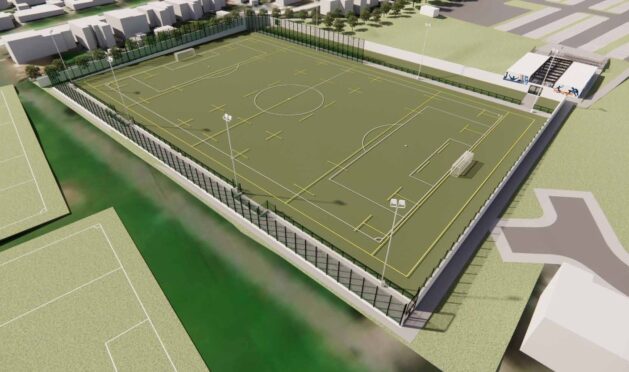
Plans approved for ‘Little Wembley’s revamp are becoming reality. Credit: planning documents
Little Wembley – the first step on the road
Work has started this summer on the redevelopment of the Little Wembley training pitch behind Boundary Park.
A professional team featuring leisure-focused placemaking consultancy Space & Place, consultancy KKP, and planner Roman Summer led the scheme through planning, with consent secured in December.
PST Sport is delivering the pitch construction. Betts Hydro, Edge Structural Engineering and Amenity Tree are also on the delivery team. Rowan Ashworth is providing civil engineering services on Little Wembley, and Rhodes Construction car park enabling works.
The project includes the development of a new 3G multi-sports training pitch with associated earthworks and engineering required to provide a flat surface, along with associated elements such as means of enclosure, fencing, and lighting.
There will be an ancillary building accommodating changing rooms, classrooms/offices, toilets, and a small cafe area, with some landscaping.
Little Wembley will house the club’s academy, along with community availability. The surface technology means rugby league can be played, and with the Clayton Fields community pitches potentially to be rented, the hope is that SportsTown can host a junior football league – making possible once again the days when a host of names that would go on to become football legends played at Boundary Park Juniors.
The first sod was cut in late June on the project.
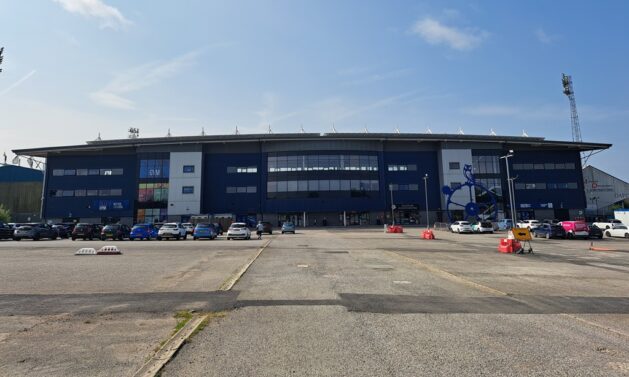
Boundary Park’s large car park is in line for repurposing. Credit: Place North
Next steps
What’s next? Royle said “We’re pushing on with plans to renovate the top floor of the Joe Royle Stand into a state-of-the-art education facility, and we’re having some incredibly exciting conversations with universities about that. It’s something that will bring an increased credibility to the town.”
Place had a glimpse of floorplans for this project, within Boundary Park’s most modern stand, which had been left uncompleted and in limbo due to a row between the club’s previous two ownerships until the Rothwell rescue act.
It’s not hard to see the possibilities – the North West has already seen sports and academia blend with positive results in facilities such as UCFB – in Burnley and at the Etihad campus – and the UA92 cluster in Trafford. Why not here?
Outside of the ground, there are plans to develop a facility for cricket and netball, which, although outdoor, will offer shelter and be usable in all weather – there is such a facility in use at Woodhouse Grove, Leeds. In the longer term, the goal is also to add a 3,000-seat arena, primarily for netball, but which could also host basketball, wheelchair basketball, and wheelchair rugby.
All this, if it comes off, could see Boundary Park and SportsTown welcome 25,000 visitors a week within five years. It’s a target.
The club and its partners will continue to go for funding to make these things happen. The land is there, with a large car park and rough ground at the club’s disposal. Should it achieve its goals in full and develop across the car park, it could introduce underground parking so as to maintain the volume of parking spaces as the footprint diminishes.
In time, perhaps even the historic main stand could see an overhaul. Maintenance alone here, in what Royle estimates to be the third-oldest working grandstand in the senior English game, is a never-ending battle. Again, education could play a part. It’s a tricky one, and would no doubt be hideously expensive for a club still in the early stages of its fightback – in practical terms, there’s a road right behind the stand, and houses across the way. Other battles will come first.
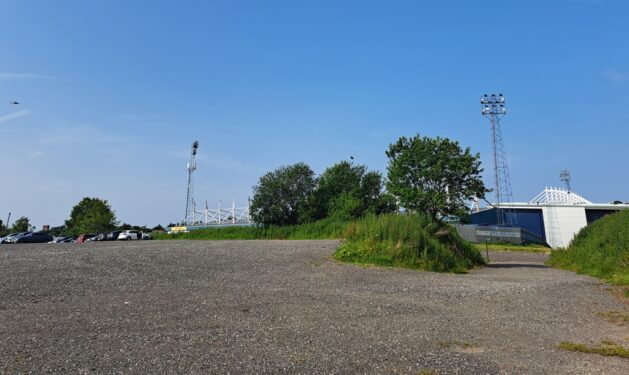
Land behind the Rochdale Road End is part of the plans. Credit: Place North
A people – and partnership – business
Since the Rothwell takeover, the door has been open at Oldham Athletic. The club’s eagerness to partner with organisations and individuals in mutually beneficial relationships has been in marked contrast with the previous regimes.
It makes sense: a football club that brings in around 7,000 people at a time for a few hours 25 times a year needs to be part of something bigger in order to survive.
At SportsTown’s launch, Royle spoke of how from day one, the club’s aim has been to do what it can to “build a positive, sustainable Oldham, beyond just what we do as a football club”, and that’s borne out by the way the club operates.
Royle told Place: “Further and higher education is a driver for us, and with the ongoing drive to improve health and wellbeing in Oldham, along with providing STEM opportunities, there is a key partnership between the club, Oldham Council, and Northern Care Alliance. NCA NHS Trust”
In the last few weeks, Dame Robina Shah has joined the Latics board, a veteran of public sector governance and a recent non-executive director of Northern Care Alliance. She has also served on the FA Council and worked with Manchester Met University and Salford University.
Along with the input of Kevin Roberts, there’s also an academic advisory board, chaired by James Reade, an economics professor at the University of Reading.
SCL Education is working with the club on its quest to establish relationships in the sector, while property faces such as Andrea George and Nick Morgan of Republik of Ideas are involved.
Looking up
Positivity is something Oldham hasn’t had in spades in recent years, both town and team. But with some heritage assets now repurposed and relaunched, rethinks for market and shopping centre, and a plan in place for a residential-led town centre redevelopment led by Muse, there’s a clear vision of the future.
Although few would have thought it possible as recently as May 2022, the same can now be said of the football club.
Sounds great! Hope the 1876 Rugby League club don’t get shunted to the Little Wembley pitch. Name a stand after Sir Kev.
By Wolfie
Interesting stuff – football clubs are great ‘anchor’ institutions in their towns.
By BLS Bob
An excellent article and vision for the future there is one aspect which had not be addressed which is the lack of public transport to Boundary Park. For this to be inclusive there needs to be engagement with Metrolink and Bee network otherwise it will struggle to engage with all areas of Greater Oldham never mind Greater Manchester. Royton already had an NHS facility without public transport. I love what the Rothwell’s are trying to do they are an inspiration.
By BPorBust