


How Crewe aims to go from devastation to become the best small city in Europe
The local authority has ambitious plans to transform the fortunes of its poorest town, bounce back from the blow of missing out on HS2, and put past false dawns to bed.
It is almost two years since the Conservatives announced the cancellation of HS2 beyond Birmingham. It was a decision that dismayed the North, not least Cheshire East Council.
Crewe had stood to be one of the main beneficiaries of HS2, with plans for a new hub station worked up. The regenerative ripples that would cause amounted to an estimated £750m economic opportunity.
The decision to cancel HS2 was described by the council as a “direct and devastating blow” to the future of Crewe.
As the second anniversary of that fateful day approaches, the mood within the local authority is much more upbeat. The pain of losing out on HS2 is now more of a dull ache and an alternative plan to reverse Crewe’s fortunes is in the works.
‘A national scandal’
Naturally, given Crewe’s history as a railway town and its enviable rail connectivity, any plan for the town’s future should include the train station at its heart.
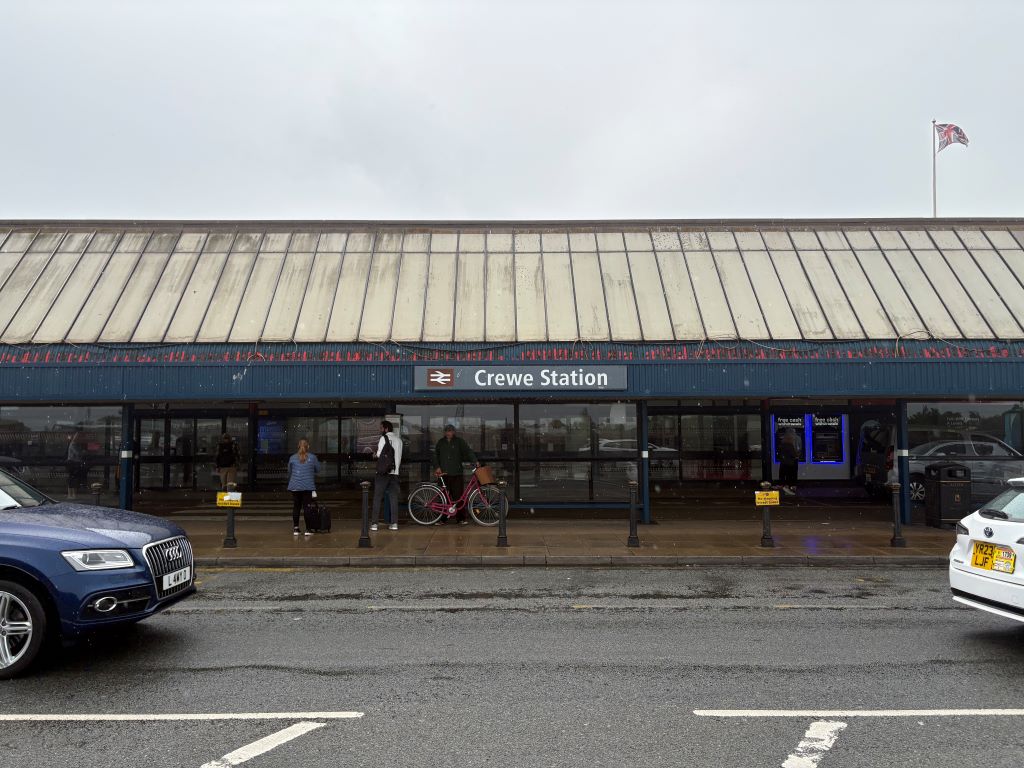
Most people who are not from Crewe know it best for its station, which welcomes three million passengers annually.
However, only a fraction of those venture beyond the station’s platforms and concourses, with most passing through on their way somewhere else.
Crewe is England’s interchange, which does little to benefit a town in the grip of decline.
At the heart of Cheshire East Council’s regeneration plan is an ambition to give people a reason to venture beyond the confines of the station and make Crewe somewhere people want to visit rather than a place they pass through.
The vision is split into two distinct elements. The first, Crewe360, focuses on the train station and the surrounding area.
“Our challenge is to get investment into that that station campus because there’s been no active investment there for a generation,” said the council’s deputy leader Michael Gorman.
“It is a national scandal that there’s no investment there.”
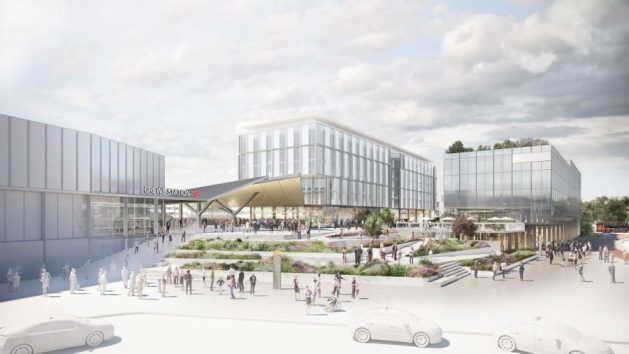
Crewe’s HS2 hopes were dashed almost two years ago. Credit: via Cheshire East
There is still hope HS2 may arrive at some point. There have been repeated calls from politicians and rail industry giants to reverse the cancellation of HS2 and build out the line from Birmingham to Crewe.
At the same time, Cheshire East wants the town to be factored into plans for Northern Powerhouse Rail.
Whether high speed trains ultimately pull into Crewe station or not, investment in the town’s most famous asset is long overdue.
“We want to change the narrative from Crewe the rail town that missed out on HS2,” Gorman said.
“If you can tell me a place in the UK that’s got better opportunity for investment than Crewe, let me know.”
Gorman, an independent councillor, is bullish about the town’s future and is dreaming big about what could be delivered within the scope of Crewe360.
“There’s a whole audience there to make Crewe not just somewhere you change trains but a destination for a conference centre,” he said.
“There is also lots of work [to be done] around a suitable cultural offer. I look at Bilbao and the effect the Guggenheim had. We could do a similar thing down the track in Crewe. It’s a fantastic location for a national cultural offer.
“We’ve got to have that ambition.”
Town centre focus
Away from the station – about a 20-minute walk – is Crewe town centre, which is also in council’s regeneration crosshairs.
Cheshire East recognises the need to address Crewe’s reputation as an island of depravation in a borough that boasts some of the country’s richest settlements.
Luckily, there are fundamentals that Crewe can boast right now that make it an attractive place to live and invest.
Aside from enviable access to the rest of the country via the rail network, Crewe benefits from having Bentley as one of its largest employers and the council is doing some early lobbying to government for a manufacturing enterprise zone with the carmaker at its heart.
A proposed multi-billion-pound new health campus at Leighton Hospital could create thousands of jobs and be an exemplar for medical settings nationally, while there is a long-held ambition to develop a centre for degree-level qualifications within the borough that Crewe could find a landing spot in Crewe.
While Gorman has a clear idea of what a new-look Crewe should contain, Cllr Nick Mannion the Leader of Cheshire East Council, is keen to point out what it should not be.
“It cannot be a Runcorn or a Skelmersdale,” he said, referencing what many regard as failures of the maligned New Towns programme of the 1960s.
“It could be something a lot greener, a lot softer, and a lot more about community.”
It is unsurprising then that there are plans for 1,000 homes to be delivered in the heart of the town over the next five years to house Bentley’s engineers, the hospital’s clinicians, and anyone else the council can entice.
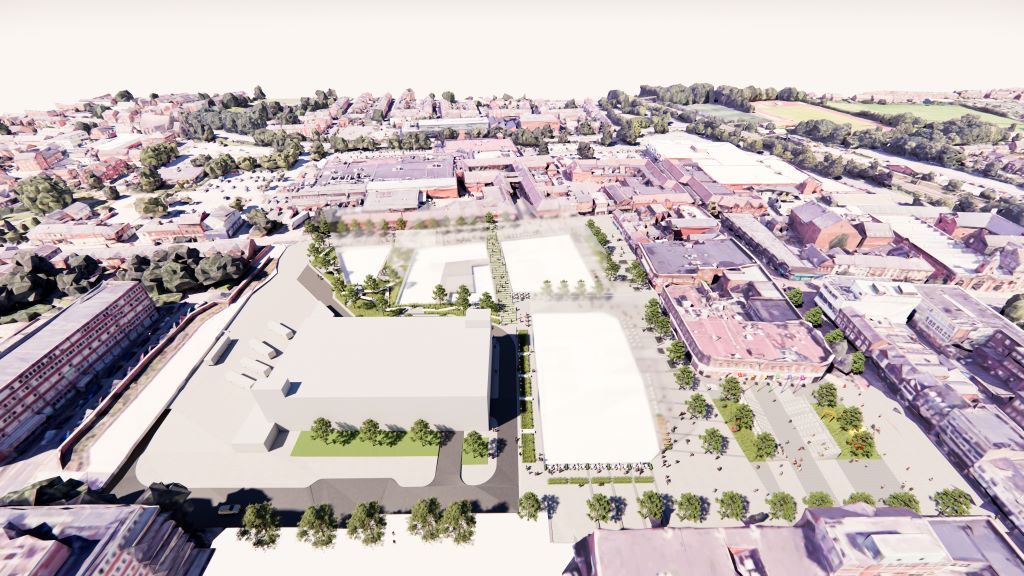
An early indication of how the Royal Arcade site could be broken up. Credit: via Font Comms
Capital&Centric sees the appeal
Around half of the 1,000 homes will be delivered by Capital&Centric, a developer whose schemes make it attractive to local authorities and whose social media output has helped it penetrate the mainstream.
Co-founder Tim Heatley regularly gets messages from people in Crewe pleading with him to help. Their prayers have been answered.
The council’s executive director for place Phil Cresswell said the decision to work with Capital&Centric in Crewe was inspired by the firm’s “track record of social impact regeneration”.
Cresswell and Heatley also worked together on the latter’s Goods Yard scheme in Stoke when the former worked for the city council.
Heatley said that project, which is not dissimilar in scope to what he hopes to achieve in Crewe, is “completed and doing phenomenally well”.
Consultation is due to begin soon on plans for a £100m high-density housing scheme featuring up to 500 homes of all types, slap bang in the centre of Crewe.
The council hopes that the developer’s debut Cheshire scheme, which will require grant funding, can raise values in the town and make subsequent developments more viable.
It is also hoped that the people who live in Capital&Centric’s Crewe development, whether natives or newcomers, will breathe life back into the town, which, like almost everywhere else, has suffered decline alongside that of high street retail.
To do so in an inclusive way requires a fine balancing act and the council and the developer are wary of Crewe’s need to remain competitively priced.
“The propensity for gentrification is rapid here because of the affluent hinterland around it,” Heatley said.
“Our collective theory is around making sure that it’s for everybody and it doesn’t just become exclusive.
“We are considering how we ensure that it remains affordable, that [it doesn’t] become a big Alderley Edge or a Wilmslow.”
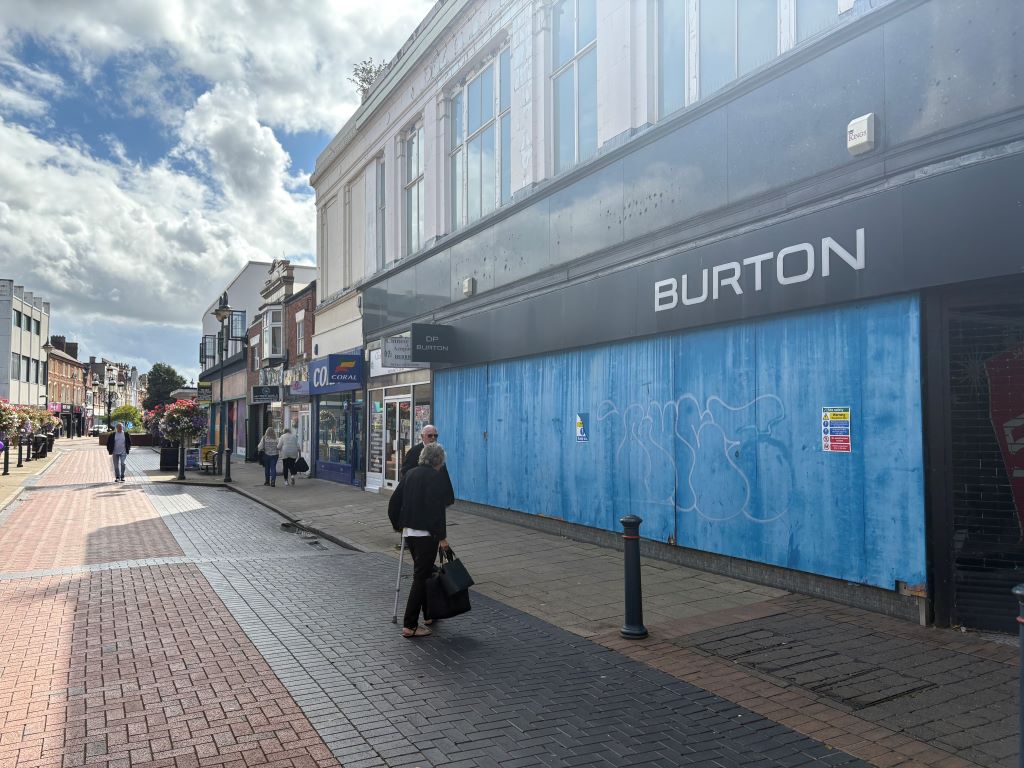
Crewe suffers from a struggling high street like many Northern towns. Credit: PNW
A Gen-Z city?
Through the regeneration of the station and surrounding land plus the residential-led redevelopment of the ailing town centre, the council’s ultimate aim is to transform Crewe into “the best small city in Europe”.
“There’s a chance here to create a new Gen Z city,” Gorman said, trying to define what the best small city in Europe actually means. “We’ve got baby boomer cities all over the damn place.
“This is a Gen Z city where that generation will have the kind of small city they want.”
The idea of a Gen Z city is unlikely to go down well with some of Crewe’s electorate.
In the 2024 general election, Reform placed third in the Crewe and Nantwich electoral race; narrowly behind the Conservatives who were distant second to Labour, which secured 10,000 more votes than the Tories.
Reform’s rising tide, which coincides with Labour’s dwindling popularity and the Conservative’s continued demise, is as likely to touch Cheshire East as it is anywhere else.
However, the prospect of Reform’s growing influence should not deter the council, according to Gorman.
“I don’t want to waste breath and energy thinking about Reform, because they could be here this year and next year gone,” he said.
“This is a 30-year, serious regeneration project on behalf of the people of Cheshire and Crewe, that’s what we need to focus on.”
Regardless at what may or may not happen at future mayoral and local elections, it is incumbent on the current administration to convince residents that their plan for Crewe is the right one.
Mannion concedes there is likely to be push back from residents, although not necessarily due to political leanings.
False development dawns have eroded trust in the council’s ability to deliver. The Royal Arcade site, one of the ones Capital&Centric plans to redevelop, is a case in point.
Plans to redevelop it have cropped up at regular intervals over the last three decades, but none have come to fruition.
“Crewe has had a couple of missteps in the past [and] there’s a level of cynicism amongst many residents,” Mannion said. “[But] this is our big chance. This is our opportunity.”
Mannion is adamant that the days of false dawns are over. With a new development and regen team installed, a reputable developer on board, a clear vision, and the prospect of enhanced powers through devolution, he might be right.