




Commentary
Discover where Greater Manchester is heading next
We’ve spent the best part of a year taking a virtual tour around Greater Manchester – punctuated by my charity Wanderwalk tour in July – exploring how each local authority is approaching regeneration and housing delivery to meet their own local needs, writes Euan Kellie of Euan Kellie Property Solutions.
It’s been eye opening, and thoroughly enjoyable.
In some areas, we’ve a long legacy of collaboration stretching back to the early days of the business. In others, we’re forging and strengthening newer relationships. In all, we’ve been getting under the skin of what makes each borough tick and how being part of the wider GM family impacts the strategic direction of each borough.
That’s been the real value of this exercise. Not just looking at sites and strategies on paper, but understanding people, pressures and priorities from within each local authority.
So, as many of us gear up for MIPIM next week, we’re sharing some of the insights we’ve gleaned from those conversations – what’s shifting across Greater Manchester, and where the opportunities lie for meaningful collaboration and growth.
When you spend time across all ten boroughs, something becomes clear: while the places look different, the direction of travel is pretty well aligned.
A shift from vision-setting to active intervention
There’s no shortage of ambition in Greater Manchester. But what’s notable now is the shift from long-term vision documents to hands-on delivery.
Councils aren’t simply allocating sites and waiting for the market to respond. They’re assembling land, taking control of key assets, acquiring funding and forming long-term partnerships to de-risk complex sites.
Whether it’s town centres, employment-led growth corridors or strategic housing allocations, local authorities are increasingly stepping in earlier to create the right conditions for investment. That confidence, in many cases, is the difference between plans on paper and cranes on site.
Homes that reflect people and place
Of course, the numbers matter. The national target of 1.5 million homes looms large. But what we’ve heard consistently is that delivery must reflect local reality and there’s a more nuanced conversation about housing taking place.
What works in Manchester or Salford’s urban core doesn’t automatically translate to Bury, where market demand leans more towards family housing at lower densities.
At the same time, specialist housing is increasingly part of the discussion, with authorities recognising that successful places need to cater for a full range of residents, not just one demographic.
Making the most of GM’s scale
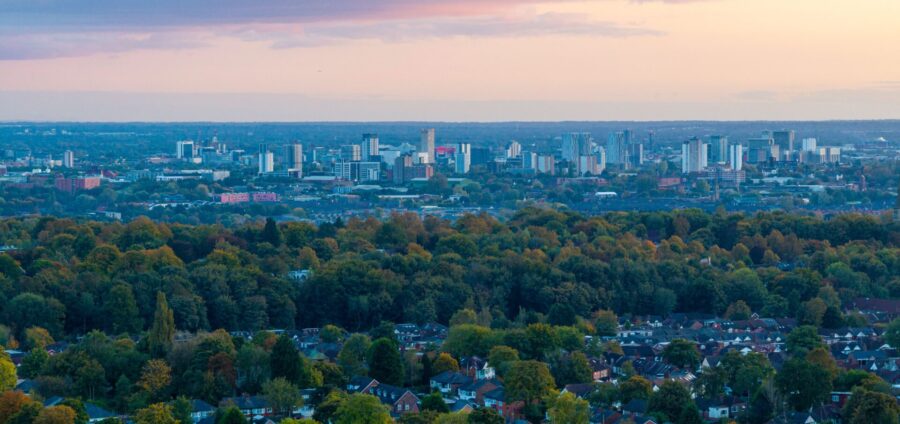
Aerial image of Greater Manchester view from Prestwich, credit: Bardhok
One of Greater Manchester’s biggest strengths is its ability to operate at scale while still respecting local difference.
GM’s devolved model continues to mature. Through the GMCA, funding decisions and investment priorities are increasingly being shaped at city-region level, whether through instruments like the Good Growth Fund or through longer-term, consolidated settlements. That flexibility allows boroughs to collaborate strategically while staying responsive to local realities and retaining autonomy over how growth takes shape locally.
GM’s Places for Everyone has opened the door for cross-boundary collaboration between Wigan and Bolton, with NorthFold, and the broader Atom Valley vision spanning Bury and Rochdale as prime examples.
GM’s devolution is tangibly creating the conditions for collaboration where it adds value and allowing local character to lead where it matters most.
Levelling the playing field
While the city core’s skyline often grabs the headlines, our conversations this year have reinforced that opportunity is everywhere you look.
Wigan is leveraging infrastructure investment to unlock employment growth and strengthen connectivity. Tameside is reshaping its narrative through strategic allocations and town centre interventions. Bolton is using heritage as a catalyst for renewal. Oldham, Rochdale and others are leaning into their distinct strengths and looking to play a more prominent role in the city region’s next chapter.
There’s a growing recognition that Greater Manchester’s long-term success depends on more balanced growth across the conurbation.
And that means ensuring northern boroughs have the infrastructure, employment land and strategic backing to thrive alongside the regional core. Levelling up isn’t a slogan, but a structural challenge that requires sustained collaboration that the GM model is perfectly placed to provide.
Shared identity, shared future
Greater Manchester is brimming with opportunities and a confidence that’s buoyed by a track record of delivery. Perhaps most importantly, there’s a willingness to collaborate.
That GM-wide identity makes cross-boundary conversations easier and creates an environment where meaningful partnerships can flourish.
As we head to MIPIM, those are exactly the kinds of conversations we’re looking forward to continuing – exploring how local ambition, regional collaboration and the right partners can come together to unlock the next phase of growth.
Greater Manchester has been the UK’s fastest growing city region since 2015, but growth hasn’t always been evenly spread. With deeper devolution, empowered local authorities and heaps of opportunity, the benefits of that growth are set to reach all four corners of the region, not just at its core.
There’s plenty of opportunities out there, and we’re excited to see what’s next.
- Euan Kellie is founding director of Euan Kellie Property Solutions

Related Articles

Analysis
Councils take on futile fight against national planning changes
Four local authorities have drawn lines in the sand, refusing to amend their constitutions to adopt the latest statutory government guidance that would see officers become the default body for deciding most planning applications across England.

Analysis - Commentary
We’re building an interconnected future. So why are we still talking about infrastructure in silos?
As investment in water, energy and data centres accelerates, the infrastructure supporting Britain’s growth is becoming increasingly interconnected, writes Jimmy Coles of Lexington.