Chorley named and shamed as ‘underperforming’ in planning by Gove
The Lancashire local authority has disputed the label – pointing out that it has delivered more than its expected share of housing.
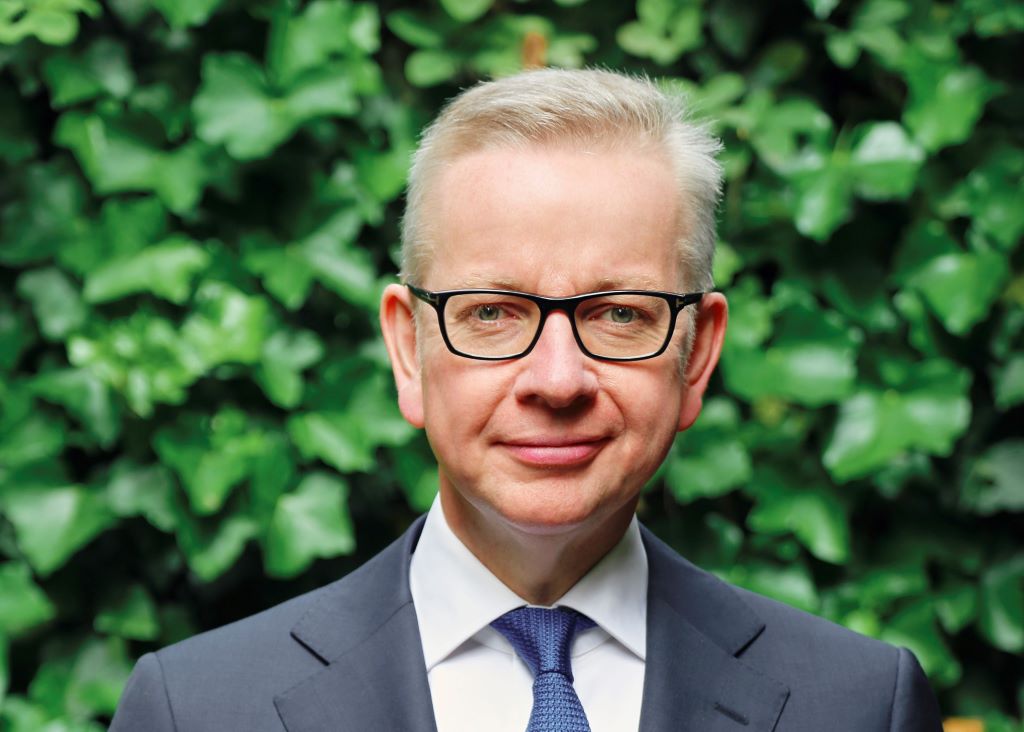
Michael Gove, the secretary of state for the Department for Levelling Up, Housing, and Communities, took no prisoners during his speech on Tuesday announcing the latest edition of the National Planning Policy Framework and the government’s efforts to speed up the planning process.
Gove described Chorley Council and Fareham Council as two local authorities that “persistently underperformed in dealing with planning applications”. Accordingly, he said the two councils would be designated because of “poor quality decision-making”. Place understands that this is due to the number of appeals the councils have lost.
Chorley Council had 15.6% of its major planning decisions overturned at appeal between October 2020 and September 2022 – the most recent figures available. This is significantly higher than most other councils, with the vast majority having less than 5% overturned.
Chorley’s stats focus on seven of the 45 major applications that the council considered during that timeframe. It is worth noting that only 11 of the council’s major application decisions went to appeal during this time, but having seven of those overturned means the city council has a 64% failure rate.
As designated councils, both Chorley and Fareham will have to craft an improvement plan. Developers will also, in the meantime, be able to bypass the council and go directly to the Planning Inspectorate to have their applications considered.
Chorley Council Leader Cllr Alistair Bradley was baffled by Gove’s words.
“We cannot understand why the secretary of state has made this announcement today,” he said.
“Chorley is by no means anti-development and, in fact, if you look at Chorley’s housing figures, we have delivered a great deal of homes – much more so than our neighbouring areas,” he continued.
“The government are well aware of this and so far have given us no proper explanation as to why then, this decision has been taken.”
Indeed, the government’s latest housing delivery figures, published on Tuesday, show that Chorley Council has enabled the delivery of 1,175 homes between 2019 and 2022 – 109% of its housing need for that period.
Bradley added that Chorley Council believed that if Gove designated the local authority it would be a move that “is not in any way valid in our view and seeks to ride roughshod over local democratic accountability”.
Chorley’s looming designation was far from the only significant moment in Gove’s Tuesday speech. He spoke at length about the five tenets that lead the latest edition of the National Planning Policy Framework: beauty, infrastructure, democracy, environment, and neighbourhood – or B.I.D.E.N. He joked: “I hope I will not be misinterpreted by anyone when I say I am violently pro-BIDEN”.
Gove also delved into various methods of supporting local authorities with handling planning applications, including the first round of awards for the Planning Skills Delivery Fund and the recently enacted increase in application fees. The money raised through those fees will be ringfenced for planning support, with the fees set to rise in line with inflation, Gove said.
After showcasing the carrot, Gove brought out the stick. Gove pinpointed seven non-North West local authorities for their failure to adopt a local plan since 2004, adding that “there is no excuse for any local authority to not have a plan in place”.
Delving into the housing delivery test figures, he pointed out that 20 local authorities will be subject to “presumption” for their failure to produce the appropriate amount of housing. Being subject to presumption means that planning powers are restricted for these councils, meaning that the local authority will largely be unable to reject plans that meet NPPF rules. Chorley is not among the 20 authorities highlighted, but Bury, Rossendale, and Trafford are. Those three authorities delivered 46%, 63%, and 65% of the housing units needed in the three years ending in 2022.
Gove also introduced measures to ensure statutory consultees respond to planning applications within the current timeframe, including a three-month review of the current consultee system. The results of this review will be announced in 2024.