


Commentary
Cheshire’s £3.6bn Origin will transform the North
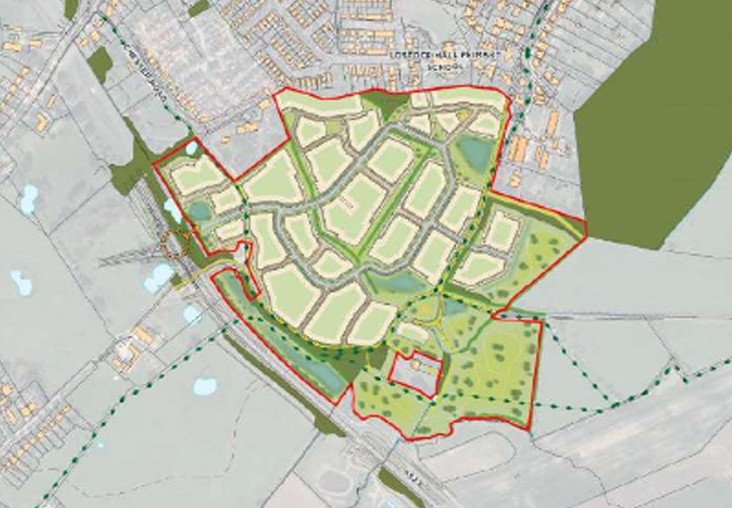
Ellesmere Port is the home to the businesses of the future, with a burgeoning net zero carbon industrial cluster already generating a gross development value of £1.4bn – a number that is due to more than double over the coming years as a further 332 acres of near-term developable land sits ready to be unlocked.
Origin is the start of something big.
Overseen by Cheshire West and Chester Council and supported by Cheshire and Warrington Combined Authority, Origin has the potential generate £3.6bn annually for the UK and regional economy. Already, it is home to 1,300 businesses – including world leaders in glass manufacturing, automotive development, and carbon capture.
Origin has a clear purpose. It is looking towards the industrial future, not the past. It is a hub of innovators. It is the home of the green revolution.
And that revolution is already underway.
The nation’s powerhouse
Steve Purdham, chair of the Cheshire and Warrington Business Advisory Board, puts it best.
“If you look at the 1,300 businesses in Origin, it’s actually one of the most productive areas in the whole of the country,” he said. “In reality, it’s a real power centre of productivity.”
From crafting the complex alloy systems that make your phones more durable to redefining the way we generate power – the businesses of Origin are at the forefront of daily life in the UK.
Encirc creates the bottles that we drink our wine and beer from. Less Common Metals’ magnetic products can be found in our electric vehicles, phones, and laptops. Stellantis manufactures electric vans. Innospec creates the chemical compounds that clean our kitchens and homes.
The companies of Origin are shaping the future, too.
At Protos, Encyclis is developing a facility to convert non-recyclable waste into energy in a low-carbon way. Evero is also generating power from waste, this time from waste wood rescued from the landfill.
EET is developing capacity for manufacturing advanced sustainable aviation fuel, as well as a whole host of other low-carbon technology-driven fuels from its Stanlow Refinery base.
Then there’s HyNet, a major decarbonisation project aimed at the industrial sector that links hydrogen production with carbon capture and storage. Ellesmere Port is its hub and EET is one of its chief backers.
HyNet is collaborating with its partners and government to produce low carbon hydrogen to power factories and more. HyNet also provides for sequestering the carbon, storing it in Liverpool Bay, and thus preventing it from going to the atmosphere.
The work being done around HyNet puts Ellesmere Port at the forefront of not just a national push to decarbonise industry, but a global one.
Ruth Herbert, chief business development officer and managing director of EET, described the work her company and HyNet are doing as “world leading.”
“We really are frontrunners in this,” she said. It is not just Herbert’s opinion either. The World Economic Forum has cited HyNet as a world leading example of a decarbonisation cluster.
“We have that global fame as Ellesmere Port,” Herbert said.
She added later: “I’m a Cheshire girl. The chance to be involved in the next industrial revolution and to have Cheshire at the forefront of that is really exciting to me.”
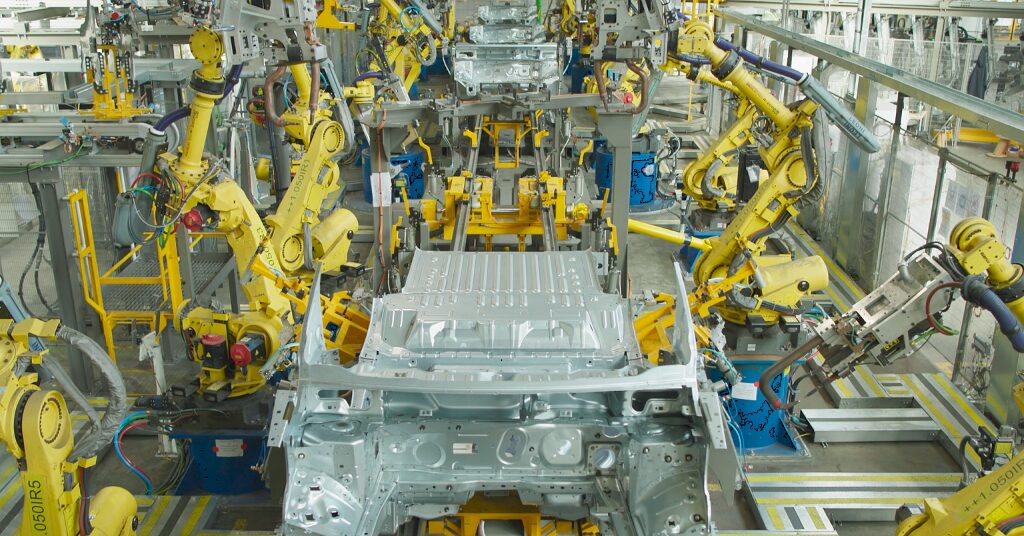
Stellantis manufactures its electric vans in Ellesmere Port. Credit: via Cheshire West and Chester Council
Plans in motion
These are not just ideas.
Protos is already delivering more than £740m of investment across its site.
EET has committed to investing £1.8bn into UK energy transition projects.
ENI is securing £2bn-worth of supply chain contracts for the Liverpool Bay carbon capture and storage system, part of HyNet.
HyNet itself has received £500m in backing from the government for its first phases. There is possibility for more cash too, with Whitehall promising to invest £21.7bn in carbon capture and storage.
“There’s real money being committed to be spent in Ellesmere Port and the wider region,” Herbert said. “It’s transformative.
“Once this infrastructure is there, it will attract businesses. It not only keeps the businesses that are there, but it gives them a sustainable pathway to continue investing in the region.”
Taking EET as an example, Herbert said that if the company can make good on all its ambitions, it could lead to another 5,000 jobs in the local area – that is in addition to the 5,000 that already exist.
“I think this is a really exciting, pivotal moment – a turning point in the fortunes of the region in terms of investment today and what we will see going forward,” Herbert said.
Taking off
Expect Origin to move at speed as the new combined authority comes into its own.
Having a combined authority allows for the county to be a strong advocate for itself on a regional, national, and global stage, according to Purdham.
“The world, with devolution, has moved into very strong regional voices,” he said.
“Without the combined authority and without the future Mayor, places like Cheshire and Warrington don’t really have a voice anymore to get things done,” he said.
The combined authority changes all that. “It gives provides a seat at the table to be able to project all the benefits of the sub region,” he said.
The combined authority has already started that work, showcasing Origin and other key transformative projects at UKREiiF.
On 26 June, it will host its launch conference – an event that is part showcase and part manifesto, highlighting the region’s investment drivers while sharing what the combined authority wants to achieve. Join the waitlist for the Cheshire and Warrington Combined Authority Launch Conference.
More will follow. Watch this space. After all, when it comes to Origin – we are just at the start.