



Green Party would radically change how we deliver housing
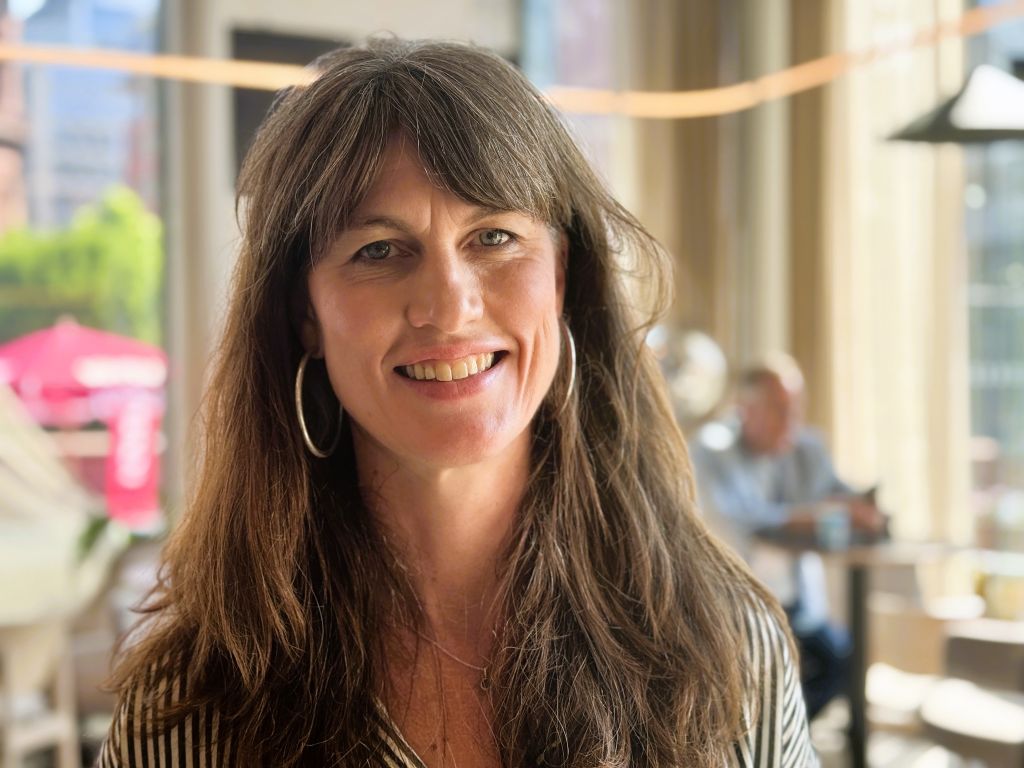
The current profit-based model for building housing has not worked, argued the party’s deputy leader Rachel Millward at Housing 2026 in Manchester. Her solution is this: a new approach that focuses on housing as a human right and as public infrastructure.
“It seems completely illogical that you could find a way out of a housing crisis with housing targets that don’t respond to housing need,” Millward told a crowd of property professionals and politicians on Wednesday morning as part of a panel discussion.
“It’s build, build, build – but build what? It’s build luxury, unaffordable homes that aren’t solving the problems of ordinary people,” she continued.
“There’s just a radical disconnect there. I think we know, because we’ve been trying this for decades, that this doesn’t solve the problem. In fact, it exacerbates it and we end up with what should be ‘homes’ being more ‘investment vehicles’.”
The fact of the matter is this, Millward said: “Housing is a human right and housing, first and foremost, is to give people a roof over their head.”
Millward said a Green government would look to make a “radical investment in social housing.”
“We don’t think the market can solve this problem,” she said.
The money for this investment would come from changing the taxation model, taxing the ultrarich, equalising capital gains tax and income tax, and transforming the current council tax model into a land value one.
“It is a fairer system, and it does generate a lot of money to invest,” she told Place in an interview after her panel appearance.
Also on the Green housing agenda: a brownfield first approach, the end of right to buy, and a focus on retrofit.
One of the main standout changes for Millward is adding a social housing target.
“It’s actually genuinely strange to me that we don’t have a social housing target,” Millward said.
“It is very weird as a council Leader, telling your residents you just have to [approve plans] because the government’s told you to build X number of houses,” she continued.
“It’s like, for what? It’s not for communities. It’s not for the people who need the housing. It gives developers profit and it changes land owners’ fortunes for generations, frankly.”
She referred to the current government’s system of housing targets and ‘Build, Baby, Build’ as another form of trickle-down economics that hopes that adding more homes will cause people to move and free up more affordable housing for someone else.
“That just is not what’s happening,” she said. “That’s not happened for two, three decades. The problem has gotten worse and worse and worse – so that idea is disproven and we just need to be real about that.”
Targets are especially on Millward’s mind as she is in the middle of crafting a local plan for Wealden District Council, where she is Co-Leader.
Place asked Millward how she would reshape the local plan process. She said she would do away with the current system of calling for sites and making proposals based around that. That is because in her experience there are a very limited number of sites coming forward and the infrastructure may not be in place to support them. She would rather be proactive about finding the best sites for delivery.
“You would have a huge amount of public consultation,” she said. “You’d also have, obviously, planning experts looking very carefully at the area. You would think: where are the best places for housing? How do we build community? How do we make sure that people don’t have to travel far? We’d look at it all strategically and have that input.”
As for the planning committee system, Millward is an advocate for it. Councillors, she said, are not the blockers for housing delivery. She pointed to there being thousands of homes with planning permission in her council area that have yet to start on site.
The committee process makes projects better, she contended. Conditions are added; improvements are made. And sometimes, she said, the project is just not good enough.
Public opposition to building affordable housing on brownfield sites does happen, she conceded. But this could be mitigated with better communication and engagement.
“There is a danger of just really patronising communities and assuming that all people are basically pretty selfish NIMBYs,” she said. “I don’t find that to be true.
“What I do think is true is that if there is a communication vacuum, then what fills it is hostile, polarising, and angry.”
In her opinion, presenting people with the facts and the choices in front of them can go a long way. It will not convince everyone, but it will win over many.
“Most people are actually pro greater good,” she said.
At the end of the day, Millward was clear about one thing. Change needs to happen or the housing crisis will just continue year after year.
“If we want to build the housing that the future generations need, we need a different system,” she said. “We really do.”

Its not a national target but there is a national 10% floor, Councils are free to set their own social housing ratio requirements in developments which commonly vary from about 20% to 40% to meet their own calculated shortfall in supply. For instance in her council its currently 35% up from 17% in 2024.
By WatcherZero
Meanwhile back on planet earth we can all recall the Truss Government and what happened when it stuck two fingers up to the markets.
By Anonymous
There is an interesting bit of possible subtext there that is that if the social provision isn’t to be delivered by the market then that is to be delivered by the state.
I doubt that this is what is meant, but if so I imagine the Greens would receive some lovely contributions from HBF so as to move them overtly to the position that the state provides social and the market provides private homes.
By JohnMac
A real green party wouldn’t deliver any housing.
By Anonymous
She has a point that houses should be built in the right place and not just to numbers. I think she’s making a disguised critique of the housing market in Manchester that Burnham leaves as his legacy – unbalanced, heavily rent focused, shortage of quality affordable housing.
By Anonymous
@anon 6:37 – it’s not really like that though is it, should markets not recognise, respond to, and provide for more than one single demographic? Luxury housing can only take the industry so far, and putting all your eggs in one basket is never a good thing (market crash springs to mind) – that’s before even mentioning that provision of more council / social housing will only ever act as a net social “good”. Providing more than just affordable homes, but also a steady pipeline of much needed jobs and investment in communities who are otherwise feeling forgotten and snubbed by subsequent governments and councils across the country! Build more, and build for all.
By it's a bit obvious really
So the end of growth in Manchester. Sorry that isn’t serious.
By MJC
Fairy tale politics – wealth taxes have not worked anywhere and will just deplete the UK’s wealth for generations as the ultra-rich choose to live elsewhere.
By Sean
She just explained the Locals Plan process as if it doesn’t exist already……….
By UnaPlanner
So the people who live in apartments in Manchester aren’t ordinary people?
By MJC
Millward is totally disconnected form the real world.
By Anonymous
Deluded and dangerous
By The Blob
Never has a truer word been said. The current system isn’t working for communities and just rewards developers with big profits.
By Alex Bergh
“Housed are “not for the people who need the housing”, really?? Are they all empty? Or being used as bars and restaurants? The total inaccuracy of the assumptions is terrifying for an elected member of anything
By Rational observefr
I do agree that the current system is not working (and also remember the previous incarnations), but a delivery vehicle that makes no profit does not pay tax, and how are you going to fund some of the other more fantasy based schemes these guys are promoting.
By Steve5839
For a Green no statement on building on farm land which needs banning
By Anon
I agree with her on the Land Value Tax. Even capitalist USA uses a land value tax. They recognise it is necessary to increase productivity. And in such a small country as the UK we need it even more. Too many landowners in the UK horde large areas of land leaving them unproductive ugly wastelands all whilst there is a shortage of housing and green fields being built on. Put in a land value tax and developers will be forced to build or sell to someone who will. Also offshore investors can’t move land abroad and therefore evade tax. And council tax can be reduced for the masses as more money come in from the land value tax. Not sure about her other ideas but on a Land Value Tax I strongly agree. The hording of land by a tiny amount of people / companies is holding the UK back.
By Land Value Tax
Cloud Cuckoo Land as per all Green Party ‘Policies’!
By Anon
No need to change the way things do not work. Keep doing what Thatcher started. Half-a-century of failure is good enough for most (if they are well housed themselves or benefit from the shortage).
By Anonymous
Also to make ecological housing using natural materials and the moss covered bricks that are now being used in Holland to absorb Co2 s . Let’s encourage more green coverage of buildings to help with more oxygen and to keep buildings warm in winter and cool in summer . Virginia creeper is excellent and extremely fast growing Good for us all to know also as stated by the RHS ivy is good for buildings so long as the morter is intact . Ivy only does damage to buildings if it is removed . As ivy is one of the best plants to absorb co2 s . It helpes oxygenise building and keeps them warm in winter and cool in summer why would anyone want to remove it .
By Clare Skilbeck Edgar
Yes, Rachel spot on. Being on the planning Committee of the Same Council you co-lead we saw this very clearly. So miserable for those in need of social housing and the many young people who had to move away to afford a flat or small house. Also miserable for the many who wanted to preserve as much of the environment where they lived ad possible but were disappointed time and time again when the developers appealed.so pleased you have a chance to speak out and doing so clearly and persuasively.
By Cornelie Usborne