



Commentary
How SME developers are unlocking regional regeneration
We are currently delivering two projects that illustrate why secondary cities require a fundamentally different approach than established markets, writes Nick Mullins of Axis-RE.
The Joinery in Manchester’s Northern Quarter is a 261-unit build-to-rent scheme developed in partnership with Marco Living and City Developments. The site forms part of the Piccadilly East SRF and had operated as a surface car park for over a decade, but the fundamentals were straightforward: institutional capital understood Manchester BTR, operators knew the market, and planning had clear precedents.
Brewery Lane in Lancaster is a three-acre former brewery site that had been derelict for over 40 years. It sits within the city’s Canal Quarter, and while a masterplan existed for more than a decade, nothing had moved. Working alongside Marco Living again, ensuring this scheme is financially viable requires significant coordination across Lancaster City Council, Lancashire County Council, the NHS, cultural venues including the Dukes and Grand theatres and positioning alongside the Eden Project’s transformational impact on Morecambe.
The difference between the two isn’t just scale or location. It’s the level of coordination required before delivery becomes financially viable.
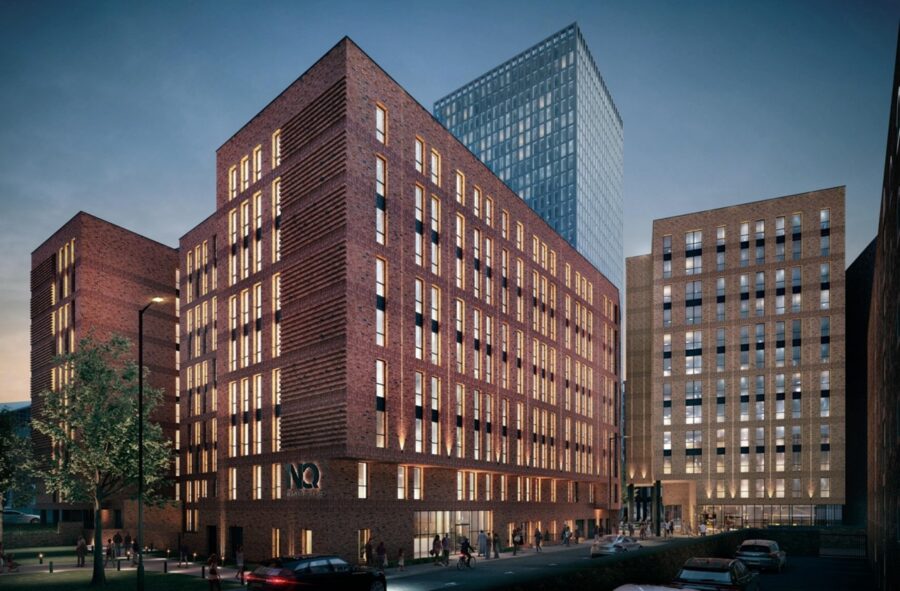
The Joinery, Northern Quarter, Manchester – CGI courtesy of LRW
That doesn’t make delivery simple, but it does mean the components connect more readily. For The Joinery, we could focus on delivering genuine quality: apartments built to National Design Space Standards, MEV KERS units converting waste heat to renewable hot water for lower running costs, PV panels achieving EPC B ratings, and rooftop amenity space with a landscaped courtyard seamlessly connecting to our neighbours and completing a new pedestrian thoroughfare to improve permeability through the city centre. The result is homes that work for residents in one of Manchester’s coolest neighbourhoods.
The fundamentals of viability, funding and delivery were understood by all parties from the outset.
What’s harder in secondary cities
Lancaster requires a different level of structuring. Institutional investors need education on why the city represents an opportunity. Our conversations with pension funds focus on what makes regional regeneration schemes investable: long-term secure income, index-linked rent, credible operators on 15- to 35-year leases.
Operators require more context. Why Lancaster? How does the Eden Project change the visitor economy? What does neighbourhood healthcare demand look like?
Planning moves more cautiously. Fewer large schemes have been processed, which means more stakeholder coordination upfront and a patient approach to timelines.
Most significantly, infrastructure that exists in Manchester doesn’t readily exist outside the region. Transport, highways, power are all key components that require joined-up thinking before large-scale regeneration can take place. The wider Canal Quarter needs the council to enact its car parking strategy before its land can be released for development.
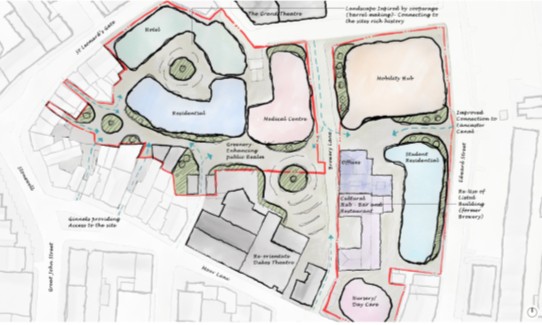
Brewery Lane, Lancaster. Concept masterplan
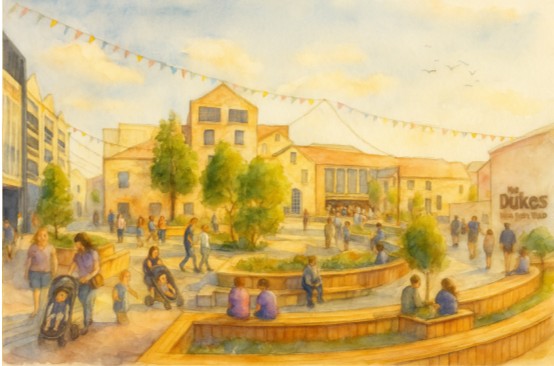
Brewery Lane, Lancaster – Artist’s impression. Credit LRW
To make Brewery Lane viable, we have established a series of steering groups with city and county council representatives, NHS and Integrated Care Board stakeholders, culture and business institutions and infrastructure bodies – forums to identify potential constraints early and solve them collaboratively and quickly.
This coordination costs time and capital before any meaningful development can take place. But it’s what turns an inactive, aspirational masterplan into a deliverable reality.
Where SME developers add value
Larger developers optimise for efficiency, deploying capital at scale in markets they understand. That leads them toward core cities where those conditions exist.
Secondary cities create opportunities for SME developers prepared to invest differently. We can commit capital early to de-risk sites and establish credibility with stakeholders. We can structure schemes around what communities actually need rather than what fits a template. And we can build relationships that create long-term value beyond individual schemes.
At Brewery Lane, that means designing around real community needs: focusing on neighbourhood health, housing, business, culture and tourism and connecting to Lancaster’s existing strengths as well as delivering high quality public open space to drive long-term community benefit.
Our approach across both projects centres on collaboration with stakeholders, transparent engagement on viability and delivery, and seeing schemes through properly. The macro-economic environment – from the GFC through Brexit, Covid and current geopolitics – has proven that no development approach is risk-free. But thorough preparation and the right partnerships provide the platform to navigate challenges as they arise.
Looking ahead
The Joinery completes this year. Brewery Lane is moving through planning, with operator and investor discussions active across all different elements of the masterplan.
Regional regeneration needs developers prepared to work this way. The skills, experience and capability is there, the capital exists, the need exists, and increasingly the political will exists. What’s required now are the right partnerships to connect them.
For SME developers, that’s not a constraint. It’s the model we’re built for.
- Nick Mullins is co-founder of Axis-RE

Related Articles
Analysis - Commentary
How can insolvency practitioners and receivers best approach real estate challenges?
Taking into account the wider restructuring or insolvency plans, there are a number of strategic decisions to be made to ensure the best course of action is taken to unlock value within tight timescales, write Andy Thompson and Matthew Hattersley at BTG Eddisons. Real estate advice When appointed, IPs and receivers can be presented with […]
Analysis - Event Summary
Greater Manchester Development Update 2026 | Summary + gallery
Delegates at Place North West’s sold-out conference heard from the newly elected mayor on how she is targeting a decade of growth, the impact of the new NPPF on development in the city region, and how the pioneering £2bn Good Growth Fund is unlocking development in a constrained market.