


Airport City prepares for take-off with new name, new masterplan
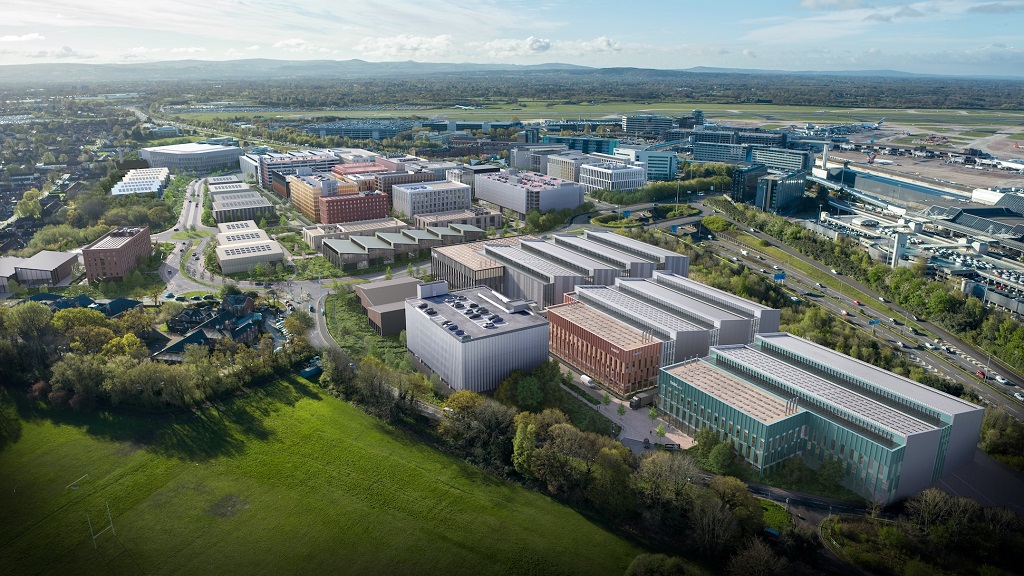
Pivoting away from commercial offices towards advanced manufacturing and science, the 60-acre project has given itself a new moniker: MIX Manchester.
The rebrand of Airport City comes after several years of speculation about the £1bn project’s future after plans for 5m sq ft of offices seemed to be going nowhere.
During that time, it now appears that a rethink was happening between the scheme’s joint venture partners: Columbia Threadneedle Real Estate, Manchester Airports Group, Beijing Construction Engineering Group International, and the Greater Manchester Pension Fund.
The result of that rethink: a promise to bring forward 2m sq ft of laboratories, research and development facilities, manufacturing spaces, and offices – alongside public realm, three hotels, and leisure venues.
An estimated 8,000 jobs will be created in the process, according to the project team.
Sheppard Robson has drawn up the masterplan for MIX Manchester, having worked on the under-wraps scheme for the past two years. A strategic regeneration framework is due to go to consultation this summer, with the assistance of planner CBRE.
Agents are already appointed for the site as well, with JLL and Track Real Estates charged with finding occupiers for the project.

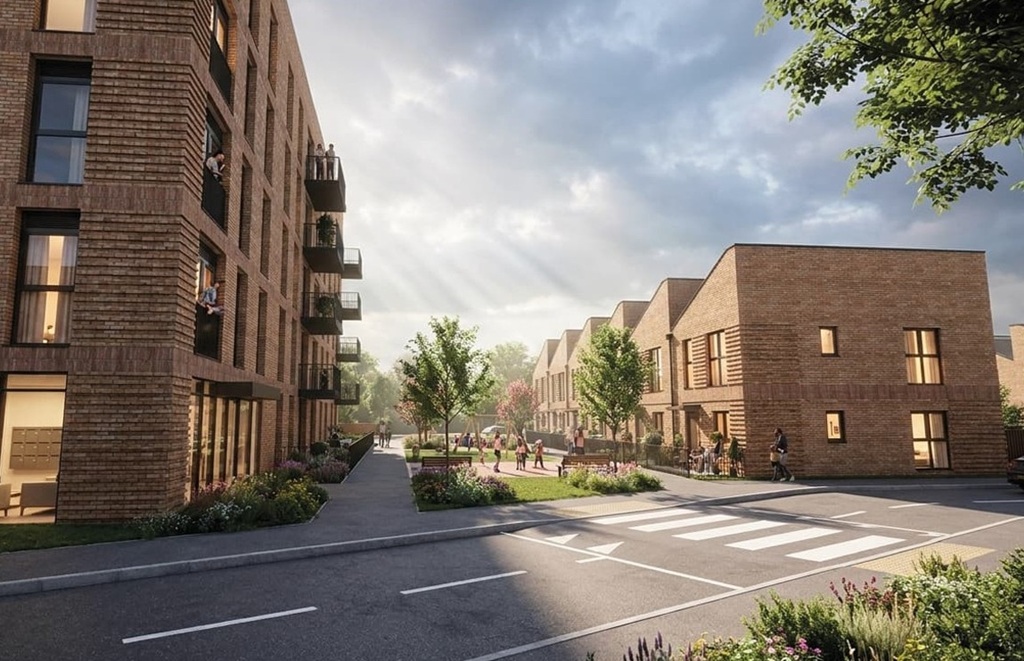
CBRE is the planning consultant for MIX Manchester. Credit: Virtual Planit
The past and future
MIX Manchester’s previous iteration, Airport City, had its masterplan crafted in 2012. The southern half of the site became Global Logistics, an 821,000 sq ft logistics estate that was sold to Icon Industrial in 2017.
The northern part, the section that now makes up MIX Manchester, struggled. At the time, the £1bn scheme was meant to deliver 5m sq ft of offices on this plot. This included a 1m sq ft THG campus that never came to fruition.
Thus, the need for change.
“In recent years, we have seen occupier demand move away from traditional out-of-town offices,” explained Manchester Airports Group property director Gareth Jackson.
“This trend, coupled with rapid growth in the advanced manufacturing, life sciences, digital, and technology economies and the requirement for highly sustainable work environments has led us to adapt our plans for the next phase of commercial development,” he continued.
Jackson also referred to the work that was accomplished during the 12-year period since the Airport City masterplan was brought in.
There has been £30m of infrastructure investment in the form of electricity connections, a pedestrian bridge with links to Manchester Airport, and the Enterprise Way link road.
This, the MIX Manchester team said, makes the project a “shovel-ready” site, primed to become, in Jackson’s words, “Manchester’s innovation gateway”.

Autumn is the target for when the MIX Manchester SRF will go before the city council. Credit: Virtual Planit
Connections
Samantha Hadland, senior asset manager at Columbia Threadneedle, played up MIX Manchester’s proximity to the airport.
“Being situated next to an international airport which links 28m passengers a year, MIX Manchester opens a global opportunity for science and innovation businesses wanting to locate in the North West, in particular the burgeoning advanced manufacturing sector,” she said.
“With world-class universities and research institutions on the doorstep with immediate access to secure, global logistics connections through Manchester Airport’s World Freight Terminal, occupiers will have access to an incredible talent pool and unrivalled global connectivity.”
Manchester City Council Leader Cllr Bev Craig pointed out that the new MIX Manchester framework plays into the city’s economic strengths.
“The vision for MIX Manchester presents another significant investment in our city that enhances our reputation as a centre of excellence in science and innovation – and a further platform for economic growth in our emerging industries,” she said.
“The campus will create thousands of jobs and support the ongoing regeneration of our communities in Wythenshawe, as well as cementing Manchester’s place as a leader in innovation on a global scale.”
What’s next?
After MIX Manchester’s public consultation this summer, the team hopes to put forward the modified strategic regeneration framework to Manchester City Council this autumn.
MIX Manchester is set to join a robust line-up of science and technology-focussed developments in Manchester, including the £1.7bn ID Manchester from Bruntwood SciTech and the University of Manchester, and the £450m Upper Brook Street masterplan from Property Alliance Group, Moda, McLaren Property Group, and Kadans – a project that includes 215,000 sq ft of labs.
In terms of other schemes focussed on advanced manufacturing, there is the Atom Valley Mayoral Development Zone in Bury, Oldham, and Rochdale. Atom Valley will seek to deliver 17m sq ft of employment space to create a “mega cluster” for advanced materials in the northern part of Greater Manchester.