Commentary
Good growth | How do we turn ambition into buildings that actually perform?
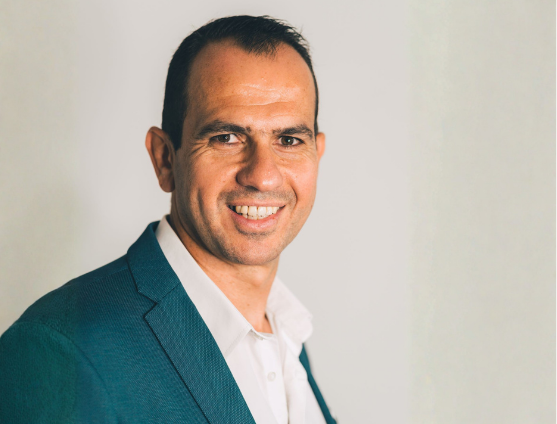
There is no shortage of ambition across the North and Midlands this year, writes Antonios Agapakis of CPW. Major regeneration programmes, investment strategies and growth plans are helping shape the future of our towns and cities, creating opportunities to drive the economy. and support our local communities.
Alongside that ambition, however, one theme has consistently emerged within industry discussions throughout 2026: viability.
As expectations of development continue to evolve, growth is no longer measured solely by the number of homes delivered, jobs created, or pounds invested. Increasingly, projects are expected to support sustainability, generate social value, improve wellbeing, and contribute to long-term economic resilience. In short, they are expected to deliver “good growth”.
The question is how those ambitions are translated into reality.
Viability is more than delivery
Across the country, there are encouraging examples of this ambition in action. One is the redevelopment of Mell Square, now known as Holbeche Place, in Solihull town centre. The scheme will deliver up to 1,600 homes alongside new retail, leisure, and public spaces, creating opportunities for investment, job creation, and town centre renewal.
Just as importantly, the development has been designed with long-term performance in mind. A fabric-first approach, high-performance façades, heat pumps, and solar PV aim to reduce operational carbon while supporting wider sustainability objectives. The scheme reflects a growing recognition that viability should be about more than getting a project built. It should also consider how successfully it performs once occupied.
Other major regeneration programmes, including Birmingham’s Central Heart initiative, HS2-related development opportunities and Greater Manchester’s plans to attract £10bn of investment and deliver around 75,000 homes, demonstrate the scale of ambition across the UK. Projects such as MIX Manchester further highlight how investment is shaping the future of our regions.
However, rising construction costs, financing pressures, infrastructure requirements, and regulatory demands mean every development must remain commercially deliverable.
The risk is that viability becomes a short-term exercise. A scheme may be viable at the point of construction but create challenges later. Reducing capital expenditure today can lead to higher energy consumption, maintenance costs, and future retrofit requirements, leaving building owners and occupants to absorb the consequences.
The question, therefore, is whether viability should be measured solely at the point of delivery, or across the life of a development.
Sustainability needs to survive the viability conversation
Sustainability is rarely absent from development discussions. The greater challenge is ensuring it survives the viability conversation.
With the government aiming to deliver 1.5m homes over the next five years, the Future Homes Standard represents an important step forward. New homes will be expected to achieve substantially lower operational carbon emissions through measures including improved building fabric, heat pumps, and solar PV. Compliance, however, should be viewed as the starting point rather than the destination.
As the built environment adapts to a changing climate, the questions facing the industry are becoming broader. Are we designing homes that remain comfortable during hotter summers? Are buildings resilient to more frequent extreme weather events? Can they adapt to changing technologies and patterns of use? And are we considering embodied carbon alongside operational performance?
The answer often lies in decisions made long before construction begins.
Too often, sustainability measures are viewed as additions to a scheme once key design decisions have already been made. By that point, change becomes expensive and opportunities are lost. A more effective approach is to embed sustainability thinking from the outset through collaboration between developers, architects, planners, and engineers.
Some of the least visible design decisions can have the greatest impact on how successfully a building performs over the next 30 years. Passive design strategies, energy planning, overheating analysis, electrification, and whole-life carbon assessments all have the potential to improve performance while avoiding future costs.
Good growth should still be good in 20 or 30 years.
Many of the regeneration programmes shaping our towns and cities today are generational in scale. From Manchester Piccadilly and Northern Powerhouse Rail to major developments across Birmingham, Liverpool, and the wider North, these projects are designed to influence how people live, work, and connect for decades to come.
Investment announcements and regeneration strategies are important milestones, but the greatest measure of success is what happens after delivery.
Ultimately, good growth is experienced by the people who use the places we create. It is reflected in comfortable homes, healthy workplaces, adaptable learning environments, affordable running costs, and public spaces that continue to support thriving communities.
These outcomes emerge through collaboration, long-term thinking, and a commitment to performance beyond practical completion.
This is why strong relationships between design teams and building occupiers remain so important. The most successful projects are often those where expertise is brought into the conversation early and remains involved throughout a building’s lifecycle, helping to ensure that performance matches ambition.
If “good growth” is going to mean something, success cannot simply be measured by the value of investment secured. It needs to be measured by the places left behind: how they perform, how they adapt and how they serve future generations.
Discuss your latest project with Antonios Agapakis by emailing [email protected].
- Antonios Agapakis is a director and Birmingham lead at CPW